And that’s where the big question comes in.
Is The Ravine actually based on a true story? Or is it one of those films that just feels real because it hits close to home?
Let me walk you through it, because the truth here isn’t black and white. It’s layered, emotional, and honestly… a little heavy.
So… is The Ravine based on a true story?
Short answer? Yes. But also… not exactly in the way people expect.
The film is inspired by real-life events and people. It’s rooted in the experiences of a couple from Olathe, Kansas, who went through something deeply tragic. The story takes emotional and thematic truth from their journey. But the movie itself isn’t a word-for-word retelling.
Think of it like this. The heart of the story is real. The pain, the confusion, the search for meaning… all of that comes from real life. But the details? Some are shaped, adjusted, and dramatized to fit a film narrative.
And honestly, that might make it even more powerful.
Because it’s not just about one couple. It starts to feel like it could be about anyone.
What actually happened in real life?
Here’s where things get heavy.
The real story behind The Ravine involves a married couple whose lives were shaken by a tragic and violent incident. It wasn’t just a random event either. It forced them to question everything… their beliefs, their sense of safety, even their faith.
From what’s been shared publicly, the real-life couple went through an experience that brought them face-to-face with grief and trauma in a very personal way. And instead of giving them answers, it opened up more questions.
Why did this happen?
Where was God in all of this?
How do you move forward when something like this breaks your world?
Those questions became the backbone of the movie.
What the movie The Ravine is really about
On the surface, you might think it’s about tragedy. And yeah, it is. But that’s not the whole picture.
It’s really about what happens after tragedy.
That quiet, uncomfortable space where life doesn’t make sense anymore.
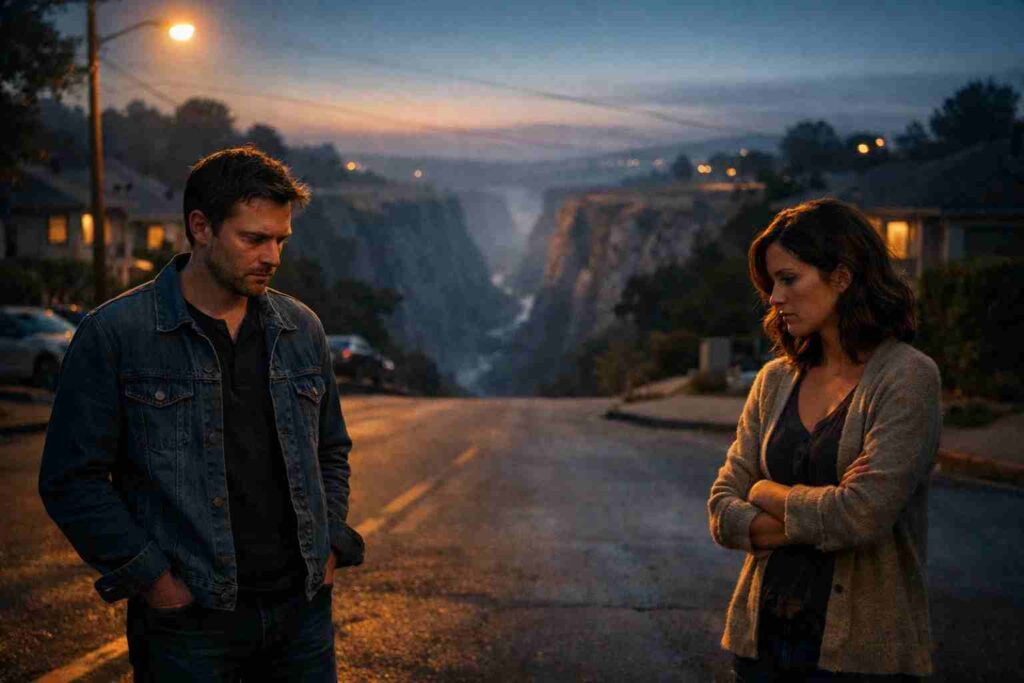
The film follows a couple trying to process a violent event that touches their lives. But instead of focusing only on the event itself, it zooms in on their emotional journey.
And that journey gets messy.
There’s anger.
Confusion.
Moments of silence that feel louder than any argument.
And then there’s faith… or the struggle with it.
Quick Fact
Studies show that over 60% of people who experience major trauma go through a period of questioning their beliefs or worldview. That includes faith, identity, and purpose.
That’s exactly what The Ravine taps into.
The faith angle… and why it matters
Here’s something interesting.
One of the biggest themes in The Ravine is faith. Not the perfect, polished version you see in some movies. But the kind that gets shaken.
The kind that cracks a little.
The characters don’t just lean on faith. They wrestle with it.
And that feels honest.
Because in real life, people don’t always respond to tragedy with calm acceptance. Sometimes they get angry. Sometimes they doubt. Sometimes they feel nothing at all.
The film doesn’t shy away from that.
It shows how complicated belief can be when life hits you hard.
What makes this story feel so real
You know what’s interesting? It’s not just the “based on true events” label.
It’s the way the story is told.
There’s no rush to wrap things up neatly. No forced happy ending. The emotions linger. Conversations feel unfinished. People react in ways that aren’t always logical… but they’re human.
That’s what makes it hit.
And it’s also why so many viewers walk away wondering if it actually happened.
Because it doesn’t feel scripted.
What research says about trauma and storytelling
Psychological research from institutions like the National Institute of Mental Health shows that trauma affects people in deeply personal ways. There’s no single path to healing.
Some people turn to faith.
Some turn away from it.
Some just try to survive day by day.
Movies like The Ravine mirror that reality. Instead of offering solutions, they reflect the struggle.
And that reflection? That’s what makes it relatable.
Was The Ravine meant to teach something?
Not in a preachy way.
But yeah… it does leave you thinking.
It nudges you to consider how you’d react in the same situation. What would you hold onto? What would you question?
And maybe more importantly… how would you rebuild?
Because that’s really what the story circles back to.
Rebuilding.
Not perfectly. Not quickly. But somehow.
What is the movie really saying?
If I had to put it into one sentence… it’s this:
Life doesn’t always give you answers. Sometimes it just gives you the chance to keep going.
That might sound simple. But when you’ve seen what the characters go through, it lands differently.
Let’s talk about forgiveness for a second
This part gets overlooked, but it’s huge.
The movie quietly explores forgiveness. Not the easy kind. Not the “say sorry and move on” version.
The kind that feels almost impossible.
Because when something deeply painful happens, forgiveness isn’t just a decision. It’s a process. Sometimes a long one.
And the film doesn’t rush it.
It shows how complicated it can be… and how personal.
What viewers are saying
A lot of people who’ve watched The Ravine describe it the same way.
“Slow… but powerful.”
“Quiet… but emotional.”
Some even say it felt more like real life than a movie.
And that’s probably the biggest compliment it could get.
Is it similar to other “true story” films?
Kind of. But also not really.
There are movies that say they’re based on true stories but then go full Hollywood. Big drama, clear villains, neat endings.
The Ravine doesn’t do that.
It leans into the uncertainty instead.
And that’s rare.
Was Truth a true story? (Quick comparison)
Since people often ask…
Yes, the movie Truth (about journalism and CBS reporting) is also based on real events. But it’s very different in tone.
Truth focuses on facts, media, and public controversy.
The Ravine focuses on personal emotion, faith, and healing.
One is about what happened in the public eye.
The other is about what happens inside people.
Why this story stays with you
You don’t walk away from The Ravine with excitement.
You walk away with questions.
And maybe that’s the point.
Because real life doesn’t always wrap things up nicely either.
Sometimes it just… continues.
So… yeah, it doesn’t really wrap up cleanly
Here’s what matters.
The Ravine isn’t just a movie about tragedy. It’s about what comes after. The quiet moments. The internal battles. The slow, uncertain steps forward.
Yes, it’s inspired by a true story.
But more than that, it captures something true about people.
How we break.
How we question.
And somehow… how we keep going anyway.
And honestly? That’s more powerful than any perfectly scripted ending.

Katie Couric, MA in Arts & Journalism. Crafting compelling narratives at istruestory.com. Passionate about bringing untold stories to light.