That’s why so many viewers finish the Netflix film asking the same question: Is 1922 based on a true story?
The short answer is no. 1922 is not a direct retelling of a real murder case. But the truth behind the story is far more interesting than a simple yes or no. Stephen King pulled inspiration from real American fears, real rural hardships, and disturbing historical stories that once shocked the country.
And honestly, that’s what makes the film hit harder.
Unlike supernatural horror filled with ghosts or demons, 1922 traps viewers inside guilt itself. The horror grows from human choices. One selfish decision destroys an entire family, and the consequences never stop spreading.
Directed by Zak Hilditch and released on Netflix in 2017, the film adapts Stephen King’s novella from his collection Full Dark, No Stars. Thomas Jane plays Wilfred James, a Nebraska farmer who convinces his teenage son Henry to help murder his wife, Arlette, after she plans to sell the family farm and move to Omaha.
What follows is not a crime thriller in the usual sense. It becomes a slow-burning nightmare about conscience, punishment, and madness.
The Real Truth Behind 1922
1922 is fictional. Wilfred James was not a real farmer, and the murder at the center of the story did not happen exactly as shown in the film.
Still, Stephen King has openly discussed where the emotional and visual inspiration came from. One major influence was the famous historical book Wisconsin Death Trip. That book collected disturbing photographs and true accounts from struggling rural communities in the late 1800s and early 1900s.
The images showed isolated farms, mental illness, poverty, death, and emotional despair across small-town America. Those haunting ideas clearly shaped the atmosphere of 1922.
Stephen King’s official site even mentions Wisconsin Death Trip as part of the novella’s inspiration. The hopeless rural mood in the movie comes directly from that kind of historical reality.
And you can feel it throughout every scene.
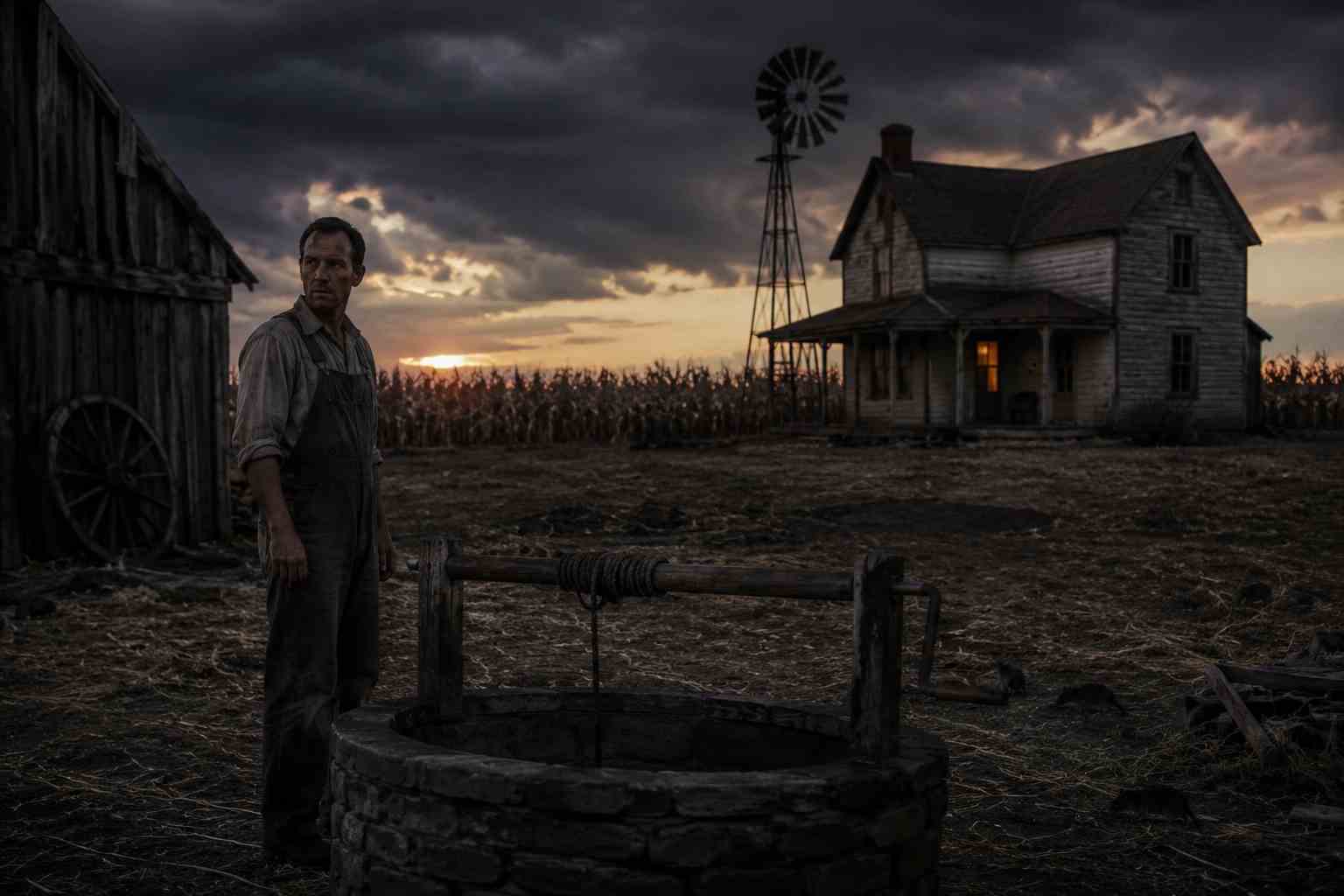
The empty cornfields look cold instead of peaceful. The farmhouse feels trapped in silence. Even before the murder happens, the story already feels rotten inside.
That realism matters because it grounds the horror. Nothing about Wilfred James feels supernatural at first. He sounds like a real man protecting his pride, his land, and his control over his family.
That’s the terrifying part.
Fast Facts About 1922 and Its Dark Origins
| Topic | Details |
|---|---|
| Movie Title | 1922 |
| Release Year | 2017 |
| Genre | Psychological Horror / Drama |
| Based On | Stephen King novella 1922 from Full Dark, No Stars |
| Is It a True Story? | No, but inspired by real rural hardships and historical crime themes |
| Main Character | Wilfred James |
| Actor Who Played Wilfred | Thomas Jane |
| Setting | Rural Nebraska, United States |
| Director | Zak Hilditch |
| Streaming Platform | Netflix |
| Main Theme | Guilt, greed, punishment, and mental collapse |
| Famous Symbol | Rats representing guilt and decay |
| Real-Life Inspiration | Wisconsin Death Trip historical stories and photography |
| Is It About Bonnie and Clyde? | No, though Henry and Shannon briefly become outlaw fugitives |
| What Happens to Wilfred? | He slowly loses his sanity after murdering his wife |
| Story Style | Slow-burn psychological horror |
| Stephen King Focus | Human darkness rather than supernatural monsters |
| Most Disturbing Element | The emotional realism and growing paranoia |
| Why People Think It’s Real | The grounded setting and believable family conflict |
| Ending Tone | Bleak, tragic, and emotionally haunting |
What Happens to Wilfred James?
Wilfred James begins the story as a proud Nebraska farmer obsessed with keeping his land.
His wife Arlette wants a different life. She inherited farmland and plans to sell it so the family can move to Omaha. Wilfred refuses. He sees the farm as his identity, and losing it feels like losing himself.
Instead of accepting change, he manipulates his teenage son Henry into helping him commit murder.
The killing itself is brutal but quiet. Wilfred cuts Arlette’s throat, and together they throw her body into a well where rats begin feeding on the remains.
From that moment, the entire story changes.
Wilfred never truly escapes what he did.
At first, he believes the crime worked perfectly. But guilt slowly destroys everything around him. Henry runs away with his girlfriend Shannon and becomes involved in robberies. Wilfred’s farm starts collapsing financially. Rats begin appearing everywhere. Strange visions haunt him. He sees Arlette’s ghost. He hears noises. He loses sleep.
Eventually, Wilfred becomes physically and mentally broken.
By the end of the film, he is isolated, starving, terrified, and consumed by hallucinations. Whether the ghosts are real or simply manifestations of guilt is left intentionally unclear.
That ambiguity is one reason the movie stays in people’s minds.
What Inspired Stephen King to Write 1922?
Stephen King has always been fascinated by ordinary people making terrible decisions.
That theme appears across many of his darker stories. In 1922, he strips away supernatural spectacle and focuses on psychological punishment instead.
Several real-world influences shaped the story:
Rural Isolation
Early 20th-century farming life could be lonely and emotionally crushing. Families often lived miles apart. Financial pressure was constant. Mental health struggles rarely received attention.
1922 captures that isolation perfectly.
The endless fields feel beautiful at first, but eventually they become prison walls around Wilfred.
Historical Crime Stories
The early 1900s saw many gruesome rural murders reported in newspapers. Family killings over land disputes were sadly not uncommon during difficult economic periods.
King took those real anxieties and turned them into emotional horror.
Wisconsin Death Trip
This influence cannot be ignored.
The book documented emotional collapse across isolated Midwestern communities. It showed how loneliness, poverty, disease, and fear could push ordinary people toward darkness.
That atmosphere lives inside every frame of 1922.
Is 1922 About Bonnie and Clyde?
No, 1922 is not about Bonnie and Clyde.
Some viewers get confused because Henry and Shannon briefly become outlaw fugitives after leaving Nebraska. Newspapers in the film refer to them as the “Sweetheart Bandits,” which resembles the romanticized criminal image associated with Bonnie and Clyde during the Great Depression era.
But the similarities stop there.
Bonnie Parker and Clyde Barrow were real criminals active during the 1930s. Their story involved bank robberies, police chases, and nationwide media attention.
Henry and Shannon are fictional characters trapped in a tragic spiral caused by Wilfred’s original crime. Their storyline is smaller, sadder, and more personal.
Instead of glamorizing outlaw life, 1922 shows how violence spreads through families like poison.
That emotional chain reaction is one of the film’s strongest ideas.
What Do Rats Symbolize in 1922?
The rats in 1922 are not just random horror imagery.
They represent guilt.
After Arlette’s body is thrown into the well, rats begin feeding on the corpse. From then on, Wilfred starts seeing rats everywhere. They crawl through the farmhouse, appear in dark corners, and seem to follow him endlessly.
Symbolically, the rats reflect several things:
Guilt That Cannot Be Buried
Wilfred believes hiding the body will erase the crime. Instead, the rats become physical reminders that the truth is still alive beneath the surface.
Moral Decay
The farm slowly rots after the murder. Relationships collapse. Henry loses his innocence. Wilfred’s mind deteriorates.
The rats mirror that decay.
Fear and Madness
As Wilfred becomes paranoid, the rats appear more aggressively. It becomes difficult to tell what is real and what exists only inside his mind.
This psychological uncertainty gives the film its disturbing atmosphere.
Stephen King often uses animals symbolically, and in 1922, the rats become a living punishment.
Why the Story Feels So Real
One reason audiences keep searching whether 1922 is true is because the emotions inside it feel authentic.
There are no flashy horror tricks.
Instead, the movie explores real human flaws:
- greed
- stubbornness
- fear of change
- toxic pride
- emotional manipulation
- guilt
Wilfred James does not start as a cartoon villain. He sounds calm, practical, and convinced he is right.
That realism makes the story uncomfortable.
Viewers can recognize pieces of real people inside him. Some see controlling fathers. Others see emotionally trapped marriages or people who destroy their lives because they cannot accept change.
That emotional honesty makes 1922 scarier than many supernatural horror films.
Thomas Jane’s Performance Made the Horror Feel Authentic
A huge reason the movie works is Thomas Jane’s performance as Wilfred James.
He does not play Wilfred as openly evil. Instead, he slowly transforms from stubborn farmer into haunted wreckage.
The Nebraska accent, the exhausted posture, and the quiet narration all make the character believable.
Jane reportedly studied rural Midwestern speech patterns and farming culture to ground the role in realism. That attention to detail helps the film avoid feeling exaggerated.
You believe Wilfred existed somewhere.
And that illusion is powerful.
The Psychological Horror Is the Real Monster
Many horror films focus on survival.
1922 focuses on consequences.
The murder happens relatively early in the story. After that, the movie becomes a study of psychological collapse.
Wilfred’s punishment is not prison at first.
It is living with himself.
That makes the film closer to classic guilt-driven literature than traditional horror. There are echoes of Edgar Allan Poe’s The Tell-Tale Heart hidden beneath the surface. A man commits murder, believes he escaped justice, and then destroys himself mentally.
Whether Arlette’s ghost is supernatural or imagined almost becomes irrelevant.
The guilt alone is enough to ruin Wilfred.
How Accurate Is the Film to Stephen King’s Novella?
The Netflix adaptation stays surprisingly faithful to Stephen King’s original novella.
Most of the major events remain intact:
- Arlette’s murder
- Henry’s involvement
- the rat symbolism
- Wilfred’s psychological decline
- the bleak ending
Director Zak Hilditch focused heavily on atmosphere rather than adding unnecessary Hollywood action.
That decision helped preserve the slow emotional dread that made the novella memorable in the first place.
Fans of Stephen King often praise 1922 because it captures the emotional tone of his writing instead of only copying plot details.
Why 1922 Still Stands Out Among Stephen King Adaptations
Stephen King adaptations often lean into monsters, supernatural powers, or epic fantasy.
1922 feels different.
It stays intimate and deeply human.
There are no giant set pieces. No heroic victories. No comforting ending.
Just one terrible choice poisoning every life connected to it.
That grounded approach gives the film unusual emotional weight. Years after release, many viewers still remember the images of rats, empty fields, and Wilfred’s exhausted face because the story feels emotionally believable.
And honestly, that realism may be scarier than any ghost.
The Final Truth Behind 1922
So, is 1922 based on a true story?
Not directly.
Wilfred James and his family are fictional creations from Stephen King’s imagination. But the emotions, historical atmosphere, and human darkness inside the story were inspired by very real struggles from rural American history.
That blend of fiction and emotional truth is what gives the movie its power.
The film reflects real fears about greed, isolation, guilt, and the damage people cause when they refuse to let go of control.
And maybe that’s why 1922 lingers long after the credits end.
Not because it tells a real murder story.
But because it feels like something that could have happened somewhere, to someone, in the silence of a lonely farmhouse almost forgotten by the world.

I am Jeremy Jahns – Your Cinematic Explorer
Immerse in movie reviews, Hollywood insights, and behind-the-scenes stories.