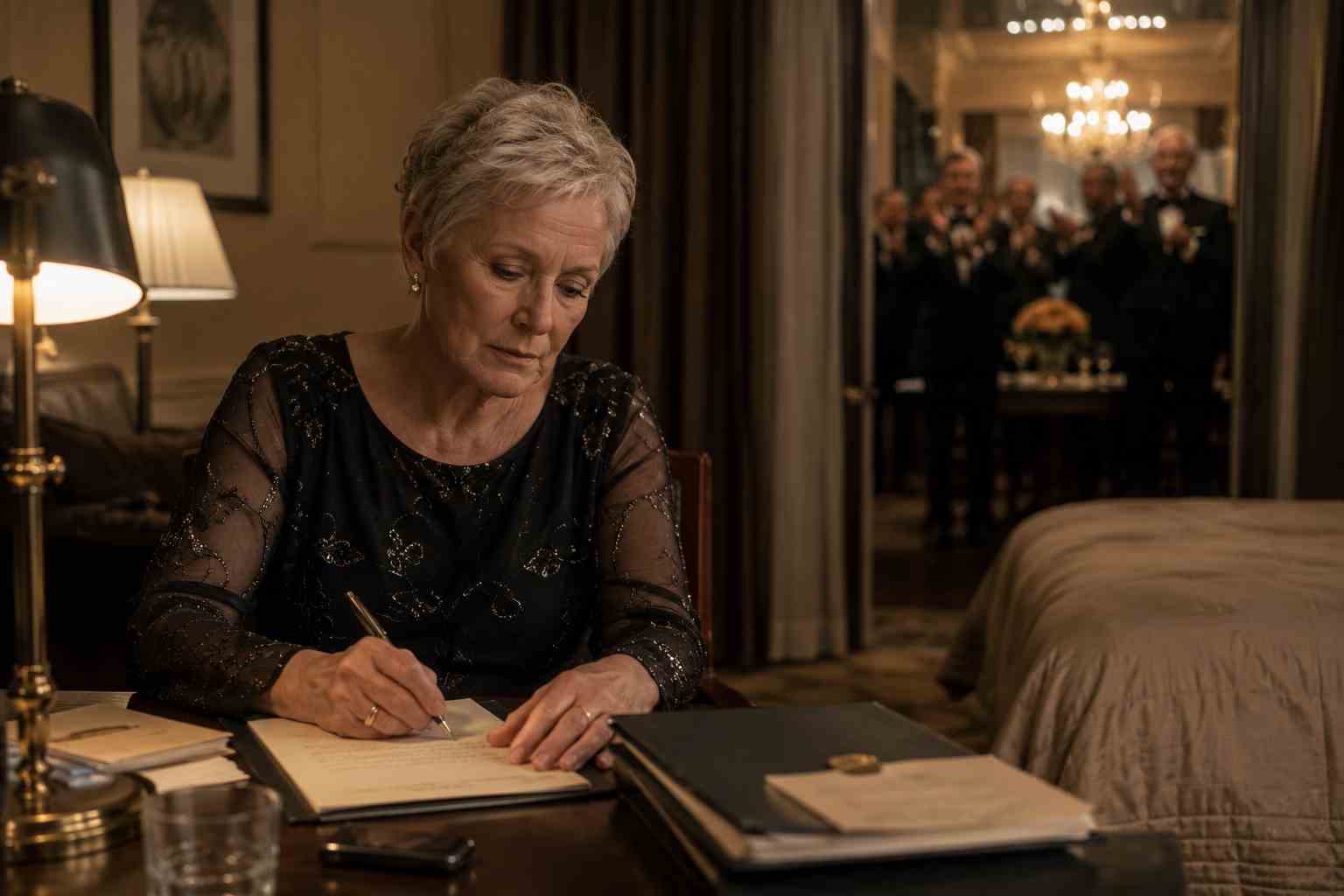
That reaction is part of why so many viewers search for The Wife true story online after watching it.
The film feels real. The emotions feel painfully honest. Joan Castleman does not act like a typical movie character. She feels like someone you may have seen before. A woman smiling politely beside a successful husband while hiding years of disappointment underneath.
The 2017 drama stars Glenn Close as Joan and Jonathan Pryce as her husband Joe Castleman, a celebrated novelist who receives the Nobel Prize in Literature. On the surface, they appear to have the perfect intellectual marriage. But as the story unfolds, uncomfortable truths begin to rise.
Many viewers walk away asking one question:
Was The Wife actually based on a true story?
The short answer is no. The movie is not directly based on one real couple. But the deeper answer is far more interesting because the emotional foundation of the film comes from very real experiences faced by countless women for generations.
That is what makes the story linger in people’s minds long after it ends.
Fast Facts About The Wife
| Detail | Information |
|---|---|
| Movie Title | The Wife |
| Release Year | 2017 |
| Genre | Drama, Literary Drama |
| Director | Björn Runge |
| Based On | Novel The Wife by Meg Wolitzer |
| Main Cast | Glenn Close, Jonathan Pryce, Christian Slater |
| Is It a True Story? | No, but inspired by real social and emotional themes |
| Main Theme | Hidden sacrifice behind public success |
| Setting | Nobel Prize journey in Stockholm |
| Famous Twist | The wife may be the real creative force behind the novels |
| Glenn Close Awards | Golden Globe Winner, Oscar-nominated performance |
| Runtime | Approximately 1 hour 40 minutes |
| Why People Love It | Emotional realism, powerful acting, quiet tension |
| Best Known For | Glenn Close’s unforgettable performance as Joan Castleman |
| Streaming Interest | Popular among viewers searching for psychological marriage dramas |
Where The Wife Really Came From
The Wife was adapted from a 2003 novel written by American author Meg Wolitzer. Years later, Swedish director Björn Runge turned the novel into the acclaimed film starring Glenn Close.
Even though the story is fictional, Wolitzer has openly explained that Joan Castleman was inspired by the long history of talented women whose ambitions were ignored, minimized, or pushed aside while men received recognition.
The story reflects a world where women were often expected to support greatness instead of becoming great themselves.
That idea gives the film its emotional weight.
Joan is not shown as weak or unintelligent. In fact, the movie slowly reveals that she may be the most gifted writer in the marriage. But she lives in a time where female authors struggle to be taken seriously. The film suggests that sacrificing her own identity became the price of survival.
That reality connects the story to real history.
Throughout the 20th century, many female writers faced publishing barriers, sexism, and public dismissal. Some even used male pen names just to get their work read seriously.
The movie never names one specific real-life inspiration, but viewers and critics have compared its themes to literary marriages throughout history where women’s contributions remained invisible.
That is why The Wife feels less like fiction and more like a hidden confession from an entire generation.
The Emotional Core That Made The Film So Powerful
At first glance, the film looks like a Nobel Prize drama filled with elegant dinners, interviews, and formal speeches.
But underneath that polished surface is a story about emotional exhaustion.
Joan spends much of the movie quietly observing her husband. She fixes problems, protects his image, manages his moods, and supports his career. Yet something feels deeply wrong from the beginning.
The tension grows because viewers slowly realize Joan is carrying years of buried resentment.
Glenn Close plays the role with incredible restraint. She does not scream through most of the film. She barely raises her voice. Instead, the pain appears in tiny facial expressions, long silences, and exhausted looks.
That realism is one reason audiences believed the movie might be true.
Real relationships often break quietly before they break loudly.
The movie understands that.
What Is The Twist In The Wife’s Story?
The biggest twist in The Wife is the revelation that Joan may actually be the true creative force behind Joe Castleman’s celebrated novels.
The film strongly suggests that Joe’s literary success depended heavily on Joan’s writing talent, editing, ideas, and emotional labor.
In some interpretations, she practically wrote the books herself.
Joe became the public face. Joan remained invisible.
That revelation completely changes the meaning of the movie. Suddenly, every award ceremony and every public compliment feels uncomfortable. Joe is celebrated worldwide while Joan quietly disappears into the background.
The twist is not presented like a thriller reveal. There is no dramatic courtroom confession or secret recording.
Instead, the truth emerges slowly through emotional cracks in their marriage.
That subtle approach makes it feel more believable.
The movie is less interested in shocking the audience and more interested in asking difficult questions:
- How many women sacrificed their identities for powerful men?
- How often does society reward visibility instead of truth?
- What happens when someone spends decades hiding their own talent?
Those questions are what turned The Wife into such a respected drama.
Why People Compare It To Real Marriages
One reason searches for The Wife true story remain popular is because viewers see echoes of real relationships inside the film.
Over the years, many famous creative couples faced rumors or debates about unequal recognition. History contains examples of wives who acted as editors, researchers, emotional supporters, or even ghostwriters while husbands received most public praise.
The movie taps directly into that uncomfortable historical reality.
It also reflects broader social expectations placed on women during earlier decades.
Joan belongs to a generation where marriage often demanded sacrifice from women first. Career dreams were frequently treated as secondary. Ambition in men was praised. Ambition in women could be criticized.
The film captures that imbalance with painful honesty.
Even viewers who have never worked in publishing understand the emotional truth behind it.
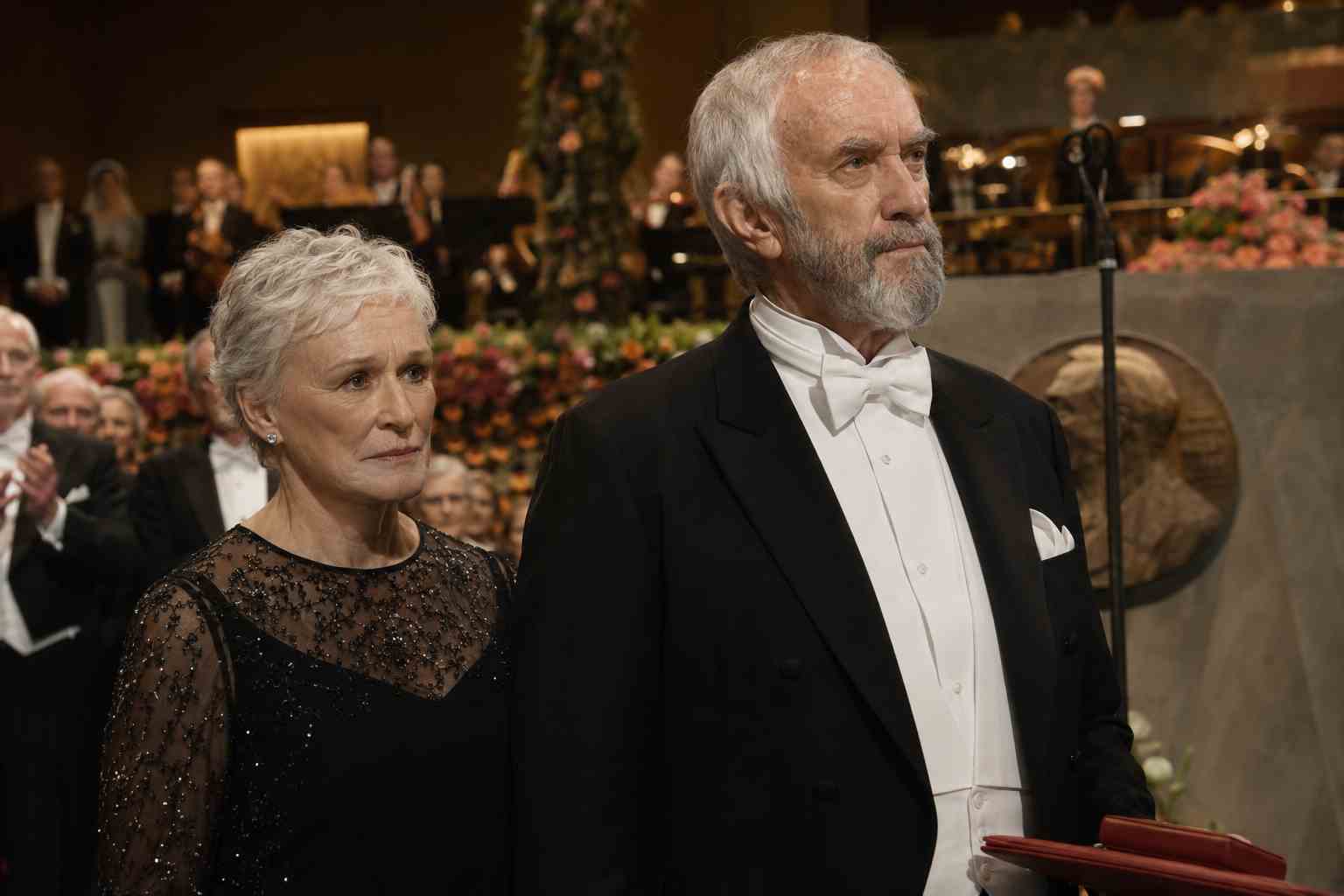
Why Did Charlie And Nicole Divorce?
This question is actually connected to another movie entirely: Marriage Story.
Many search engines accidentally connect relationship-based film questions together because both movies explore unhappy marriages and emotional distance.
In Marriage Story, Charlie and Nicole divorce because years of emotional imbalance, personal sacrifice, and communication problems slowly destroy their relationship.
That theme overlaps with The Wife in an interesting way.
Both films examine what happens when one partner’s identity slowly disappears inside the marriage. Both show how resentment can build quietly over time until it becomes impossible to ignore.
But The Wife approaches the issue from a more restrained and literary perspective. It focuses heavily on gender expectations, public image, and intellectual recognition.
Glenn Close Gave One Of The Best Performances Of Her Career
Much of the film’s success came from Glenn Close.
Critics widely praised her performance as Joan Castleman. Many believed she delivered the best acting work of her career. She won the Golden Globe and Screen Actors Guild Award for the role and received an Academy Award nomination.
Her portrayal feels incredibly human because Joan is not written as purely heroic or purely bitter.
She is complicated.
At times, Joan appears loving. At other moments, she seems emotionally trapped. Sometimes she protects Joe. Sometimes she quietly despises him.
That complexity makes the marriage feel authentic.
Jonathan Pryce also plays Joe carefully. He is arrogant and needy, but he is not shown as a cartoon villain. The movie suggests he genuinely loves Joan even while benefiting from her silence.
That emotional gray area makes the story more believable than a simple good-versus-bad narrative.
The Nobel Prize Setting Matters More Than People Realize
The Nobel Prize backdrop is not just there for elegance.
It represents ultimate public recognition.
Joe Castleman finally receives the world’s highest literary honor while Joan privately wrestles with the possibility that the achievement should partly belong to her.
That contrast drives the emotional pain of the movie.
Public success and private truth begin moving in opposite directions.
The luxurious hotels, formal speeches, interviews, and celebration dinners create a feeling of pressure around Joan. Everywhere she turns, people praise Joe while ignoring the person who may have sacrificed the most.
The setting becomes symbolic.
The brighter Joe shines publicly, the more invisible Joan feels.
What The Movie Says About Identity
At its heart, The Wife is not really about publishing.
It is about identity.
Joan spent decades shaping herself around someone else’s success. Over time, she stopped existing publicly as her own person.
That emotional reality is what makes the film resonate with so many viewers, especially older audiences who recognize similar patterns in real life.
The movie asks a painful question:
What happens when someone spends years helping another person become important while slowly disappearing themselves?
There is no easy answer.
And the film wisely avoids giving one.
Was Joe Castleman Based On A Real Author?
There is no confirmed real-life Nobel Prize-winning writer directly connected to Joe Castleman.
However, critics have noticed similarities between Joe and certain larger-than-life literary figures known for ego, affairs, intellectual arrogance, and public celebrity status.
The character represents a type of famous male author rather than one specific person.
That broad approach helps the movie feel universal.
Instead of turning into a biography, the story becomes a reflection of wider cultural patterns surrounding fame, marriage, and artistic ownership.
Why The Wife Became So Relevant During The #MeToo Era
Although the original novel was written years earlier, the movie arrived during a time when public conversations about gender imbalance and hidden labor became much louder.
The timing mattered.
Audiences saw Joan Castleman as more than just one fictional wife. She became symbolic of women whose contributions were overlooked in workplaces, creative industries, and relationships.
The film does not use loud political speeches to make its point. Instead, it relies on emotional realism.
That subtlety made the message even stronger.
Viewers could feel Joan’s exhaustion without needing lengthy explanations.
So, Is The Wife Based On A True Story?
No, The Wife is not based on one real marriage or historical couple.
But emotionally, socially, and historically, the film draws from very real experiences.
That is why it feels true.
Meg Wolitzer created fictional characters, yet the themes come from generations of women who lived in the shadows of celebrated men. The story reflects real struggles involving recognition, sacrifice, ambition, and identity.
In many ways, the movie works because it tells an emotional truth instead of a literal one.
And sometimes that can feel even more powerful than a traditional true story.
By the end of the film, viewers are not thinking about Nobel Prize ceremonies anymore. They are thinking about silence. Regret. Sacrifice. Lost years. And the painful cost of never receiving credit for who you really are.
That lingering emotional honesty is the real reason people continue searching for The Wife true story long after watching the film.

Jessica Savitch, with a deep passion for journalism, brings her expertise to istruestory.com as a dedicated author. MA in Arts & Journalism.