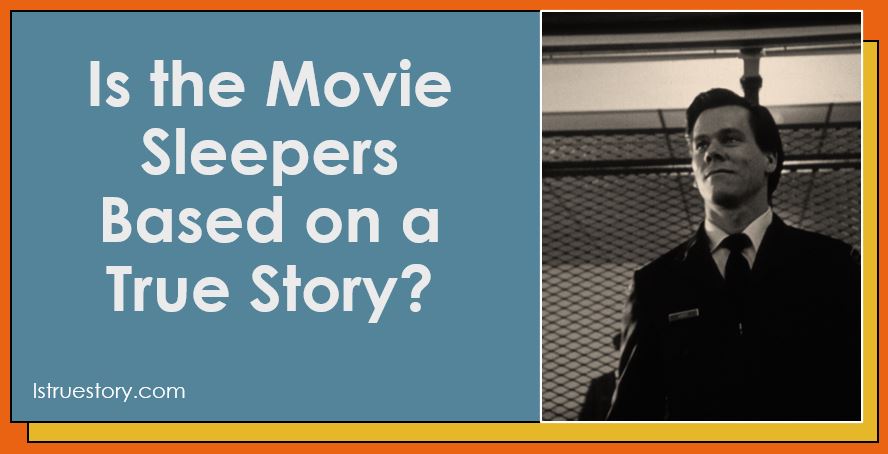
Let’s dive deep into the world of Sleepers from its emotional punch to the controversy around its supposed true origins and find out what’s fact, what’s fiction, and what sits uneasily in between.
What Is Sleepers About on Netflix?
If you’re catching Sleepers on Netflix today, here’s the rundown.
The movie, directed by Barry Levinson, is a crime drama set in 1960s Hell’s Kitchen, New York an era when the neighborhood had grit, attitude, and danger on every corner.
Four boys Shakes, Michael, John, and Tommy grow up playing street games and pulling small pranks. But one summer, a prank goes terribly wrong. They steal a hot dog cart as a joke, and the incident ends with a man seriously injured. The boys are sentenced to the Wilkinson Home for Boys, a juvenile detention center that turns out to be a nightmare.
Inside, they’re brutalized by guards physically, emotionally, and sexually. Years later, as grown men, they cross paths again with their abusers. What follows is a tale of vengeance cloaked in moral dilemma, where justice takes a dark, unpredictable route.
The cast is unforgettable:
- Kevin Bacon as the vicious guard Nokes.
- Brad Pitt as the adult Michael, now a lawyer.
- Jason Patric, Billy Crudup, Ron Eldard, and Robert De Niro round out a powerhouse lineup.
It’s a movie that leaves your conscience uneasy and your heart heavy. Which brings us back to the question did it really happen?
Was the Film Sleepers a True Story?
Here’s where things get tricky. Sleepers is based on the 1995 novel by Lorenzo Carcaterra, who claimed it was inspired by true events from his childhood. When the movie came out a year later, the tagline echoed that same claim: “Based on a True Story.”
But after its release, journalists, police officers, and even court officials began digging and no one could find proof of the crime, the trial, or even the supposed detention center where the abuse happened.
Carcaterra stood by his story, saying he changed names and locations to protect people involved. Yet critics argued that the story was too cinematic, too perfectly structured to be real.
So where does that leave us? Somewhere between memory, myth, and movie magic.
The Real Hell’s Kitchen: Fact or Fiction?
Carcaterra did grow up in Hell’s Kitchen, a working-class neighborhood in Manhattan known for its rough edges. In the 1960s, it was a place where kids roamed the streets and crime was part of daily life.
Many locals have confirmed that juvenile facilities like the fictional “Wilkinson Home for Boys” existed but none matched the name or description in the book. And no records showed four boys being sentenced after a prank gone wrong.
The author once said in an interview:
“It’s true as I remember it. Maybe not in every court record, but true in the way life was.”
That line sums up Sleepers perfectly it’s truth filtered through pain, memory, and cinematic storytelling.
Where Can I View the Movie Sleepers?
If you haven’t seen Sleepers yet (or want to rewatch it with new perspective), it’s available on:
- Netflix (in select regions)
- Amazon Prime Video
- Apple TV+
- YouTube Movies and Google Play
The movie runs for 2 hours 27 minutes long enough to tell a full moral tragedy without rushing its emotional beats.
The Origins: Lorenzo Carcaterra’s Controversial Book
Before the film came the storm.
Carcaterra’s book Sleepers hit shelves in 1995 and shot up the bestseller lists. He insisted it was nonfiction, claiming his own childhood and his friends’ trauma inspired it.
But when reporters started asking for documents or names, things didn’t add up.
- No official records of the accident that led to the boys’ arrest.
- No trial transcripts.
- No trace of the “Wilkinson Home.”
Even Barry Levinson, the director, later said he treated the story as “true in emotion, not necessarily in documentation.”
The controversy only made people more curious and the movie more powerful.
Behind the Camera: Barry Levinson’s Vision
Barry Levinson wasn’t new to emotional storytelling. He directed Rain Man and Good Morning, Vietnam both movies that mix morality and humanity.
In Sleepers, Levinson crafts two contrasting halves:
- The first half captures the boys’ innocence the long summer days, the street laughter, the false sense of safety.
- The second half is the reckoning revenge mixed with reflection, showing how trauma changes people.
The film’s muted color palette, the slow pacing, and the haunting score by John Williams amplify the weight of memory. It’s not just about what happened it’s about what lingers.
Who Was the Father of Carol’s Baby in Sleepers?
One of the movie’s most debated mysteries involves Carol, played by Minnie Driver. She’s the childhood friend who reconnects with the boys as adults.
In the film, it’s heavily implied that John (Ron Eldard) is the father of her child, though the movie never states it directly. Their quiet understanding, her emotional connection to him, and the way she supports the group suggest an unspoken bond one born out of shared pain rather than romance.
That ambiguity is classic Levinson. He leaves emotional threads untied because life rarely gives perfect closure.
The Themes: Justice, Revenge, and Lost Innocence
Few films hit the emotional trifecta like Sleepers.
It’s part courtroom drama, part coming-of-age tragedy, and part moral puzzle.
The story forces us to ask: If the system fails you, do you have the right to take justice into your own hands?
For Michael (Brad Pitt), a lawyer who manipulates the trial to avenge his friends, the answer is both yes and no. He wins the case, but the victory feels hollow haunted by what they lost in their youth.
Levinson doesn’t glorify revenge. He lets silence and grief speak louder than bullets or courtroom cheers.
And maybe that’s why audiences still remember Sleepers decades later because it isn’t just a story of violence. It’s a story of broken innocence and the impossible search for redemption.
Sleepers and the Question of Truth
The debate over Sleepers’ authenticity still sparks arguments nearly 30 years later.
Some believe Carcaterra exaggerated real events blending truth with narrative technique. Others think it’s entirely fictional, packaged as true to give emotional weight.
The author himself never wavered. He told The New York Times:
“I never expected people to believe it completely. But I lived it. That’s all I can say.”
If that’s true, it’s both heartbreaking and courageous. If not, it’s one of cinema’s most convincing illusions.
Critical Reception and Cultural Impact
When Sleepers hit theaters in 1996, it divided critics:
- Some praised its moral depth and acting.
- Others found its tone uneven half nostalgic, half brutal.
Roger Ebert gave it three and a half stars, calling it “a movie of great performances and a kind of anguished morality.”
The film grossed about $165 million worldwide, proving that audiences connected with its story real or not.
Over time, Sleepers earned cult status among viewers who appreciate its emotional honesty. It’s often cited alongside films like Mystic River and Stand by Me for its portrayal of childhood trauma and moral consequence.
Why It Feels So Real
Even if Sleepers isn’t strictly factual, it feels real because everything about it mirrors genuine human experience guilt, friendship, revenge, and regret.
Barry Levinson, coming from Baltimore himself, understood working-class hardship. His direction adds authenticity through texture the flickering streetlights, the echoes in empty hallways, the slow motion of time in trauma.
Every performance bleeds sincerity. You don’t just watch Sleepers; you absorb it.
Behind the Scenes Trivia
Here are a few details movie fans love to know:
- Robert De Niro agreed to play Father Bobby because he felt it was “a story about what faith does when systems fail.”
- The prison scenes were shot using dim, natural lighting to heighten realism.
- Kevin Bacon later said playing Nokes was one of his hardest roles because he had to “embody cruelty without ever justifying it.”
- Barry Levinson refused to show graphic violence. He believed “suggestion hurts more than depiction.”
These choices give Sleepers its chilling realism without turning it into shock cinema.
Did It Really Happen?
So, is the movie Sleepers based on a true story?
Here’s the honest answer: it’s based on claims of true events, but there’s no hard evidence to prove they happened.
Think of it this way Sleepers may not be true in the courtroom sense, but it’s true in the emotional one. It gives voice to real issues like abuse, guilt, and systemic failure. Whether or not the specific story occurred, countless others like it did.
That’s why the movie still resonates: it feels like something that could have happened and maybe that’s enough.
The Legacy of Sleepers
Almost three decades later, Sleepers still stands tall among 90s dramas. Its legacy lies in its ability to blur the line between memory and myth, forcing us to question what “truth” even means in storytelling.
Every generation discovers it anew on streaming platforms, asking the same question you are right now Did it really happen?
And that’s the genius of Sleepers: it traps you in that uncertainty. You want to believe, you fear it might be real, and you hope it isn’t.
My Perspective
From a cinematic lens, Sleepers is one of those rare movies that doesn’t need CGI or spectacle to punch you in the gut. It relies on pure human storytelling raw performances, heavy silence, and moral tension so thick you could slice it with a knife.
Whether or not it’s true doesn’t change what it achieves. The film makes you feel something powerful, something unsettling and in cinema, that’s the highest form of truth there is.
So next time someone asks, “Is the movie Sleepers based on a true story?”, you can tell them:
“Maybe not in fact, but absolutely in feeling.”
I am Jeremy Jahns – Your Cinematic Explorer
Immerse in movie reviews, Hollywood insights, and behind-the-scenes stories.