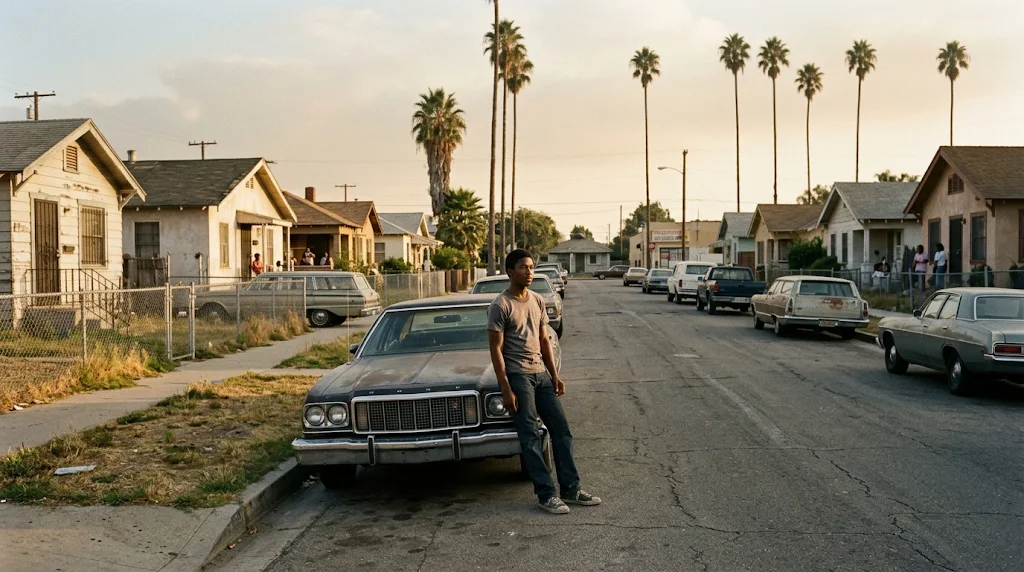
That question stays with many viewers after watching Snowfall. The FX crime drama follows Franklin Saint, a smart young man who turns a small drug business into a powerful criminal empire. His rise brings wealth and influence. But it also destroys relationships, changes his neighborhood, and eventually threatens everything he loves.
The story feels painfully real. The streets, the people, and the growing fear all seem connected to something that actually happened.
So, was Snowfall based on a true story?
Yes, but not in the way you might expect. Snowfall is a fictional television series inspired by the real crack cocaine epidemic that changed Los Angeles during the 1980s. Franklin Saint and CIA operative Teddy McDonald are fictional characters, but the historical setting and many of the problems shown in the series are real.
The show also draws from the experiences of people who lived through that period, including its creator, John Singleton.
To understand what really happened, we need to separate the lives of the fictional characters from the history that inspired them.
How Much of Snowfall Actually Happened?
Snowfall premiered on FX on July 5, 2017, and ended on April 19, 2023, after six seasons.
Created by John Singleton, Eric Amadio, and Dave Andron, the series takes viewers back to Los Angeles in 1983.
America was changing. Cocaine was becoming increasingly available, and crack cocaine would soon cause devastating harm in communities across the country.
In Snowfall, we see these changes through different lives.
Franklin Saint enters the drug business hoping to become wealthy. Teddy McDonald, a CIA operative, participates in a secret cocaine operation. Other characters become involved in organized crime, family struggles, and violence.
The characters’ paths eventually connect.
However, there was no single documented criminal empire that followed Franklin Saint’s exact storyline.
The writers created fictional people to explore a real historical period.
In a 2017 interview with TheWrap, Dave Andron explained that the show’s creators researched different accounts of how cocaine entered Los Angeles. They consulted people familiar with the period and worked to make the story feel authentic.
That research helped build the world of Snowfall. It did not turn the series into a documentary.
Is Franklin From Snowfall Based on a Real Person?
No. Franklin Saint is not a real historical person. He is a fictional character played by British actor Damson Idris.
Still, Franklin’s story has several connections to real life.
At the beginning of the series, Franklin is a 19-year-old from South Central Los Angeles. He is intelligent, ambitious, and determined to improve his financial situation.
He also attends school outside his neighborhood, giving him a view of the economic differences between wealthy and working-class families.
This detail is especially important.
John Singleton experienced something similar while growing up.
In a 2017 Los Angeles Times interview, Singleton remembered traveling from his neighborhood to attend school in the San Fernando Valley.
Seeing wealthier communities helped him understand that people living only a short distance apart could have very different opportunities.
Franklin shares that experience.
But their lives take different directions.
Singleton became a filmmaker who told stories about Los Angeles. Franklin enters the cocaine trade and becomes increasingly willing to hurt others to protect his business.
Franklin reflects a mixture of Singleton’s childhood memories, real drug dealers, and fictional storytelling.
He represents the kind of young person whose future could change dramatically depending on the choices and pressures around him.
Who Is Franklin Saint Based on in Real Life?
The name most often connected to Franklin Saint is “Freeway” Ricky Ross, a real Los Angeles drug trafficker who became notorious during the 1980s.
The similarities are difficult to ignore.
Both men became involved in cocaine distribution in South Los Angeles. Both built large criminal operations. Both accumulated wealth while their neighborhoods experienced growing problems linked to drugs.
Yet similarities do not mean the stories are identical.
Was Freeway Ricky Ross the Real Franklin Saint?
Ricky Donnell Ross, better known as Freeway Ricky Ross, became a major figure in the Los Angeles cocaine trade during the 1980s.
His operations expanded far beyond a small neighborhood business.
According to the U.S. Department of Justice’s investigation, Ross obtained large quantities of cocaine through suppliers that included Oscar Danilo Blandón, a Nicaraguan drug trafficker.
Ross’s real activities later became part of a major controversy involving drug trafficking and the Nicaraguan Contra movement.
That history has clear similarities to the world shown in Snowfall.
However, the creators did not identify Franklin as a direct recreation of Ross.
In an account published by LEVEL Man, co-creator Eric Amadio explained that he and Singleton deliberately chose not to make the Freeway Ricky Ross story. Instead, they wanted to explore a broader history involving several neighborhood figures.
Ross has publicly disagreed with that position.
He has claimed that Snowfall borrowed from his life and that he should have received recognition or compensation for his contribution to the underlying story.
Those are Ross’s claims, not an established finding that Franklin was copied directly from him.
This distinction matters.
Freeway Ricky Ross is one of the strongest real-life comparisons to Franklin Saint, but Franklin is not a verified one-to-one portrayal of Ross.
Other People Who May Have Inspired Franklin
Freeway Ricky Ross was not the only major figure in Los Angeles drug history.
In a 2023 Andscape interview, writer and producer Cheo Hodari Coker described Snowfall as a combination of multiple real experiences.
He connected the show’s broader inspiration to figures including Michael “Harry-O” Harris, Brian “Waterhead Bo” Bennett, and Thomas “Tootie” Reese, alongside Ricky Ross.
These men had different personal histories and connections to the drug trade.
Their stories help explain why Snowfall should be viewed as a fictional portrait of an era rather than the biography of one criminal.
Who Is the Real Teddy From Snowfall?
Teddy McDonald is one of the most mysterious characters in Snowfall.
Played by Carter Hudson, Teddy is a CIA operative involved in a secret operation to supply cocaine and support anti-communist forces in Central America.
He becomes a central part of Franklin’s rise.
His storyline also raises one of the most disturbing questions in the series: Could a government intelligence operation have helped fuel America’s crack cocaine epidemic?
But there is no verified real CIA operative identified as the direct inspiration for Teddy McDonald.
The character is fictional.
According to FX’s official character description, Teddy runs an off-the-books operation connected to the fight against communism.
This storyline draws on real Cold War history and long-standing allegations involving the CIA and Nicaraguan Contra supporters.
However, the precise operation shown in the series has not been established as a historical event.
Teddy’s personality, relationships, and actions were created for dramatic storytelling.
He helps the audience explore what could happen when secret political goals become connected to criminal markets.
But his actions should not be treated as proof of what an actual CIA employee did.
What Drug Lord Is Snowfall Based On?
If you are looking for one real drug lord most closely associated with Snowfall, Freeway Ricky Ross is the clearest answer.
His rise in the Los Angeles cocaine trade closely resembles important parts of Franklin’s story.
Ross built a major drug distribution network during the same decade in which the series takes place.
His life also became connected to the wider debate about cocaine suppliers, Contra supporters, and government investigations.
But Snowfall includes other influences.
It explores the experiences of street-level dealers, organized crime networks, families, and people caught between powerful institutions.
That is why Franklin’s journey cannot be explained by looking at Ross alone.
The show uses one character to tell a much bigger story.
It asks what happens when a young person gains access to wealth but becomes trapped by the business that created it.
Franklin’s actions are fictional. The social conditions that make his journey believable are not.
The Real Crack Cocaine Epidemic in 1980s Los Angeles
To understand the truth behind Snowfall, we need to understand the crisis that shaped its setting.
During the 1980s, crack cocaine spread across several American cities, including Los Angeles.
Crack is a smokable form of cocaine. Its rapid effects and relatively low price per purchase helped it spread through street-level drug markets.
The consequences were serious.
Addiction, violence linked to the illegal drug trade, and aggressive law enforcement responses affected many communities.
In neighborhoods already dealing with poverty and limited economic opportunities, the crisis created even more hardship.
Families struggled to protect loved ones. Young people faced dangerous choices. Some residents became involved in the drug trade while others experienced its effects without ever participating.
This is where Snowfall becomes more than a crime drama.
The series shows how the pursuit of money can damage friendships, family relationships, and entire neighborhoods.
Franklin initially views cocaine as a business opportunity.
As the story continues, the human cost becomes impossible to ignore.
People around him experience addiction, fear, and loss.
These effects reflect real problems experienced by communities during the crack epidemic, even though the particular events involving Franklin and his family are fictional.
The historical record also shows that the epidemic cannot be traced to one dealer, one neighborhood, or one supplier.
The cocaine trade involved many different networks, and crack spread through several markets.
That complexity is important when judging how closely Snowfall follows history.
Did the CIA Really Help Spread Cocaine?
This is one of the most controversial questions raised by the series.
And it deserves a careful answer.
During the 1980s, the United States supported the Contras, armed groups fighting Nicaragua’s Sandinista government.
Over time, reports emerged that some people connected to the Contra movement were also involved in drug trafficking.
Those concerns were not invented by Snowfall.
A U.S. Senate investigation published in 1989 found substantial evidence of drug trafficking involving individual Contra supporters, suppliers, pilots, and others connected to the movement.
The situation received renewed attention in 1996 when journalist Gary Webb published his Dark Alliance series in the San Jose Mercury News.
Webb examined connections between Los Angeles cocaine trafficking, Nicaraguan suppliers, and Contra supporters.
His reporting brought widespread public attention to questions about U.S. intelligence agencies and the drug trade.
However, important parts of the broader allegations remained disputed.
What Did Official Investigations Find?
The U.S. Department of Justice and the CIA conducted investigations following the controversy.
The Department of Justice Inspector General’s report confirmed that certain major cocaine traffickers had also supported the Contras to some extent.
But investigators did not substantiate the central allegation that the CIA protected the Los Angeles trafficking network or that a single network caused the crack epidemic.
The CIA’s Inspector General also investigated allegations involving the agency and Contra-related cocaine trafficking.
Its findings did not establish that the CIA, as an organization, operated the cocaine-selling conspiracy portrayed in Snowfall.
This does not mean every concern about drug trafficking and foreign policy was imaginary.
Evidence of wrongdoing by people connected to Contra support networks existed.
But drug trafficking by Contra-linked individuals is not the same thing as proof that the CIA deliberately created America’s crack epidemic.
That difference is essential.
How Snowfall Changes This History
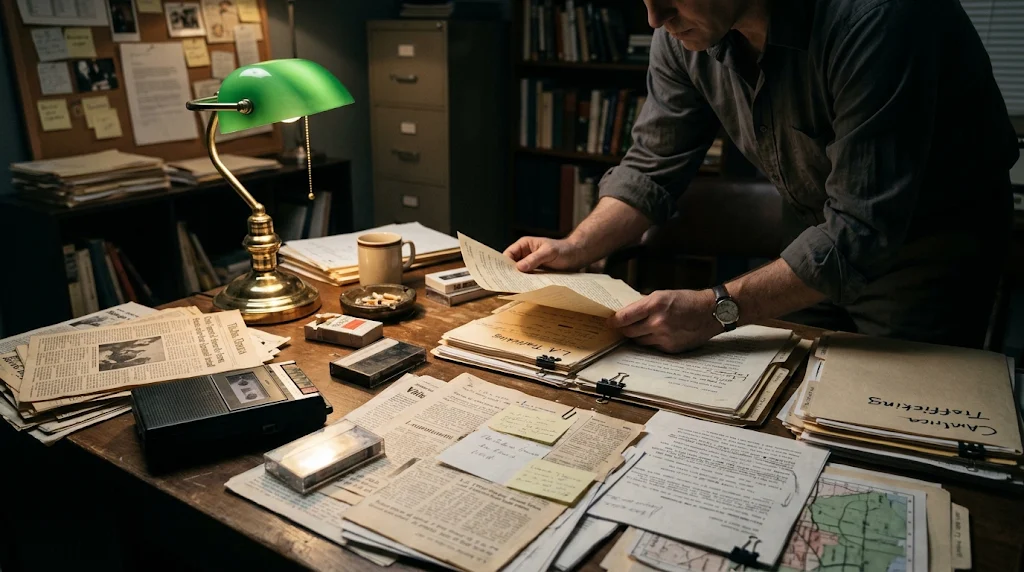
The series turns the controversy into a dramatic storyline.
Teddy becomes the face of secret government operations. Franklin becomes a major distributor benefiting from the cocaine supply.
Their relationship gives viewers a clear story to follow.
Real history was more complicated.
Different traffickers, political groups, intelligence officials, and law enforcement agencies played different roles.
Some allegations were supported by evidence. Others were disputed or could not be established.
Snowfall combines these questions into a fictional account rather than attempting to reproduce every verified event.
The result is gripping television, but it should not replace historical research.
How John Singleton’s Childhood Shaped Snowfall
John Singleton was not simply a filmmaker interested in crime stories.
He grew up in South Los Angeles and watched his surroundings change.
That experience gave him a personal connection to the history he wanted to explore.
Before creating Snowfall, Singleton directed Boyz n the Hood, the 1991 film that examined friendship, violence, and the difficulties facing young people in South Central Los Angeles.
Years later, Snowfall allowed him to return to similar concerns while exploring an earlier period.
In a Washington Post interview, Singleton described remembering the neighborhood’s beauty, palm trees, and children playing outside.
He wanted viewers to understand that these were living communities with families, friendships, and hopes for the future.
That perspective shapes Snowfall.
The show does not begin with a neighborhood that exists only to represent crime.
It shows people with ordinary lives before drug trafficking increasingly changes their surroundings.
Singleton understood that the damage was not limited to people who sold or used drugs.
The wider community also paid a price.
He died in April 2019, before Snowfall reached its final season.
The remaining cast and creative team continued the series, which concluded in 2023.
His influence remained central to the story until the end.
What’s Real and What’s Fictional in Snowfall?
The difference becomes easier to understand when we compare the show’s biggest elements with actual history.
| Snowfall storyline | Historical truth |
|---|---|
| Franklin Saint becomes a powerful drug dealer | Fictional character influenced by real Los Angeles drug history |
| Teddy McDonald supplies cocaine through a secret operation | Fictional CIA character; the exact operation is not established history |
| Crack cocaine spreads through Los Angeles | Real historical development during the 1980s |
| Drug traffickers have connections to Contra supporters | Some connections were documented by official investigations |
| Franklin’s criminal empire grows and collapses | Fictional story, with similarities to real drug trafficking careers |
| Families and neighborhoods suffer from the drug crisis | Reflects real social consequences of the crack epidemic |
The setting and historical crisis are real. The central characters and their individual storylines are dramatized.
That is the most reliable way to understand the series.
Why Snowfall’s Story Still Matters
There is a reason Snowfall continues to leave such a strong impression on viewers.
It begins with a familiar dream.
A young man wants to escape financial struggle. He wants security, respect, and a better life.
At first, Franklin’s ambition may seem understandable.
But each decision pulls him deeper into a world where money and control become more important than the people around him.
The tragedy is not simply that Franklin becomes involved in crime.
It is that his idea of success changes until he can no longer see what he is losing.
That story connects to the real experiences of many people affected by the cocaine trade.
Behind the historical headlines were parents, children, friendships, businesses, and neighborhoods.
Some people made destructive choices. Others suffered from circumstances they could not control.
Snowfall uses fiction to bring attention to those consequences.
It also reminds us that understanding history requires asking difficult questions, especially when claims involve powerful institutions and communities that have experienced lasting harm.
The Real Story Behind Snowfall Is Bigger Than Franklin Saint
So, was Snowfall based on a true story?
Snowfall was inspired by real historical events, but it is not a direct retelling of one person’s life.
Franklin Saint is fictional, although his rise resembles the experiences of real drug traffickers such as Freeway Ricky Ross. Teddy McDonald is also fictional, created around a controversial chapter of American history.
The crack cocaine epidemic, the suffering experienced by communities in Los Angeles, and documented drug trafficking connections involving some Contra supporters were real.
John Singleton brought these subjects together using memories from his own childhood and research into the period.
Perhaps the most powerful part of Snowfall is not whether Franklin really existed.
It is the knowledge that countless real people lived through the social crisis surrounding his fictional world.
They had families, dreams, and futures that mattered.
And for many of them, the consequences of that era lasted long after the 1980s ended.
That is the history behind Snowfall, and it is what makes the series more than an ordinary crime drama.

I am Jeremy Jahns – Your Cinematic Explorer
Immerse in movie reviews, Hollywood insights, and behind-the-scenes stories.