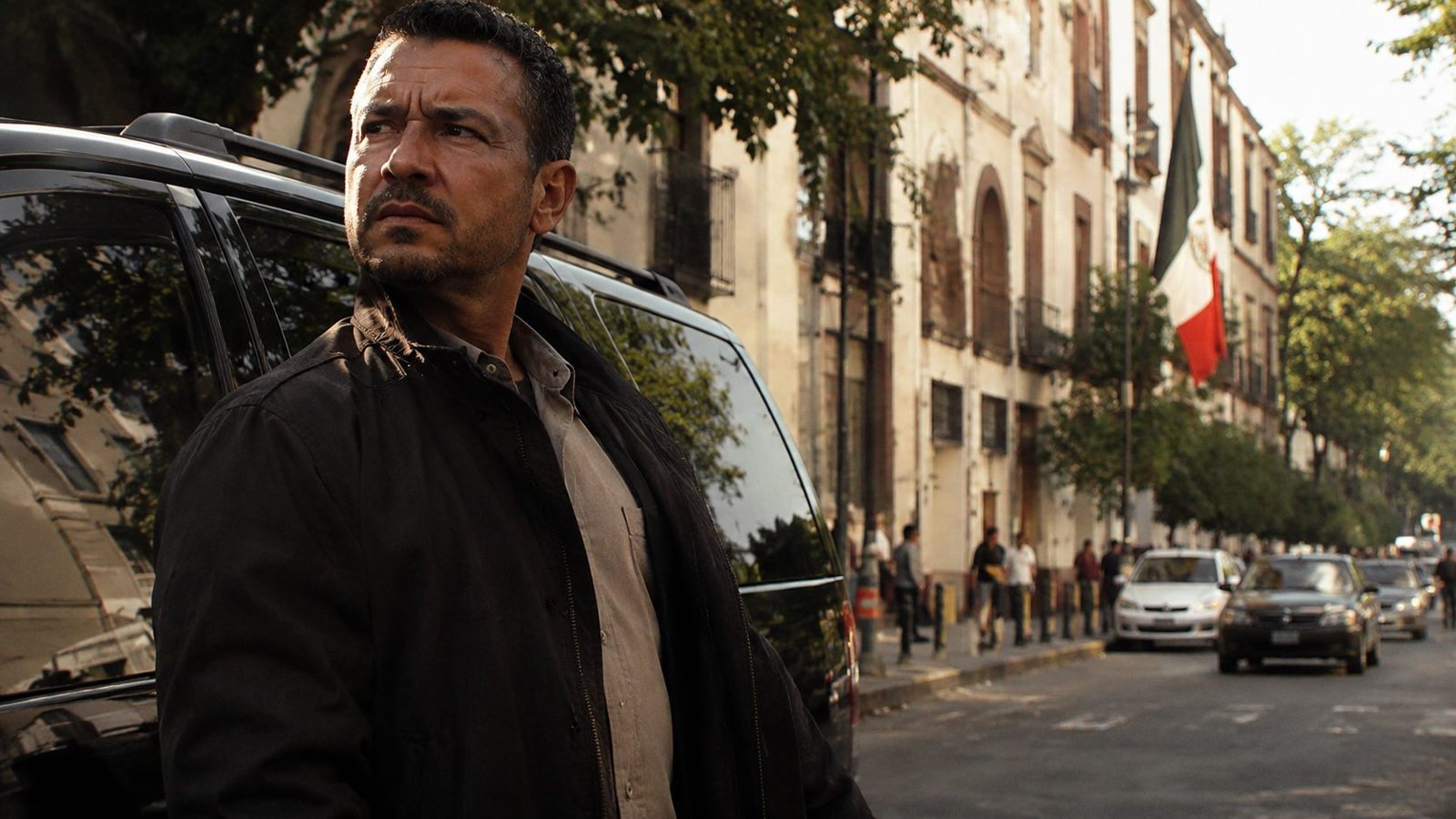
In the 2004 thriller Man on Fire, Denzel Washington plays a broken former operative who finds a reason to live when he becomes the bodyguard of a little girl named Pita. When kidnappers take her away, his quiet world turns into a desperate search for answers.
The film feels painfully real. The fear, corruption, and bond between Creasy and Pita make you wonder whether someone actually lived through these events.
So, is the John Creasy Man On Fire true story real?
The short answer is no. John Creasy is a fictional character created by novelist A. J. Quinnell. However, the story was inspired by real kidnappings, including the 1973 abduction of John Paul Getty III in Italy. The filmmakers also used details from actual kidnapping cases in Mexico.
And the story behind the novel is almost as surprising as the film itself.
Is John Creasy Based on a True Story?
John Creasy was not a real CIA agent or bodyguard whose life was recreated in Man on Fire. There is no verified account of a man named John Creasy carrying out the rescue and revenge mission shown in the movie.
His story began in 1980, when British author Philip Nicholson published Man on Fire under the pen name A. J. Quinnell.
The original novel introduced Marcus Creasy, a former French Foreign Legion soldier and mercenary who had lost his sense of purpose. The 2004 film changed his first name to John and presented him as a former American intelligence operative.
But Quinnell did not invent everything from nothing.
He had traveled widely and met people whose experiences helped shape the character. He also followed kidnapping cases that revealed how money, fear, and family loyalty could become tangled in terrible ways.
According to Film Stories’ investigation into the novel, Quinnell combined those influences to build his fictional story.
That distinction matters. Man on Fire is inspired by real events, but it is not a biography or a documentary.
The Real Kidnapping That Helped Inspire Man on Fire
Long before Denzel Washington appeared on screen, a wealthy family in Italy faced a nightmare that captured international attention.
The kidnapping of John Paul Getty III in 1973
On July 10, 1973, 16-year-old John Paul Getty III was kidnapped in Rome.
He was the grandson of billionaire oil businessman J. Paul Getty. His kidnappers demanded an enormous ransom, believing the family had enough money to pay.
But his grandfather refused at first.
The older Getty feared that paying would encourage criminals to target his other grandchildren. Meanwhile, the teenager remained in captivity.
Months passed. The kidnappers eventually sent part of the boy’s ear to a newspaper as proof of how serious their threats had become.
The family finally arranged a ransom payment, and Getty III was released in December 1973, nearly five months after his abduction.
He survived, but the experience left lasting damage.
The Los Angeles Times’ account of Getty III’s life documents the kidnapping, the difficult ransom negotiations, and the years that followed.
Quinnell later identified the Getty kidnapping as one of the incidents that influenced his novel.
The connection was not a specific bodyguard or rescue operation. It was the terrifying position of a child caught between criminals and a family’s decisions.
Another kidnapping story that troubled the author
A second account also influenced Quinnell.
In remarks attributed to the author, he recalled a wealthy Singaporean businessman whose eldest son was kidnapped by a criminal gang during the 1960s.
The father reportedly refused to pay the ransom because he feared that paying would put his remaining children at risk. According to Quinnell’s account, the kidnapped boy was killed.
The story raised a painful question: What happens when protecting an entire family seems to conflict with saving one child?
Quinnell used that moral tension in his fiction.
However, the details of this Singapore kidnapping are mainly known through accounts of the author’s recollections. They should not be treated as a fully independently verified case history.
Together, these stories help explain why kidnapping became the emotional center of Man on Fire.
How a Chance Meeting With the Mafia Changed the Novel
The most unusual part of the book’s creation had nothing to do with a movie studio.
Quinnell was traveling from Tokyo to Hong Kong when an elderly passenger became seriously ill during the flight.
He helped arrange medical attention for the man. Later, Quinnell learned that the passenger had connections to an influential Italian family.
That encounter opened an unexpected door.
When Quinnell began researching his thriller, those connections helped him meet people familiar with organized crime in Italy.
He visited Sicily and learned more about a world in which kidnapping, money, and violence could become part of ordinary life.
In a rare 2004 interview with The Observer, published by The Guardian, Quinnell described how the encounter helped him research the book.
This did not turn his novel into a factual report. But it gave him access to experiences he could draw upon while imagining his characters and their surroundings.
It also explains why the story often feels more grounded than a typical action thriller.
Who Is John Creasy in Man on Fire?
In Tony Scott’s 2004 film, John Creasy is a former CIA operative struggling with alcohol, guilt, and memories of his violent past.
His longtime friend Paul Rayburn, played by Christopher Walken, helps him find work as a bodyguard in Mexico City.
Creasy is hired to protect Lupita Ramos, known as Pita, the young daughter of a wealthy family.
At first, he keeps his distance.
He does not want to become emotionally involved with the child or her parents. His job is simple: protect Pita and keep her safe.
But Pita is curious, cheerful, and persistent.
She slowly breaks through his emotional walls. He begins helping her with swimming and discovers that caring for another person gives his life meaning again.
Their friendship becomes the heart of the movie.
Then Pita is kidnapped.
Creasy is badly wounded while trying to protect her. When he recovers, he believes she has been killed and begins hunting those responsible.
He discovers a frightening network involving kidnappers, corrupt officials, and people close to the family.
Washington’s performance makes Creasy feel like a man struggling between two versions of himself: the violent person he once was and the caring protector Pita helped him become.
That emotional struggle is fictional, even though the world surrounding it borrows from real events.
Which Parts of Man on Fire Were Inspired by Reality?
The filmmakers did more than adapt Quinnell’s novel.
They also researched Mexico City’s kidnapping problem during the period in which the movie was made.
The danger of kidnapping in Mexico
The original book was set in Italy, where ransom kidnappings had been a serious concern.
Director Tony Scott moved the 2004 story to Mexico City because kidnapping had become an important issue there.
The movie reflects that period through wealthy families hiring security, criminals targeting children, and fears about corrupt police officers.
Those concerns had real historical foundations.
However, the film’s portrayal of Mexico City is a dramatic thriller setting. Its depiction of widespread corruption should not be mistaken for an accurate description of everyone who lived or worked there.
The kidnapping gang behind some of the film’s details
According to AMC’s production notes for Man on Fire, the filmmakers drew inspiration from the Arizmendi kidnapping gang, notorious for violent ransom crimes in Mexico.
The same production notes say the filmmakers used elements from a real kidnapping involving a girl whose family believed she had died.
Those details help explain why the fictional kidnapping feels convincing.
But the production notes do not provide enough identifying information to verify that girl’s entire case independently.
The film is therefore a combination of real-world research, fictional characters, and dramatic changes.
John Creasy’s revenge was invented
This is where the difference between fact and fiction becomes clear.
There is no documented real-life investigation matching Creasy’s complete revenge mission. His interrogation methods, confrontations, discoveries, and final sacrifice were created for the story.
Real kidnapping investigations involve evidence, police work, negotiations, and the lasting suffering of victims and families.
The film turns those experiences into a personal action narrative with a powerful emotional payoff.
What Happened to John Creasy at the End?
Spoiler warning: This section reveals the ending of the 2004 movie and the original novel.
Near the end of the film, Creasy discovers that Pita is still alive.
The kidnappers agree to release her in exchange for Creasy and another man.
Creasy accepts.
In one of the movie’s most emotional moments, Pita crosses a bridge and returns to her mother while Creasy gives himself up.
Already seriously wounded, he dies during the journey with his captors.
The ending completes his transformation.
A man who once seemed unable to care about his own life gives that life to protect someone else.
But this was not the ending of Quinnell’s book.
The book tells a different story
In the original novel, the kidnapped girl, Pinta Balletto, dies. Creasy survives his revenge mission and eventually begins another chapter of his life.
The 2004 film reverses these outcomes.
Pita lives, while Creasy dies.
This change gives the movie a different emotional meaning. Instead of ending with the child’s death and the bodyguard’s survival, the film makes Creasy’s sacrifice its final act of love.
Neither ending is a record of what happened to a real John Creasy.
They are different fictional ways of exploring grief, loyalty, and redemption.
Did Denzel Washington Get Along With Dakota Fanning?
Yes. Their relationship was warm and respectful, both during the making of Man on Fire and in the years afterward.
Dakota Fanning was only nine years old when she worked with Washington on the film.
Despite their age difference, the two developed an easy working relationship.
AMC’s production notes describe them playing table tennis together between scenes. They also became comfortable improvising during filming.
Washington was reportedly impressed by Fanning’s acting ability.
Their connection did not disappear when the movie ended.
Their reunion nearly 20 years later
In 2023, Washington and Fanning appeared together again in The Equalizer 3.
This was their first film together since Man on Fire.
During an Entertainment Tonight interview, Fanning explained that one of Washington’s daughters had become one of her closest friends.
That friendship helped them remain connected over the years.
Fanning also spoke warmly about Washington’s kindness and said she valued the rare chance to work with him at two very different stages of her life.
Their genuine respect adds another layer to the way audiences remember Creasy and Pita.
While the characters are fictional, the connection between the performers was real.
What Happened to the Real Whip Whitaker?
Some viewers searching for the John Creasy true story also ask about Whip Whitaker, another troubled character played by Denzel Washington.
But these are two entirely separate films.
Whip Whitaker is the central character in Flight, a 2012 drama directed by Robert Zemeckis.
Washington plays an airline pilot who performs an extraordinary emergency landing while struggling with alcohol addiction.
There was no single real pilot named Whip Whitaker whose life the movie directly recreated.
According to the American Film Institute’s production history of Flight, screenwriter John Gatins drew from his own experiences with addiction while developing the character.
The movie’s crash sequence also incorporated details inspired by a real aviation accident.
Whip’s personal story, however, was fictional.
At the end of Flight, he admits his wrongdoing and accepts responsibility rather than continuing to hide behind his reputation as a hero.
The similarity to Creasy is emotional rather than historical.
Both characters are skilled men damaged by addiction and regret. Both eventually face a choice that forces them to confront who they have become.
Man on Fire: What Is Real and What Is Fiction?
| Story element | What the evidence supports |
|---|---|
| John Creasy | Fictional character created by A. J. Quinnell |
| Pita Ramos | Fictional child, with aspects of her kidnapping inspired by real events |
| Getty family kidnapping | Real crime in Italy in 1973 |
| Mexico City kidnapping concerns | Real historical context used by the filmmakers |
| Corrupt kidnapping networks | Inspired partly by actual criminal cases |
| Creasy’s revenge mission | Fictional action storyline |
| Creasy’s death | Fictional ending created for the 2004 film |
| Washington and Fanning’s bond | Real professional and personal connection |
The important lesson from this comparison is that inspiration does not mean historical accuracy.
A writer can use real fears, crimes, and human experiences to create characters who never existed.
That is exactly what happened with Man on Fire.
Questions Viewers Still Ask
Was Man on Fire based on a real CIA agent?
No. There is no verified real CIA agent identified as the direct model for Denzel Washington’s John Creasy. The character grew out of Quinnell’s fictional former mercenary, alongside influences from people the author encountered.
Was Pita Ramos a real kidnapped child?
Pita Ramos was fictional. AMC’s production notes indicate that part of her kidnapping storyline was inspired by a real case, but Pita’s identity, relationship with Creasy, and rescue were written for the film.
Why was Man on Fire set in Mexico instead of Italy?
The novel takes place in Italy, but Tony Scott moved the 2004 film to Mexico City to reflect the kidnapping concerns of that period. The change also gave the movie its distinctive urban setting and atmosphere.
Did John Creasy survive in real life?
There was no real John Creasy whose fate could be documented. In the 2004 movie, he dies after exchanging himself for Pita. In Quinnell’s original novel, Creasy survives.
Was there another Man on Fire movie before Denzel Washington’s version?
Yes. The first film adaptation appeared in 1987, directed by Élie Chouraqui and starring Scott Glenn as Creasy. Tony Scott’s better-known version arrived in 2004.
Why John Creasy’s Story Still Feels So Real
There is a reason people continue searching for the John Creasy Man On Fire true story.
It is not only because of the violence or the mystery.
It is because of the relationship at the center of the film.
Creasy begins as a man who has almost given up on himself. Pita sees something in him that he can no longer see. Through her friendship, he finds a reason to care.
When danger arrives, that connection changes every choice he makes.
The real kidnapping cases that helped inspire Man on Fire remind us that the fear behind the story was never imaginary. Real children and families suffered through threats, uncertainty, and terrible decisions.
But John Creasy himself belongs to fiction.
And perhaps that is why his story remains so memorable. The film takes a frightening reality and imagines someone willing to risk everything for a child.
The John Creasy Man On Fire true story is not the biography of a real hero. It is a fictional story built from real fears, real crimes, and one deeply human idea: even someone who has lost hope can find a reason to protect another life.

Jessica Savitch, with a deep passion for journalism, brings her expertise to istruestory.com as a dedicated author. MA in Arts & Journalism.