Is Green Zone a True Story? The Real Iraq War Facts Behind the Movie
There are war movies that entertain you for two hours, and then there are war movies that stay in your head long after the credits end. Green Zone belongs to the second group.
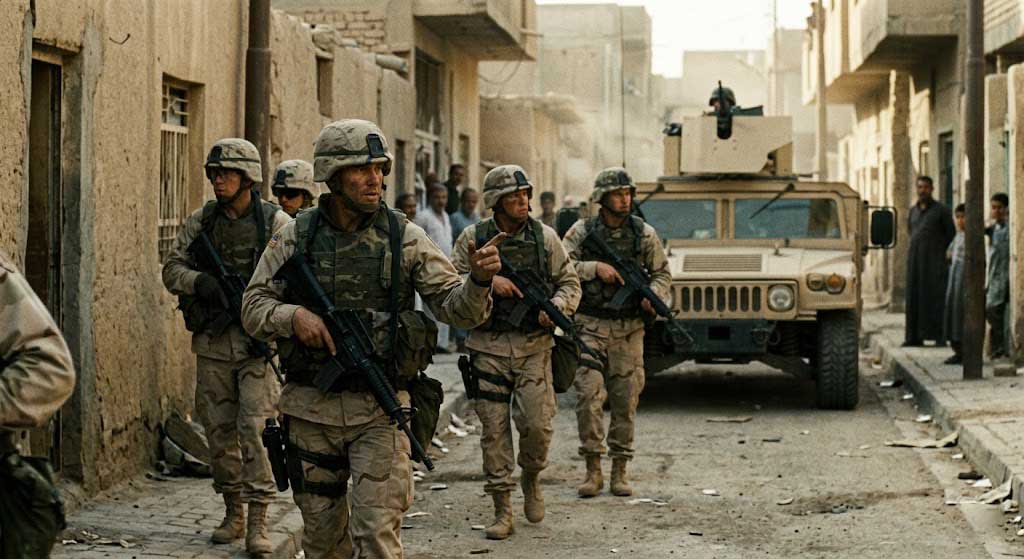
When the film arrived in 2010, many viewers thought it felt less like a Hollywood action movie and more like a dangerous piece of journalism. The dusty streets, nervous soldiers, political confusion, and constant fear all seemed painfully real. Matt Damon’s character moved through Baghdad searching for weapons of mass destruction, only to discover that the story being told to the world might not be true at all.
That immediately raised a huge question:
Was Green Zone actually based on a true story?
The short answer is yes, but not in the way many people expect.
The movie mixes real Iraq War events, genuine political controversies, and true military experiences with fictional characters and dramatized missions. Some people even called it one of the most realistic Iraq War films ever made because of how closely it captured the confusion of 2003 Baghdad.
Here’s what really happened, what was changed for Hollywood, and why the movie still sparks debate years later.
The Real Meaning Behind Green Zone
The title itself comes from a real place.
During the Iraq War, the “Green Zone” was a heavily protected area inside Baghdad. It became the center of American military and political operations after the 2003 invasion. Journalists, diplomats, intelligence officers, and military leaders worked there behind massive concrete walls and security checkpoints.
Outside those walls was what many soldiers called the “Red Zone,” where danger existed every minute.
The contrast mattered.
Inside the Green Zone, officials often discussed plans, intelligence, and political strategy. Outside, soldiers and Iraqi civilians dealt with bombings, gunfire, and chaos. That disconnect became one of the central themes of the movie.
The film suggests that leaders inside protected offices were making life-changing decisions based on intelligence that soldiers in the field increasingly doubted.
That idea was not invented for Hollywood.
It reflected real criticism during the Iraq War.
The Iraq War Weapons Controversy Was Real
The biggest true element in Green Zone involves weapons of mass destruction, often called WMDs.
In 2003, the United States and its allies invaded Iraq partly because government officials claimed Saddam Hussein possessed dangerous chemical and biological weapons.
Those weapons were never found.
That failure became one of the most controversial moments in modern political history.
In the movie, Chief Warrant Officer Roy Miller begins questioning why every mission to locate WMDs turns up empty. He slowly discovers that intelligence reports may have been manipulated or exaggerated.
That storyline mirrors real-world events.
After the invasion, multiple investigations concluded that much of the intelligence about Iraqi weapons programs was flawed, unreliable, or overstated. Many military personnel and intelligence experts later admitted that serious mistakes were made before the war began.
The emotional power of Green Zone comes from this truth. Even though the characters are fictional, the fear, confusion, and growing distrust shown in the film were experienced by real people.
Was Roy Miller a Real Person?
Matt Damon plays Roy Miller, a determined Army officer who refuses to stop asking questions.
Roy Miller was not a real soldier.
However, the character was inspired by real military experiences during the Iraq War. Reports suggest he was loosely based on Army officer Richard “Monty” Gonzales and other officers who participated in weapons searches during the early invasion period.
The film combines different real experiences into one fictional character.
That approach is common in historical dramas. Instead of telling ten separate stories, filmmakers often create one main character who represents many viewpoints at once.
Roy Miller represents soldiers who believed they were sent into Iraq for a specific mission, only to discover that reality on the ground looked very different from what they had been told.
That emotional conflict is one reason the character feels authentic.
Who Is Clark Poundstone?
One of the movie’s most mysterious figures is Clark Poundstone, the Pentagon official played by Greg Kinnear.
Poundstone is fictional.
But the character clearly represents powerful government figures connected to Iraq War planning and intelligence decisions. Many viewers believe the role was inspired by officials within the Pentagon and U.S. Department of Defense during the George W. Bush administration.
The film never directly names real politicians as villains. Instead, it creates fictional officials who symbolize broader systems of political pressure and intelligence manipulation.
That helped the filmmakers tell a political story without turning the movie into a direct documentary.
Still, many critics and commentators immediately understood the parallels.
The Movie Was Inspired by a Real Book
Another major clue about the film’s truth comes from its source material.
Green Zone was partly inspired by journalist Rajiv Chandrasekaran’s nonfiction book Imperial Life in the Emerald City.
The book explored life inside Baghdad’s Green Zone after the invasion. It described political mistakes, cultural misunderstandings, bureaucratic chaos, and the disconnect between officials and ordinary Iraqis.
The movie does not directly adapt the book chapter by chapter. Instead, it uses many of its themes and observations as a foundation.
That journalistic background gives the film a different feeling compared to traditional war action movies.
Even during intense combat scenes, Green Zone constantly asks political and moral questions.
Was Green Zone Filmed in Iraq?
Surprisingly, no.
Although the movie feels extremely realistic, most filming happened in countries like Spain, Morocco, and the United Kingdom.
The filmmakers recreated Baghdad using detailed production design, crowded street scenes, military vehicles, realistic costumes, and handheld camera techniques.
Director Paul Greengrass is famous for creating a documentary-style look. He also directed United 93 and several Bourne films, which used shaky cameras, natural lighting, and fast-moving action to create realism.
That visual style helped Green Zone feel authentic even without filming in Iraq itself.
Many viewers honestly believed parts of the movie were shot in Baghdad because the atmosphere looked so convincing.
Why the Movie Feels So Real
Several things make Green Zone stand out from typical Hollywood war films.
The Soldiers Feel Human
The military characters are not presented as superheroes.
They look exhausted, frustrated, confused, and nervous. Conversations often feel natural instead of scripted. Soldiers question orders, argue about intelligence, and react emotionally under pressure.
Real veterans have said the film captures the uncertainty of Iraq better than many other movies.
The Camera Style Creates Tension
Paul Greengrass uses handheld cameras almost constantly.
That style makes viewers feel trapped inside dangerous situations. Explosions happen suddenly. Crowds become unpredictable. Gunfire erupts without warning.
Instead of polished action scenes, the movie often feels chaotic and uncomfortable.
That realism was intentional.
Baghdad Feels Alive
Many war movies reduce locations to empty battlefields.
Green Zone does the opposite.
The city feels crowded, tense, political, and emotionally complex. Civilians, translators, journalists, and soldiers constantly interact in unpredictable ways.
The film reminds viewers that Iraq was not just a battlefield. It was home to millions of people caught in the middle of conflict.
Is Green Zone the Most Realistic Iraq War Movie?
Many people consider it one of the most realistic Iraq War films ever made, though opinions differ.
Movies like The Hurt Locker, American Sniper, Generation Kill, and Jarhead are also frequently praised for realism.
What makes Green Zone unique is its combination of combat realism and political investigation.
It does not simply show soldiers fighting.
It asks why the war happened, how intelligence failures occurred, and what confusion looked like from the ground level.
Some viewers appreciated that honesty.
Others criticized the movie for oversimplifying complex political events.
But even critics often admitted the atmosphere felt believable.
Why the Film Became Politically Controversial
Not everyone welcomed Green Zone when it was released.
Some commentators argued the film pushed a political message about the Iraq War. Others felt it unfairly blamed American officials or simplified intelligence failures.
Meanwhile, supporters believed the movie raised important questions that deserved attention.
That division reflected real public debate happening in America during the late 2000s.
By 2010, many Americans were already questioning the reasons behind the Iraq invasion. The movie arrived during a period when trust in government intelligence had been deeply shaken.
Because of that timing, Green Zone became more than entertainment.
It became part of a larger national conversation.
Is Green Zone Worth Watching Today?
Yes, especially if you enjoy realistic political thrillers.
Even years later, the film still feels intense and relevant because it focuses on truth, misinformation, and the human cost of war.
Matt Damon delivers a grounded performance that avoids exaggerated heroism. The action scenes feel raw instead of flashy. And the political themes remain meaningful in a world where people still debate media narratives and government transparency.
The movie also works well for viewers who normally avoid war films because it balances action with investigation and emotional depth.
It is not just about combat.
It is about trust.
What Green Zone Gets Right About War
One of the film’s greatest strengths is showing uncertainty.
Real wars are often confusing. Information changes constantly. Different agencies disagree. Soldiers on the ground rarely see the full picture.
Green Zone captures that feeling better than many Hollywood productions.
Nobody in the movie seems fully confident. Even powerful officials appear nervous or defensive. Rumors spread quickly. Missions change suddenly. People struggle to know who is telling the truth.
That atmosphere feels painfully authentic to many who experienced the Iraq War era.
Key Move Facts:
| Category | Details |
|---|---|
| Movie Title | Green Zone |
| Release Year | 2010 |
| Genre | War, Action, Political Thriller |
| Director | Paul Greengrass |
| Main Actor | Matt Damon |
| Matt Damon’s Role | Chief Warrant Officer Roy Miller |
| Based on Real Events? | Partly inspired by real Iraq War events and controversies |
| Inspired By | Imperial Life in the Emerald City by Rajiv Chandrasekaran |
| Main Historical Topic | The search for Weapons of Mass Destruction (WMDs) in Iraq |
| Real Filming Location? | No, it was mainly filmed in Spain, Morocco, and the UK instead of Iraq |
The Human Story Behind the Politics
At its core, Green Zone is not really about politics alone.
It is about people trying to understand truth during chaos.
Roy Miller represents individuals who continue asking difficult questions even when powerful systems want silence. Iraqi characters in the film reflect the pain civilians suffered during occupation and instability. Journalists struggle to separate facts from propaganda.
That human focus is why the movie still resonates.
It reminds viewers that wars are never just headlines or government statements. Real people live inside those decisions every day.
So, Is Green Zone a True Story?
Green Zone is not a direct true story with fully real characters and exact historical events.
But it is heavily inspired by real Iraq War controversies, true political tensions, and genuine military experiences surrounding the failed search for weapons of mass destruction.
The Green Zone itself was real.
The WMD investigations were real.
The intelligence failures were real.
The confusion felt by soldiers and civilians was very real.
What the filmmakers did was combine those truths into a fictional thriller designed to feel emotionally and politically authentic.
And in many ways, that approach made the story even more powerful.
Because while Roy Miller may not have existed exactly as shown on screen, the questions he asks were being asked by millions of people around the world.

I am Jeremy Jahns – Your Cinematic Explorer
Immerse in movie reviews, Hollywood insights, and behind-the-scenes stories.