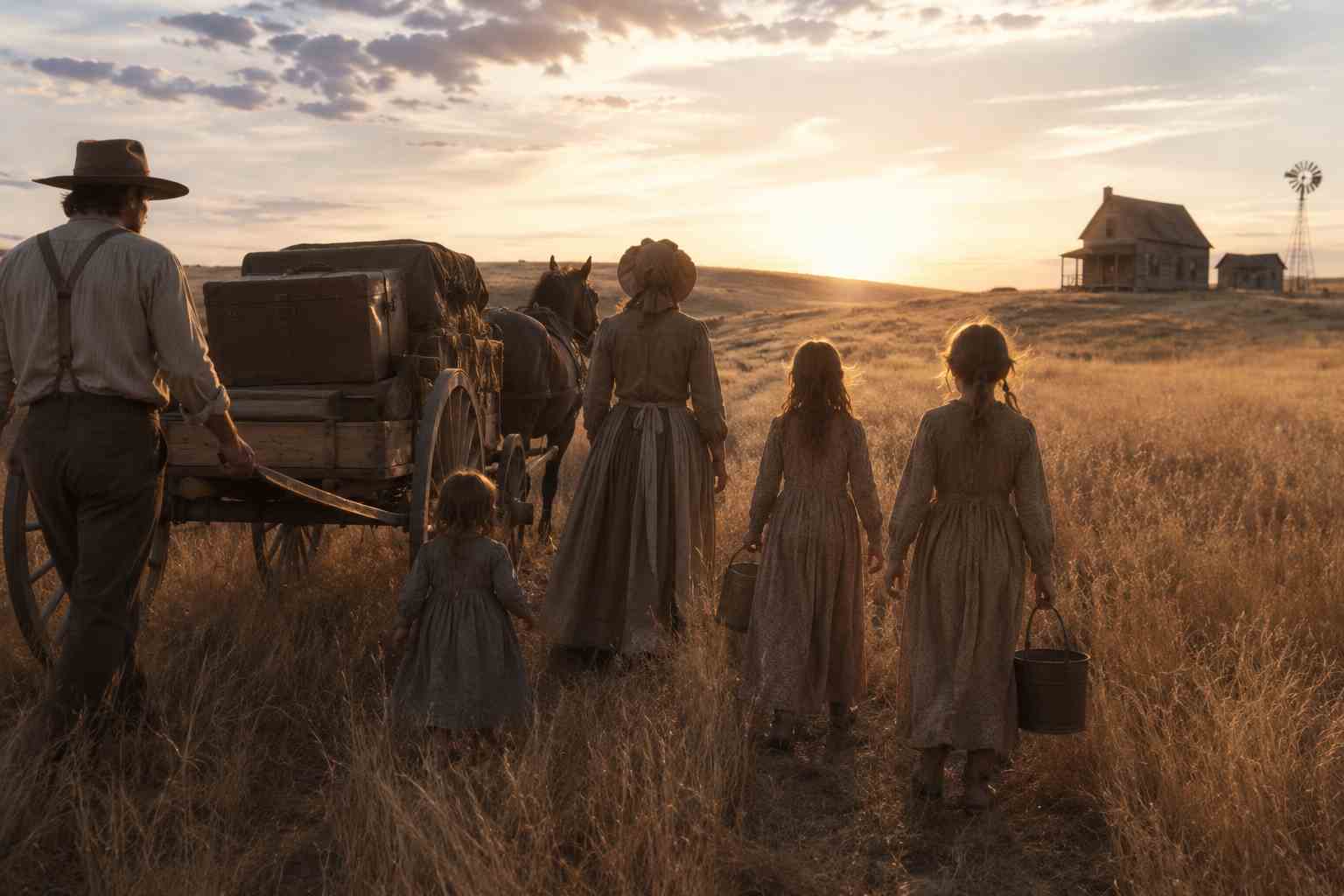
The short answer is yes, but not completely.
The famous books by Laura Ingalls Wilder were inspired by her real childhood on the American frontier during the late 1800s. Her parents, sisters, homes, and many life events truly existed. Charles Ingalls was a real father. Mary Ingalls was a real sister who lost her eyesight. The family really traveled across the Midwest searching for land and opportunity.
But here’s where things become more complicated.
The books changed some facts. The television series changed even more. Some events were softened for younger readers. Some timelines were rearranged. And some difficult parts of American frontier history were either ignored or presented in ways that later became controversial.
That mix of truth and storytelling is exactly why the series still fascinates people decades later.
The Real Laura Ingalls Was a Historical Person
Laura Ingalls Wilder was born on February 7, 1867, in Wisconsin. She grew up during a time when many American families moved west hoping to find land, freedom, and a better future.
Unlike fictional characters created entirely from imagination, Laura was real. She later wrote the Little House books based on her childhood memories. Those books became some of the most famous children’s stories in American history.
What makes Laura’s story powerful is that she did not grow up wealthy or famous. Her family struggled constantly. They moved often. Crops failed. Winters became dangerous. Illness spread easily. At times, survival itself became uncertain.
Readers connected with her because the emotions felt genuine.
Laura did not begin writing the books as a young woman. She was already in her sixties when the first Little House book was published in 1932. By then, America was going through the Great Depression. Many families felt fear and instability. Laura’s stories about resilience and family strength arrived at the perfect moment.
Her daughter, Rose Wilder Lane, also helped edit and shape the manuscripts before publication. Historians still debate how much influence Rose had on the final books, but Laura’s memories remained the emotional heart of the series.
Charles Ingalls Was Real And So Was His Frontier Dream
One of the most beloved characters in both the books and television show is Charles Ingalls, often called “Pa.”
Yes, Charles Ingalls was absolutely real.
He was born in New York in 1836 and later became a farmer and pioneer. Like many Americans during westward expansion, he believed new land could create a better life for his family.
The television version, played by Michael Landon, turned Charles into a near-perfect frontier father. He was wise, strong, gentle, and endlessly patient.
The real Charles Ingalls appears to have been loving and hardworking too, but real life was far less polished.
He struggled financially for much of his life. The family moved repeatedly because stable farming opportunities were difficult to find. Sometimes the decisions worked out badly. Some historians believe Charles often chased risky opportunities instead of staying settled in one place.
Still, Laura clearly adored her father. That emotional truth shines throughout the books.
Even critics of the series usually agree on one thing: the warmth between Laura and Charles feels authentic because it came from real memories.
Little House on the Prairie at a Glance
<div”>
| Fact | Real-Life Truth |
|---|---|
| Was Laura Ingalls real? | Yes. Laura Ingalls Wilder was a real American pioneer author born in 1867. |
| Was Charles Ingalls real? | Yes. Charles “Pa” Ingalls was Laura’s actual father and a frontier farmer. |
| Was the TV show fully true? | No. The series mixed real history with fictional drama and invented storylines. |
| Did Mary Ingalls really go blind? | Yes. Mary lost her eyesight as a teenager after a serious illness. |
| Was Walnut Grove a real town? | Yes. Walnut Grove, Minnesota, was a real place where the Ingalls family lived. |
| Why is the series controversial today? | Critics point to racial stereotypes and Native American portrayals in the books. |
| Did Laura really write the books herself? | Yes, though her daughter Rose Wilder Lane helped edit and shape the manuscripts. |
| Is the story based on real pioneer life? | Mostly yes. Many family struggles, travels, and hardships came from real experiences. |
Mary Ingalls Really Lost Her Sight
One of the saddest storylines in Little House on the Prairie involves Laura’s older sister Mary becoming blind.
This part is true.
Mary Amelia Ingalls lost her eyesight as a teenager after suffering a severe illness. For many years people believed scarlet fever caused her blindness because that is how Laura described it in the books. Modern medical experts now think viral meningoencephalitis may have been the actual cause.
Mary later attended a school for the blind in Iowa. Unlike the television version, her adult life remained much quieter and more isolated.
She never married or had children.
Mary died in 1928 at the age of 63.
Her story remains one of the most emotional parts of the Little House legacy because it reflects how difficult disability could be during frontier life. Families had limited medical care, little financial security, and almost no support systems.
Laura’s writing captured that pain in a way readers never forgot.
How Much Of The Books Were Really True?
This is where the answer becomes interesting.
The Little House books are generally described as “autobiographical fiction.” That means they are based on real experiences but shaped into smoother stories for readers.
Many major events truly happened:
- The family traveled across the Midwest
- They lived in small frontier homes
- Crop failures hurt the family financially
- Harsh winters threatened survival
- Mary lost her eyesight
- Laura later married Almanzo Wilder
But Laura also changed details.
Some timelines were compressed. Some events were simplified. Some difficult realities were softened to make the books flow better for children.
For example, the real Ingalls family spent time living near Native American land during periods of major conflict and displacement in American history. The books touched on those tensions but often from a limited frontier settler viewpoint.
Laura also removed some darker family struggles. Real frontier life could be exhausting, dangerous, and emotionally brutal. The books usually kept a hopeful tone even during hardship.
That balance between reality and storytelling helped make the books timeless.
The Television Series Changed A Lot
When NBC adapted the books into a television series in 1974, the story changed even further.
The show starred Michael Landon as Charles Ingalls and Melissa Gilbert as Laura. It quickly became one of the most loved family dramas in television history.
But the series often moved far away from historical reality.
Many episodes were completely fictional. New characters were invented. Dramatic events were added for emotional television moments.
For example:
- Some townspeople never existed
- Certain tragedies were exaggerated
- Timelines became inconsistent
- Laura’s personality became more modern and outspoken
- Charles Ingalls was portrayed as more heroic than historical records suggest
The real Laura Ingalls did not grow up exactly like the television version.
Still, the show captured something emotionally true about frontier family life. That emotional honesty mattered more to many viewers than perfect historical accuracy.
The series focused on themes people understood deeply:
- Family loyalty
- Hard work
- Kindness
- Loss
- Faith
- Survival
- Community
That emotional connection is one reason the show continues attracting new audiences decades later.
The Controversy Around Little House On The Prairie
In recent years, the franchise faced growing criticism over racial portrayals, especially regarding Native Americans.
This controversy mainly comes from the books rather than the television show.
Some passages describe Native Americans using stereotypes or language that modern readers find offensive. Critics argue the books sometimes present westward expansion only from the settlers’ perspective while ignoring the suffering and displacement experienced by Native communities.
One line especially drew attention:
“The only good Indian is a dead Indian.”
Laura included this phrase while describing attitudes of the time, but many readers felt its inclusion remained harmful regardless of historical context.
Because of these concerns, the American Library Association removed Laura Ingalls Wilder’s name from a major children’s literature award in 2018.
That decision sparked heated debate.
Some people believed the move was necessary because children’s literature should not celebrate harmful stereotypes. Others argued Laura’s books reflected historical attitudes rather than personal hatred and should remain understood within their historical context.
The debate continues even today.
What makes the issue complicated is that many readers still genuinely love the books for their themes of family and resilience while also recognizing problematic elements inside them.
Was Walnut Grove A Real Place?
Yes. Walnut Grove was real.
The small Minnesota town where much of the television series takes place truly exists. Laura Ingalls Wilder and her family lived there during part of her childhood.
Today, Walnut Grove has become a tourist destination for fans of the books and television series. Visitors can explore museums, historical sites, and recreated pioneer locations connected to the Ingalls family story.
However, the television version of Walnut Grove became much larger and more dramatic than the real town.
Real frontier communities were usually quieter, smaller, and harsher than television portrayed.
What Happened To Laura Ingalls In Real Life?
Laura eventually married Almanzo Wilder in 1885. The couple faced enormous struggles during their early marriage.
They dealt with:
- Crop failures
- Financial problems
- Illness
- Debt
- Harsh weather
- Loss of a baby son
For years, success remained uncertain.
Later, the couple settled in Mansfield, Missouri, where Laura began writing the books that would eventually make her famous.
She died in 1957 at the age of 90.
What’s remarkable is that Laura became a literary icon very late in life. Her stories survived because readers felt genuine emotion behind them. Even when details changed, the emotional memories felt authentic.
Why The Story Still Matters Today
Many modern viewers first discover Little House on the Prairie through reruns or streaming platforms. Some expect an old-fashioned family drama. Instead, they find something surprisingly emotional.
The story still resonates because it touches universal fears and hopes:
- wanting safety for your family
- trying to survive difficult times
- finding joy in simple moments
- holding onto kindness during hardship
Even with historical inaccuracies and controversies, the emotional core continues connecting with audiences.
That does not mean the series should avoid criticism. Historical storytelling becomes stronger when people examine both the inspiring and uncomfortable parts honestly.
The best way to understand Little House on the Prairie is probably this:
It was not a perfect historical record.
It was a real woman remembering her childhood through emotion, nostalgia, and storytelling.
And somewhere between truth and memory, one of America’s most enduring family stories was born.

I am Jeremy Jahns – Your Cinematic Explorer
Immerse in movie reviews, Hollywood insights, and behind-the-scenes stories.