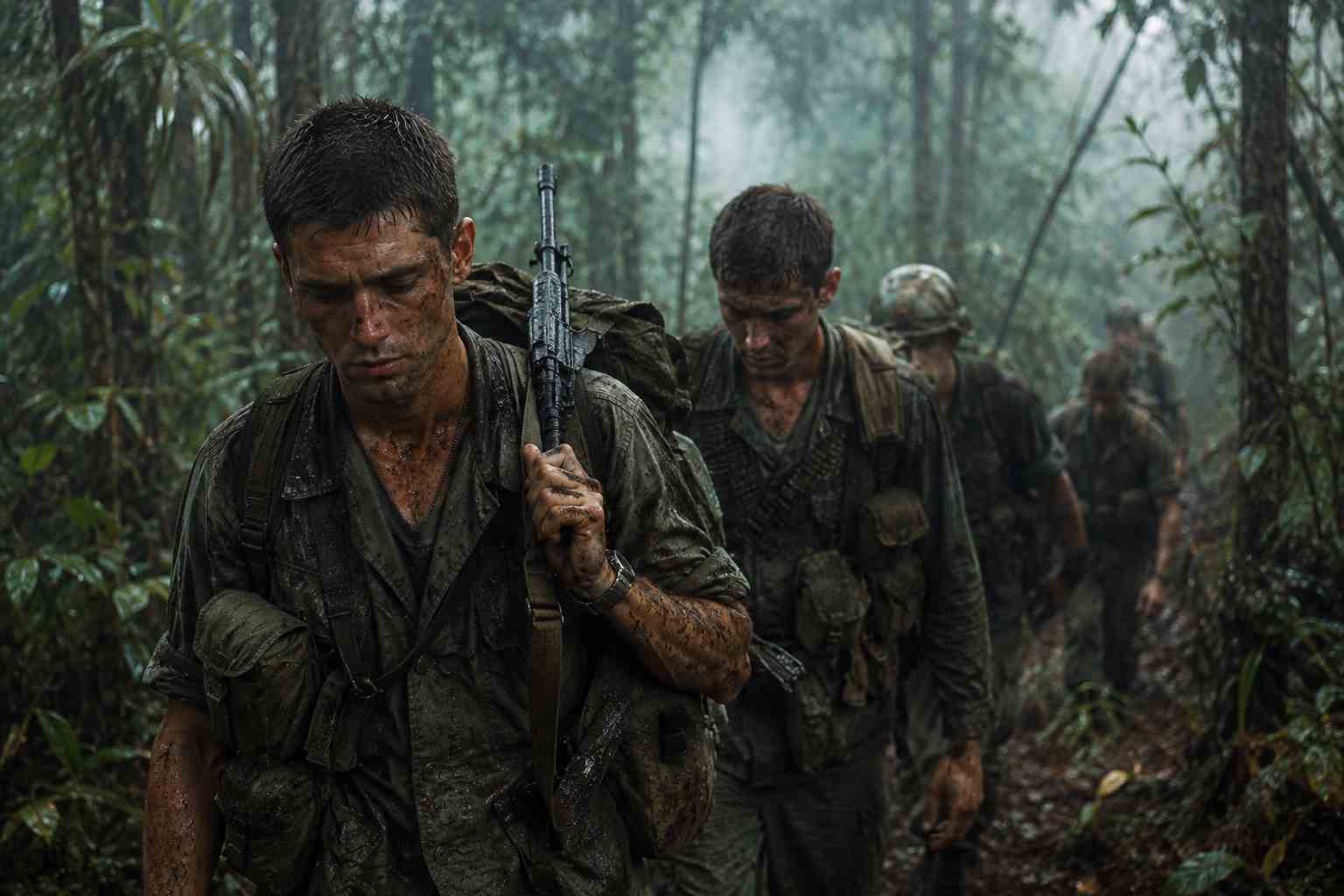
The story does not feel clean or comforting. It feels messy, emotional, confusing, and sometimes even contradictory. That is exactly the point.
Tim O’Brien wrote this chapter as part of The Things They Carried, a famous collection connected to the Vietnam War. Instead of simply explaining what happened during battle, he explores something deeper: how memory changes truth, how trauma reshapes stories, and why some experiences are impossible to explain in normal words.
The strange thing is that the story often feels more honest when it sounds unbelievable.
That tension sits at the center of everything.
Readers across generations still study this story because it challenges the way people think about truth itself. Was every event real? Did every conversation happen exactly as written? O’Brien intentionally avoids giving simple answers. He wants readers to feel uncertainty the same way soldiers often did during war.
And once you understand that idea, the title suddenly means much more than it first appears.
What Is How to Tell a True War Story About?
At its core, the story explores the emotional reality of war rather than strict factual accuracy.
Tim O’Brien tells several connected stories involving American soldiers during the Vietnam War. One of the most important moments centers around Curt Lemon, a young soldier who dies suddenly after stepping on a booby trap while joking with a friend.
The death is shocking because it happens so fast.
One moment Lemon is laughing under the trees. The next moment he is gone.
His friend Rat Kiley struggles deeply after the incident. He writes an emotional letter to Lemon’s sister describing how much her brother meant to him. When she never responds, Rat becomes angry and bitter. That reaction becomes part of O’Brien’s larger point: people outside war often cannot fully understand the emotional weight soldiers carry.
But the chapter is not structured like a normal story.
Instead of moving in a straight line, O’Brien jumps between memories, reflections, arguments, and personal observations. Sometimes he directly tells readers what makes a war story “true.” Other times he warns readers not to trust easy explanations.
This fragmented style mirrors how traumatic memories often work in real life.
People do not always remember painful events in perfect order. Certain details repeat. Emotions interrupt logic. Images return unexpectedly years later.
That is why the story feels so personal even when parts seem uncertain.
Why Tim O’Brien Says a True War Story Is Never Moral
One of the most famous lines in the story says:
“A true war story is never moral.”
That sentence surprises many readers at first.
Most stories traditionally contain lessons. They guide readers toward clear ideas about right and wrong. War films especially often show bravery, sacrifice, patriotism, or redemption.
O’Brien rejects that simplicity completely.
He believes real war destroys certainty.
Sometimes terrible people survive while kind people die. Sometimes soldiers laugh during horrifying moments because fear twists human behavior. Sometimes beauty and violence exist side by side in disturbing ways.
According to O’Brien, when a story tries too hard to sound noble or inspirational, it often becomes less truthful.
Real war rarely gives clean moral answers.
That does not mean the story supports violence. In fact, the chapter feels deeply anti-war. But instead of preaching directly, O’Brien forces readers to experience confusion themselves.
He wants readers to sit with discomfort instead of escaping it through simple lessons.
That is what makes the story powerful decades later.
The Vietnam War Changed How Stories Were Told
To understand the story fully, it helps to understand the Vietnam War itself.
Unlike earlier wars often described through patriotic language, Vietnam created enormous confusion inside the United States. Soldiers returned home carrying emotional trauma while many Americans questioned why the war even happened.
This uncertainty changed literature forever.
Writers stopped presenting war as something clean and heroic. Instead, many began focusing on fear, guilt, psychological damage, and fractured memories.
Tim O’Brien served in Vietnam himself, which gives his writing emotional weight. Many experiences in The Things They Carried draw from real emotions and battlefield situations he witnessed or felt during military service.
But O’Brien also repeatedly reminds readers that literal facts are not always the deepest form of truth.
Sometimes emotional truth matters more.
That idea becomes one of the chapter’s central themes.
Emotional Truth Versus Literal Truth
This is where many readers become fascinated by the story.
O’Brien openly admits that storytellers change details. Certain scenes may be exaggerated, combined, or reconstructed. Yet he still insists the stories are “true” in another sense.
How can both things exist at once?
Because emotional truth and factual truth are not always identical.
Imagine someone describing the worst day of their life years later. They may forget exact words or timelines, but the fear, grief, shame, or confusion remains completely real.
That emotional reality can sometimes communicate more honestly than a perfect list of facts.
O’Brien believes war memories work the same way.
A soldier may remember the sound of insects, the color of light through jungle trees, or a strange joke told moments before death more vividly than military details or dates.
Those emotional fragments become the real truth of memory.
This idea explains why the story often feels dreamlike. Readers move through memories the same way traumatized minds revisit painful experiences.
Curt Lemon’s Death and the Shock of Sudden Violence
Curt Lemon’s death remains one of the most haunting parts of the chapter.
What makes the moment so disturbing is not only the violence itself. It is how normal everything feels seconds before it happens.
The soldiers are joking.
The weather is ordinary.
Then suddenly death arrives without warning.
O’Brien describes the event with vivid but strange imagery, almost slowing time down. Instead of presenting heroic final words or dramatic speeches, he focuses on fragmented details and emotional reactions.
That approach reflects how sudden death often feels in reality.
People rarely receive cinematic endings.
Everything simply changes in an instant.
Rat Kiley’s response afterward becomes equally important. His grief appears messy, angry, and emotionally unstable. He struggles to process what happened. That emotional chaos feels more human than a polished speech about sacrifice ever could.
And that is exactly why the story stays in readers’ minds.
Why the Story Repeats Itself
Some readers notice that O’Brien repeats ideas, scenes, and phrases throughout the chapter.
That repetition is intentional.
Traumatic memories often return in cycles. People replay moments repeatedly, searching for understanding or emotional release. Certain details become trapped inside the mind.
The structure of the story imitates that process.
Instead of moving neatly from beginning to end, the narrative circles around emotional wounds.
Readers experience confusion because the soldiers experienced confusion.
This storytelling technique also forces readers to slow down and think carefully about what truth actually means.
Every time the narrator repeats a detail differently, readers question certainty again.
That uncertainty is not a mistake. It is the entire point.
The Strange Beauty Hidden Inside the Story
One reason the chapter feels emotionally complicated is because O’Brien often describes beautiful moments alongside horrifying ones.
Sunlight filters through trees.
The jungle sounds peaceful.
Soldiers laugh together.
Then violence suddenly interrupts everything.
This contrast makes the story more realistic because real life rarely stays emotionally consistent. Even during terrible situations, people still notice beauty, humor, friendship, or strange moments of calm.
O’Brien argues that if a war story only shows horror, it may actually feel less true.
Real human experiences are more complicated than that.
This mixture of beauty and terror creates emotional confusion for readers. They feel unsettled because they cannot place the story into a simple category.
Again, that discomfort reflects war itself.
What the Theme of the Story Really Means
Many students ask:
“What is the main theme of How to Tell a True War Story?”
The biggest theme is truth and how humans remember painful experiences.
But several connected ideas appear throughout the chapter:
The instability of truth
O’Brien constantly challenges readers to question whether objective truth is even possible after trauma.
The emotional cost of war
The story shows how deeply soldiers are affected emotionally, even long after violence ends.
Storytelling as survival
Telling stories becomes a way for soldiers to process fear, grief, and guilt.
The gap between civilians and soldiers
People outside war often struggle to understand what soldiers experienced emotionally.
Memory and trauma
The structure itself reflects how trauma reshapes memory.
These themes continue resonating because they apply far beyond the Vietnam War. Anyone who has experienced loss, shock, or emotional pain understands how difficult it can be to explain certain memories clearly.
Why the Story Still Matters Today
Even readers born decades after Vietnam continue connecting with this story.
Part of that comes from its honesty.
Modern audiences are often skeptical of stories that feel overly polished or emotionally manipulative. O’Brien’s writing feels raw instead. He admits confusion openly. He questions himself. He forces readers to wrestle with uncertainty.
That honesty creates trust.
The chapter also speaks to broader conversations about trauma and memory that continue today. Psychologists now understand much more about how traumatic experiences affect the brain, and many of O’Brien’s storytelling techniques mirror those realities closely.
Memories can become fragmented.
Emotions can distort timelines.
Painful experiences often return repeatedly instead of staying in the past.
Without directly sounding academic, the story captures those emotional truths remarkably well.
A Simple Summary of the Story
For readers wanting a quick explanation, here is the simplest summary possible:
How to Tell a True War Story follows soldiers during the Vietnam War while exploring how people remember traumatic experiences. Tim O’Brien argues that real war stories are often confusing, emotional, contradictory, and difficult to explain morally. Through the death of Curt Lemon and the reactions of fellow soldiers like Rat Kiley, the story shows that emotional truth can matter more than exact factual accuracy.
But even that summary leaves something out.
Because the real experience of reading the story comes from feeling its uncertainty.
That feeling cannot be fully summarized.
It has to be experienced.
The Lasting Power of Tim O’Brien’s Message
Tim O’Brien did something unusual with this story.
He turned uncertainty itself into the message.
Instead of giving readers a clean version of war, he gave them confusion, contradiction, emotional pain, humor, guilt, and fragmented memory all mixed together. Some readers find that frustrating at first. Others find it unforgettable.
But almost nobody forgets it completely.
That lasting emotional effect explains why How to Tell a True War Story remains one of the most discussed pieces of modern war literature.
It reminds readers that truth is sometimes deeper than facts alone.
And perhaps the hardest stories to explain are often the ones that hurt the most.

Jessica Savitch, with a deep passion for journalism, brings her expertise to istruestory.com as a dedicated author. MA in Arts & Journalism.