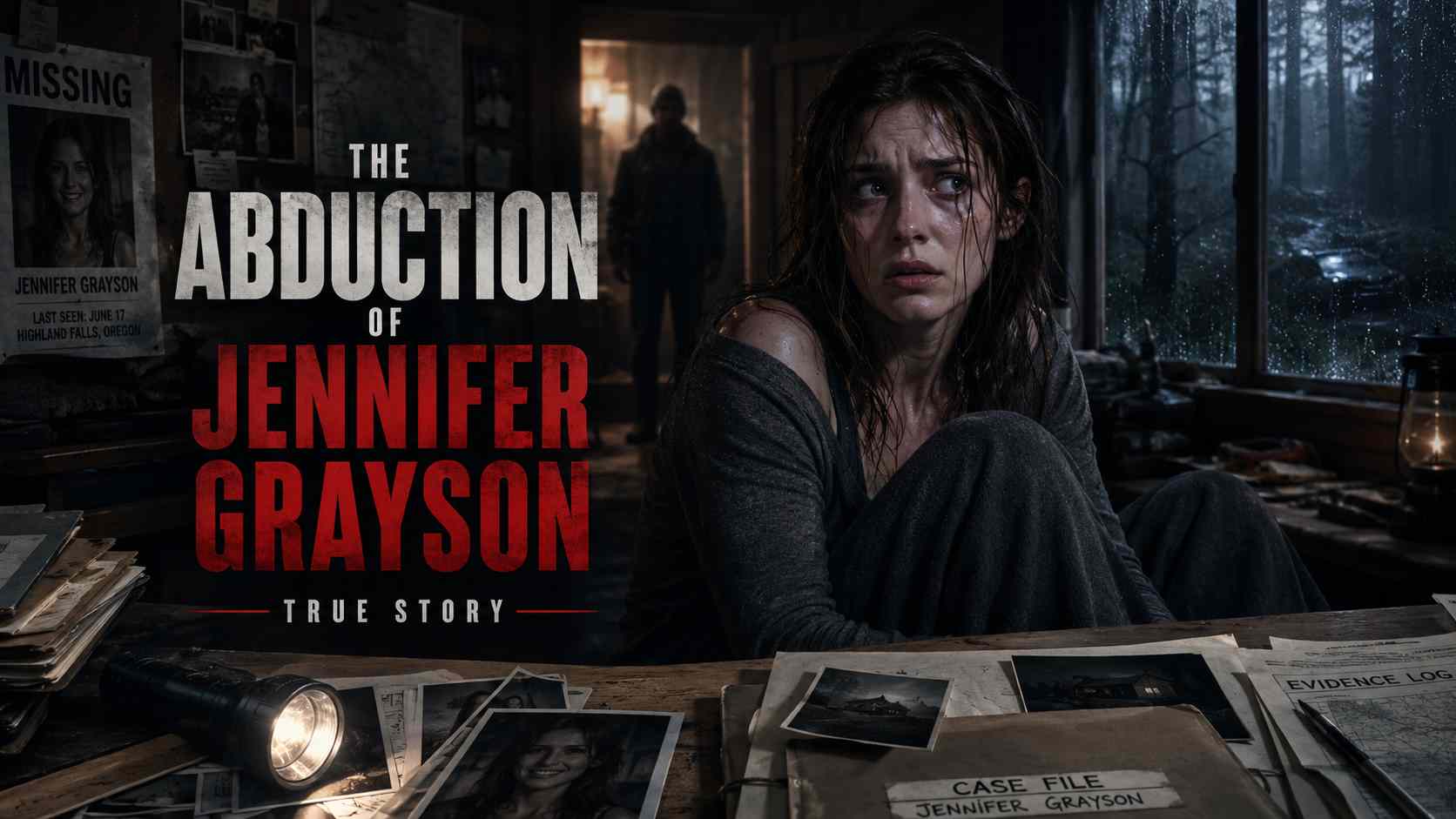
That is exactly what happened with The Abduction of Jennifer Grayson. The title sounds like a real crime documentary. The performances feel personal and believable. The emotional tension inside the cabin scenes makes the story seem frighteningly realistic.
But here is the truth.
The Abduction of Jennifer Grayson is not based on one confirmed real kidnapping case. The movie is fictional, even though it borrows emotional themes and psychological ideas from real abduction stories.
Directed by Corynn Egreczky, the 2017 psychological thriller was originally released under the title Stockholm. The film stars Rachel Jane Conn as Jennifer Grayson and James Duval as Jake Gray, the disturbed man who kidnaps her.
What makes the movie feel real is not the events themselves. It is the psychology behind them.
The story explores fear, emotional manipulation, survival instincts, and Stockholm Syndrome in a way that mirrors real criminal cases from history.
What Is The Abduction of Jennifer Grayson About?
The movie follows Jennifer Grayson, a young woman abducted by a dangerous man named Jake Gray.
Jake takes her to a remote cabin hidden deep in the woods. At first, Jennifer sees only terror. She wants escape. She wants survival. But over time, the emotional lines between victim and captor begin to blur.
That is where the movie becomes deeply unsettling.
Jennifer slowly develops a complicated emotional connection with Jake. Meanwhile, Detective Mike Sullivan works desperately to find her before things spiral even further out of control.
The film is less about physical violence and more about psychological captivity.
It asks difficult questions:
- Can fear become emotional dependency?
- Can trauma distort trust?
- Can survival instincts change how a victim sees their captor?
Those questions are what gave the movie its cult following among psychological thriller fans.
Is The Abduction of Jennifer Grayson Based on a True Story?
No. The movie is fictional.
There is no verified real Jennifer Grayson connected to the events shown in the film. Writers Corynn Egreczky and Suzi Lorraine created the story as a psychological thriller rather than a recreation of a specific crime case.
Still, many viewers believe it is real for several reasons.
First, the title sounds exactly like a true crime documentary.
Second, the movie uses grounded dialogue and realistic police investigation scenes.
Third, the emotional behavior inside the kidnapping situation resembles real hostage psychology cases that audiences already know from news reports and documentaries.
That combination creates confusion.
The film never openly says “inspired by true events,” but its realistic tone makes people assume it must be connected to a real abduction.
Why The Movie Feels So Real
The biggest reason is its use of Stockholm Syndrome.
This psychological condition happens when hostages begin emotionally bonding with their captors during long periods of captivity. The victim may start defending the abuser, trusting them, or emotionally depending on them.
The movie heavily explores this idea.
Real-world cases have shown similar patterns before.
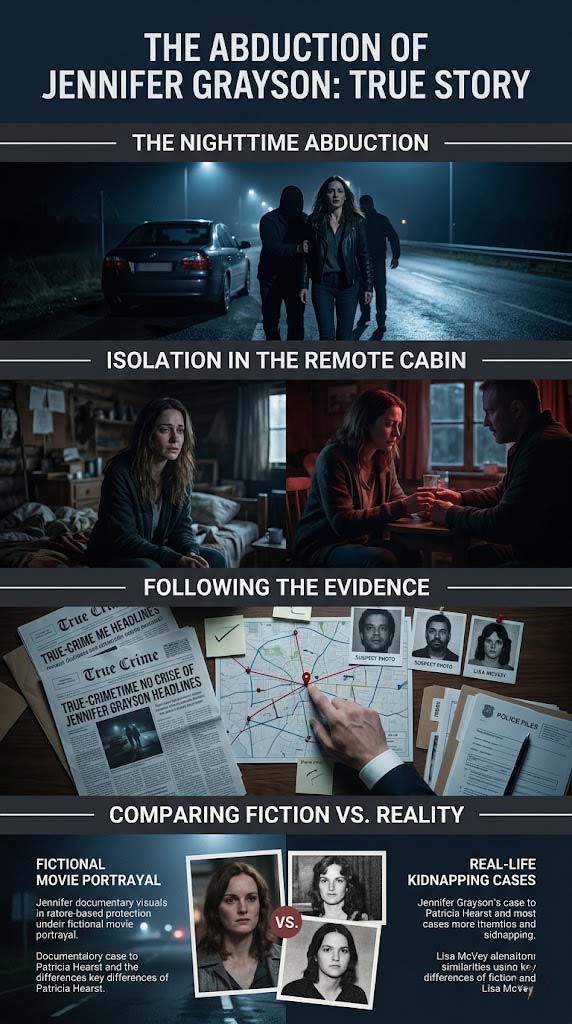
One of the most famous examples was Patricia Hearst, the newspaper heiress kidnapped in the 1970s by the Symbionese Liberation Army. During captivity, she eventually appeared alongside the group and even participated in crimes with them.
The Jennifer Grayson story seems emotionally inspired by cases like that, even if the plot itself is fictional.
That realism gives the movie emotional weight.
Who Was The Most Famous Person To Get Kidnapped?
Many people search this question after watching kidnapping thrillers.
Several real abduction cases became globally famous because of media coverage and psychological impact.
Some of the best-known include:
Patricia Hearst
Kidnapped in 1974. Her case became one of the most discussed examples of Stockholm Syndrome.
Elizabeth Smart
Abducted from her home in Utah in 2002 and rescued months later. Her survival story later inspired books and documentaries.
Lisa McVey
A teenager abducted in Florida who survived by psychologically communicating with her captor. Her story inspired the film Believe Me: The Abduction of Lisa McVey.
Jaycee Dugard
Kidnapped at age 11 and held captive for 18 years before rescue.
These real cases are part of why fictional films like The Abduction of Jennifer Grayson feel believable. Audiences already know that horrifying stories like these can happen in real life.
Is Taken Based on a True Story?
Not directly.
The Liam Neeson movie Taken is fictional. However, the film was influenced by fears surrounding international human trafficking and abduction crimes.
Like Jennifer Grayson, it mixes fiction with real-world fears.
That is common in thriller storytelling.
Writers often use realistic social fears to create emotional intensity, even when the specific characters and plot are invented.
What Is Jennifer Grayson Known For?
Jennifer Grayson is known as the fictional kidnapping victim at the center of the psychological thriller.
Inside the movie, her character becomes memorable because she is not written as a simple victim.
She adapts.
She studies her captor.
She emotionally navigates danger in order to survive.
Rachel Jane Conn’s performance also helped make the character believable. Critics and viewers praised how naturally she portrayed fear, confusion, emotional conflict, and psychological exhaustion.
The emotional realism is what keeps people searching online years after the film’s release.
The Dark Psychology Behind The Story
What makes the movie disturbing is not just the kidnapping.
It is the emotional confusion.
Jake Gray is portrayed as dangerous, unstable, and manipulative. Yet the movie also shows moments where Jennifer appears emotionally connected to him.
That uncomfortable tension is intentional.
The film forces viewers to understand how prolonged fear and isolation can affect human behavior.
Real psychologists have studied these reactions for decades. Trauma can reshape emotional thinking, especially when survival depends on understanding or calming an abuser.
The movie exaggerates parts of this dynamic for dramatic effect, but the emotional foundation comes from real psychological concepts.
That is why audiences continue debating the ending.
The Ending Explained
The ending leaves many viewers emotionally unsettled.
Jennifer’s emotional state becomes deeply conflicted. She wants freedom, but the psychological manipulation she endured changes how she sees Jake.
The movie avoids giving viewers a clean emotional resolution.
Instead, it leaves audiences asking whether Jennifer’s feelings were genuine emotional attachment or simply survival psychology developed under trauma.
That ambiguity is intentional.
Director Corynn Egreczky designed the story more like a psychological case study than a traditional thriller.
Some viewers love that realism.
Others find it deeply disturbing.
Why People Still Search “The Abduction of Jennifer Grayson True Story”
The movie succeeded because it blurred the line between fiction and reality.
It feels personal.
It feels possible.
And sadly, real kidnapping cases throughout history make stories like this emotionally believable.
That does not mean Jennifer Grayson was a real person.
But it does mean the fears, emotional trauma, and psychological manipulation shown in the movie connect strongly with real human experiences.
That emotional realism is what keeps the film alive in online discussions today.
Where The Film Fits Among Psychological Thrillers
The movie belongs more to the psychological captivity genre than traditional horror.
It shares emotional themes with films like:
- Room
- Split
- Gone Girl
- Believe Me: The Abduction of Lisa McVey
- 3096 Days
Unlike action thrillers, these films focus on emotional survival and mental trauma rather than nonstop violence.
That slower psychological style is exactly why The Abduction of Jennifer Grayson developed a niche audience.
The Truth Behind The Fear
At its core, the movie is fiction.
There was no confirmed Jennifer Grayson kidnapping case.
But the emotional themes inside the film come from very real human fears:
- abduction
- manipulation
- captivity
- survival
- emotional dependency under trauma
That mix of fiction and realism creates the unsettling feeling audiences remember long after the credits end.
And honestly, that may be why people continue asking whether the story was real in the first place.
The movie understood something powerful about human psychology:
sometimes the scariest stories are the ones that feel like they could happen tomorrow.

Jessica Savitch, with a deep passion for journalism, brings her expertise to istruestory.com as a dedicated author. MA in Arts & Journalism.