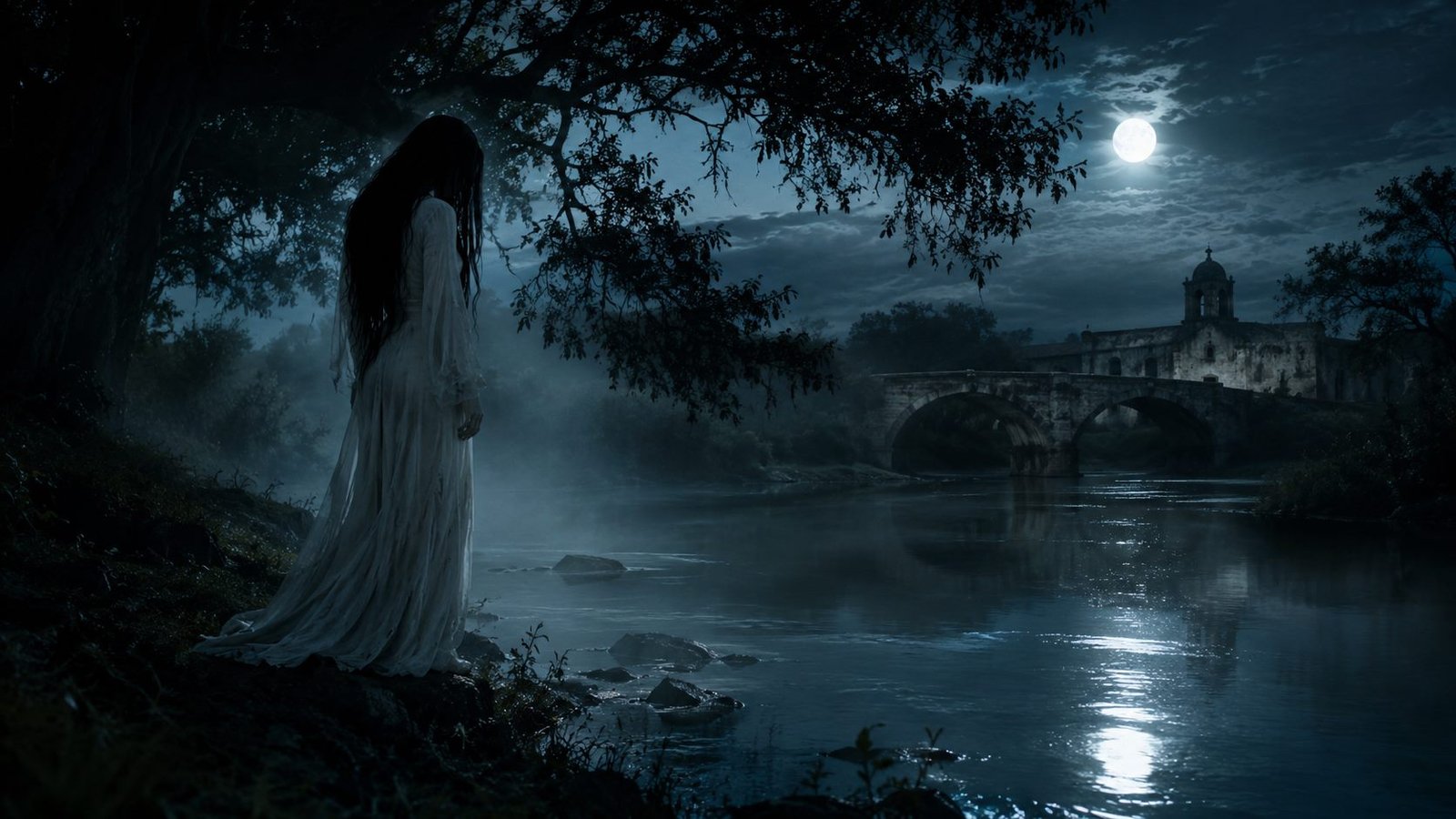
A woman is crying somewhere in the darkness.
You cannot see her, but her voice sounds close. Then comes a desperate call for her children.
For generations, families across Mexico and Latin America have shared stories about a mysterious woman who wanders near rivers, searching for the children she lost.
They call her La Llorona, or the Weeping Woman.
Some people describe her as a frightening ghost. Others remember her as a warning their parents gave them when they were young. Her story has inspired countless tales, songs, and horror movies.
But is La Llorona a true story, or is she simply a legend that has survived for centuries?
The answer is more interesting than a simple yes or no. La Llorona has deep roots in Mexican history and culture, but there is no reliable evidence that her ghost actually exists.
To understand why her story still frightens people, we need to look at where the legend began.
The Tragic Story of La Llorona
The best-known version of La Llorona tells the story of a beautiful young woman who falls deeply in love with a man.
They have children together, and for a while, their family seems happy.
Then everything changes.
In some versions, the man abandons her for another woman. In others, he refuses to marry her because of their different social positions.
Overcome by anger, jealousy, or despair, the woman takes her children to a river and drowns them.
When she realizes what she has done, she is overcome with grief.
She searches desperately for her children, but they are gone.
Some versions say she dies in the same river. Others describe her as being punished after death, forced to wander the earth until she finds her children.
Her spirit becomes La Llorona.
According to the legend, she appears near rivers, lakes, and lonely roads, wearing a white dress with long, dark hair covering her face.
Her most frightening feature is not her appearance. It is her voice.
She cries out for the children she can never bring back.
Yet this is only one telling of the story. In other traditions, she did not kill her children at all. She lost them and continues searching for them.
That difference matters because the story has never had one fixed version.
Is La Llorona Based on a Real Woman?
There is no verified historical record identifying a particular woman whose life proves the familiar La Llorona ghost story happened.
Researchers have found centuries-old traditions involving crying women, lost children, and supernatural warnings. But these records show how the legend developed, not that a ghost was ever discovered.
The Library of Congress explains that La Llorona stories developed through several cultural traditions.
Some elements come from Indigenous Mexican beliefs. Others resemble European stories about mourning women and wandering spirits.
This makes La Llorona different from a modern ghost story attached to one documented death.
Her legend developed across generations. Each community helped shape it.
The Surprising Story Hidden in an 1849 Poem
One interesting piece of evidence comes from Mexican writer Manuel Carpio.
In 1849, Carpio published a poem titled La Llorona, describing a woman named Rosalía who had been murdered by her husband.
After her death, people supposedly heard her crying near a river.
Notice the difference.
In this version, the woman was the victim of violence. She was not described as a mother who drowned her children.
The Library of Congress identifies this poem as one of the earliest literary accounts it found explaining La Llorona’s human origins.
It shows how different the story could be, even in earlier written versions.
The poem is evidence that people were telling stories about La Llorona in the nineteenth century. It is not proof that Rosalía was a real ghost.
Where Did the Legend of La Llorona Begin?
To explore the oldest roots of La Llorona, we have to travel back to Mexico before and during the Spanish conquest.
Long before modern horror movies, Indigenous communities had traditions involving powerful female spirits and goddesses connected to motherhood, childbirth, and death.
One important figure was Cihuacoatl, an Aztec goddess whose name means Snake Woman.
The Connection Between La Llorona and Cihuacoatl
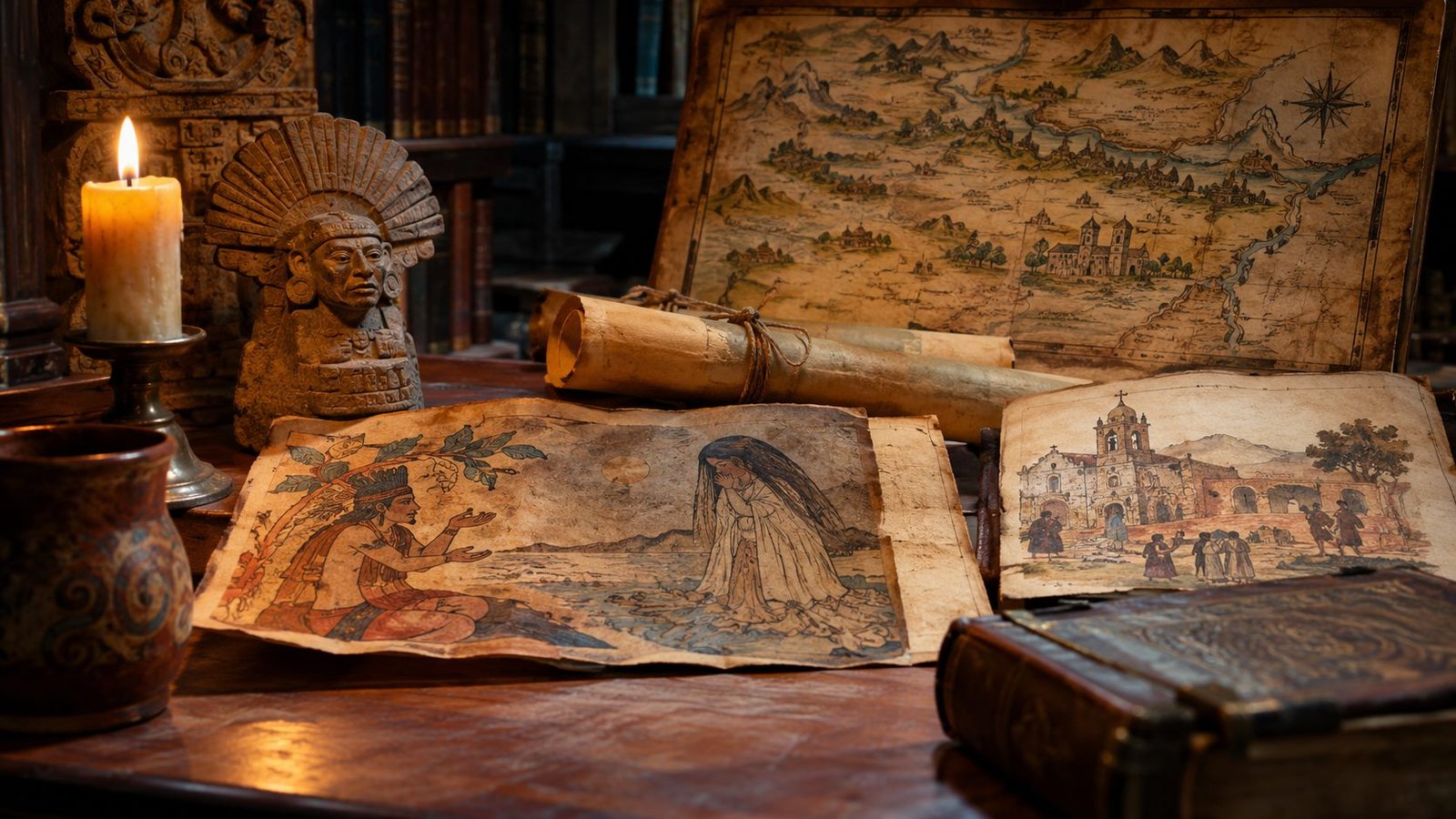
In the sixteenth century, Franciscan scholar Bernardino de Sahagún collected accounts from Nahuatl-speaking people about events they believed had happened before the Spanish conquest.
One account described a mysterious woman crying in the streets of Tenochtitlan, the Aztec capital.
The event was said to have occurred in 1509.
Her cries warned of terrible events approaching the city.
Other passages in the historical records connect the crying figure with Cihuacoatl.
The details sound strikingly familiar: a woman wandering at night, grieving for her children, and bringing a sense of danger.
According to research published by the Library of Congress, these accounts provide important evidence of the legend’s Indigenous roots.
But there is an important distinction.
The documents record what people believed and remembered. They do not establish that a supernatural woman physically appeared in 1509.
How Spanish Traditions Changed the Story
After the Spanish conquest, Mexican culture changed dramatically.
European religious beliefs and stories mixed with Indigenous traditions.
Ideas about sin, punishment, guilt, and wandering ghosts became part of many tellings.
Some scholars believe European tales helped shape the story of a woman condemned to suffer after death.
The Library of Congress also identifies an 1866 Spanish account involving a weeping female ghost called La Llorona.
This suggests the familiar Mexican legend developed from multiple storytelling traditions rather than one historical incident.
Over time, La Llorona became a symbol of lost children, grief, fear, and punishment.
Her story belonged to the communities that kept telling it.
Was La Llorona Connected to La Malinche?
Another theory connects La Llorona with La Malinche, an Indigenous woman who served as an interpreter for Spanish conqueror Hernán Cortés.
La Malinche was a real historical person.
Her role during the conquest remains an important and complicated subject in Mexican history.
Some later interpretations connect her experiences with La Llorona’s themes of betrayal, separation, and motherhood.
However, there is no reliable historical evidence that La Malinche murdered her children or became the ghost of La Llorona.
A 2026 HISTORY examination of the legend explains how these figures became connected through changing cultural interpretations.
The connection is symbolic, not proof that La Llorona was La Malinche.
That distinction helps us understand how a historical person’s experiences can become part of a much larger myth.
What If You Hear La Llorona?
In traditional stories, hearing La Llorona’s crying is considered a warning.
Some versions say the sound means she is searching nearby for her lost children.
Others claim that anyone who follows the crying might encounter her.
Parents sometimes used the story to warn children against wandering outdoors at night, especially near rivers or other dangerous places.
But what should you actually do if you hear something that sounds like a woman crying?
There is no verified evidence that hearing an unexplained cry means La Llorona is present.
Sounds can travel unexpectedly at night. Animals, wind, distant voices, and echoes can sometimes be difficult to identify.
If you hear someone calling for help, treat it as a possible real emergency rather than a supernatural event.
Stay away from dangerous water or isolated areas, and contact local emergency services if someone may be in trouble.
You do not need to assume a ghost is responsible.
The legend is frightening precisely because it turns an ordinary human sound, crying, into something mysterious.
How Many Kids Died From La Llorona?
This is one of the most frequently asked questions about the legend.
The answer depends on which version someone tells.
Some stories describe a mother who drowned two children. Others mention three. In still other versions, she loses one child or an unspecified number of children.
There is no historically confirmed number of children who died because of La Llorona.
These deaths are elements of folklore, not verified victims of a supernatural being.
The Smithsonian’s National Museum of the American Latino explains that different versions even disagree about whether she killed her children or simply lost them.
The details changed as the tale passed between families, towns, and countries.
What remains constant is her sorrow.
No matter which version you hear, La Llorona cannot stop searching for the children she misses.
Do Mexicans Actually Believe in La Llorona?
Yes, some Mexican people believe La Llorona is a real spirit. Others understand her as a traditional story or a cultural symbol.
There is no single belief shared by everyone in Mexico.
For many families, La Llorona is part of childhood.
Children may hear warnings about her from parents or grandparents. The story can become especially memorable when told late at night.
A Library of Congress article titled Growing Up with La Llorona documents how families used the legend to encourage children to return home before dark.
Some children grew up believing the warnings. Others later understood them as cautionary stories.
That does not mean the legend lost its importance.
La Llorona continues to appear in Mexican storytelling, music, theater, and popular culture.
In Mexico City’s Xochimilco canals, theatrical performances have brought the Weeping Woman’s story to life.
These celebrations show that a legend can remain culturally meaningful even when people disagree about whether it is literally true.
Has Anyone Actually Seen La Llorona?
People have reported encounters with La Llorona for generations.
Some accounts describe a woman dressed in white near a river. Others mention an unexplained cry, a shadowy figure, or someone disappearing into the darkness.
The Library of Congress has documented traditional stories about such encounters.
But there is no independently verified sighting that proves La Llorona exists as a supernatural being.
This does not necessarily mean every person reporting an experience was being dishonest.
Someone may genuinely believe they saw something unusual.
The difficulty is determining what caused the experience.
A person might misunderstand a distant figure, hear an unfamiliar sound, or connect an unclear event with a story they have known since childhood.
Without reliable supporting evidence, an unexplained experience cannot establish the existence of a ghost.
The stories remain valuable records of people’s beliefs and experiences, but they should not be confused with confirmed historical events.
Is the Movie The Curse of La Llorona Based on a True Story?
The 2019 horror film The Curse of La Llorona, directed by Michael Chaves, takes inspiration from the traditional Mexican legend.
The film follows a social worker and her children in 1970s Los Angeles as they face a frightening supernatural threat.
The movie uses familiar details from the folklore, including the grieving woman, the danger to children, and the terrifying cries.
However, its supernatural events and central family story are fictional.
It is an adaptation of a cultural legend, not a documented investigation of a real ghost.
There is also another 2019 film, La Llorona, directed by Guatemalan filmmaker Jayro Bustamante.
That film uses the legend to explore Guatemala’s history of violence against Indigenous communities. Its historical themes are grounded in real events, but its ghost story is fictional.
The two films should not be confused when discussing whether La Llorona is based on actual events.
Why Does La Llorona Still Frighten People?
The most powerful part of La Llorona’s story may not be the ghost at all.
It may be the human emotions hidden inside it.
The thought of losing a child is frightening. So is the idea of living forever with regret.
La Llorona brings these fears together in one unforgettable image: a mother wandering through the darkness, searching for someone she cannot find.
For some listeners, she represents punishment.
For others, she reflects the suffering of women who experienced betrayal, injustice, or separation from their families.
Scholars have also examined how the legend relates to Mexico’s Indigenous history, colonial violence, and changing expectations of motherhood.
That is why La Llorona can be understood in different ways.
She can be a frightening character in a bedtime story, a warning about dangerous places, or a symbol of grief that refuses to disappear.
The story survives because these emotions are familiar, even when the supernatural claims remain unproven.
The Truth Behind the Weeping Woman
So, is La Llorona a true story?
La Llorona is a genuine part of Mexican and Latin American folklore, but her existence as a ghost has never been verified.
Historical records show that traditions involving mysterious crying women existed centuries ago. Researchers have traced similarities to Indigenous Mexican beliefs and later European influences.
What they have not found is reliable proof of one particular woman whose death explains the entire legend.
And perhaps that is what makes La Llorona so memorable.
Her story has changed for hundreds of years, yet people continue to recognize the same grieving figure.
Whether you hear about her from a grandmother, a neighbor, a book, or a horror movie, the image remains powerful.
A lonely woman. A dark river. A desperate search for her children.
There is no proven ghost hiding inside that image. But there are centuries of history, fear, and human sorrow.
La Llorona may not be a verified supernatural figure, but the cultural history behind her story is very real.

I am Jeremy Jahns – Your Cinematic Explorer
Immerse in movie reviews, Hollywood insights, and behind-the-scenes stories.