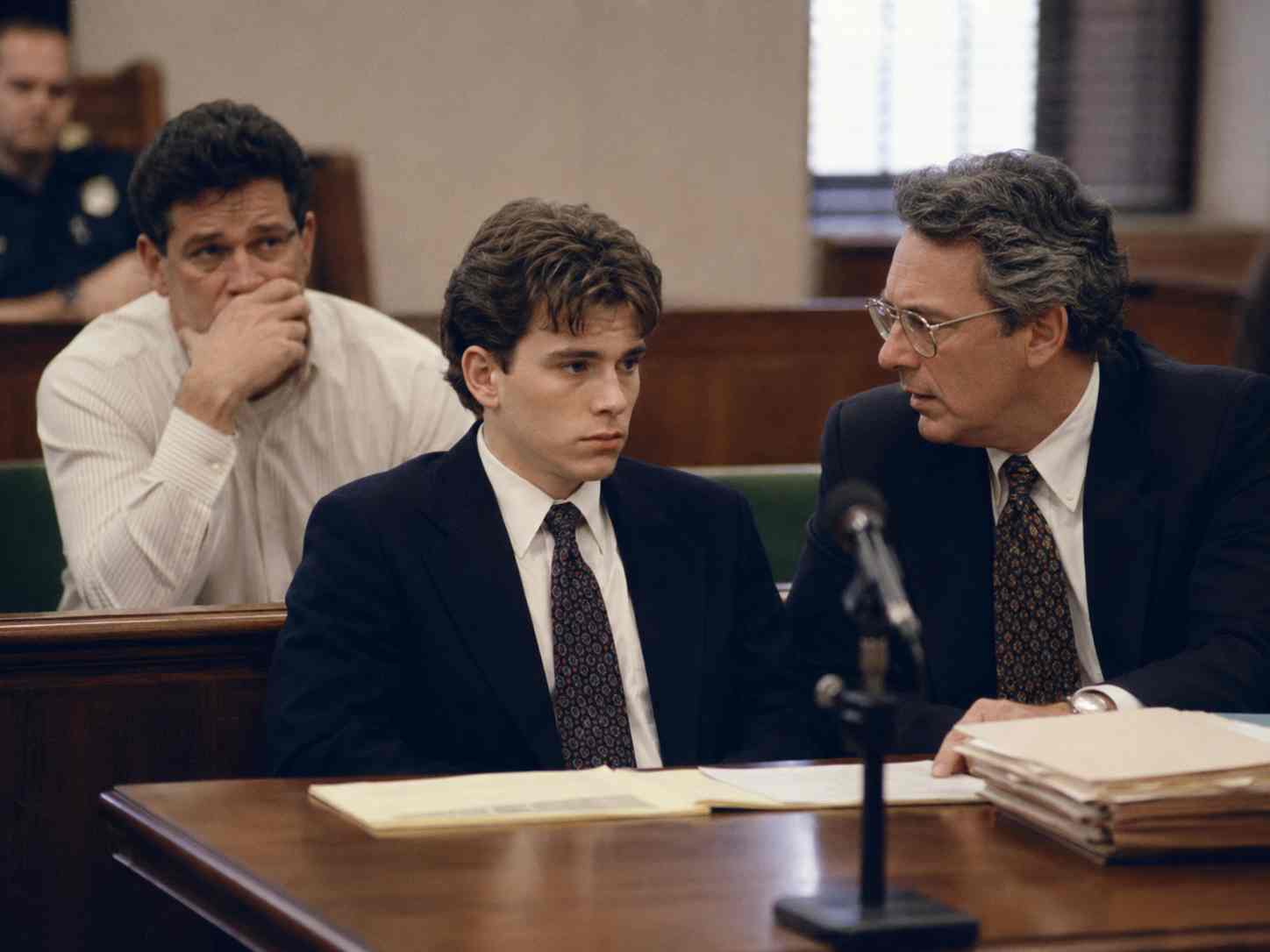
On screen, Snitch became a tense crime drama with Dwayne Johnson playing a father who walks into the drug world to save his son. It had danger, cartel pressure, federal agents, and a movie-style ending.
But the real story was smaller, sadder, and more painful.
It began with an 18-year-old first-time offender, a friend who had already been caught, and a federal drug law that left very little room for mercy. PBS FRONTLINE covered Joey Settembrino’s case in its documentary Snitch, where it described him as a young man who received a 10-year mandatory minimum sentence in 1992 for selling LSD. PBS also reported that Joey said he was set up by a government informant.
This is where the real story matters. Not because it is full of action. But because it asks a hard question.
What happens when the law gives a teenager a decade in prison, then tells his family the only way out is to help catch someone else?
A young man, a friend, and one terrible turn
Court records identify him by his legal name, Joseph Settembrino. PBS refers to him as Joey. Both names point to the same young man at the center of this case.
According to the federal court record, Joseph Settembrino pleaded guilty on January 8, 1993, to conspiracy to possess with intent to distribute LSD. The court said he was held responsible for 2,000 dosage units of LSD, which at the time affected how his sentence was calculated.
PBS producer Ofra Bikel later explained why the case stood out. She said Joey was 18, and that a friend who had already been caught with drugs asked him to get LSD. When Joey delivered it, the friend was with a DEA agent. Joey was caught, pleaded guilty, and received a 10-year prison sentence.
That detail changes how many people read the case.
Legally, Joey pleaded guilty. That part is clear.
But the emotional center of the story is different. PBS presented the case as part of a wider look at informants, mandatory minimum sentencing, and how young or low-level offenders could face very long prison terms.
The real Joey Settembrino true story is not only about one mistake. It is about the pressure system around that mistake.
Why the sentence felt so harsh
The court record shows that Joey’s sentence was not a simple judge’s personal choice.
His mandatory minimum sentence was 120 months. His guideline range was 121 to 151 months. He received 121 months in prison, followed by five years of supervised release. The judge noted that the sentence was troubling, especially because Joey was an 18-year-old first-time offender.
That is the heart of the case.
A mandatory minimum is a required sentence set by law. It means the judge may have limited power to go lower, even if the facts feel more complicated.
For a reader, it may help to think of it this way: imagine a school rule where every student gets the same punishment, even if one student made a small mistake and another caused serious harm. The rule may look firm. But it may not always feel fair.
That is why Joey’s story became bigger than one courtroom. It became part of a national discussion about whether drug laws were punishing people in a way that matched their actual role.
Who is James Settembrino?
James Settembrino is Joey Settembrino’s father.
PBS FRONTLINE identifies James as the father who tried to help prosecutors by giving information about other drug dealers in an attempt to lower his son’s sentence.
This is the part of the story that later inspired Snitch.
According to Ofra Bikel, Joey had no one he could set up to help himself get a reduced sentence. So his father was told that he could try to set up people instead. Bikel described James as a businessman who had nothing to do with drugs, yet found himself being drawn toward the world of drug investigations to help his son.
That detail is painful because it turns the father into the moral center of the story.
James was not just asking for mercy. He was being pushed toward a choice no parent would want: do nothing and watch his son serve a long sentence, or help the government build cases against others.
The movie turns that pressure into action. The real story feels more like quiet panic.
Where did James Settembrino grow up?
There is no reliable public source, connected directly to the Snitch case, that confirms where James Settembrino grew up.
This matters because several online searches bring up people with similar names. But a similar name is not enough. For a true story article, we should not connect unrelated records to Joey’s father unless a trusted source proves the link.
What we can say safely is this: PBS identifies James Settembrino as Joey’s father and describes him as a businessman. It does not provide a confirmed hometown or childhood background for him in the materials used for this article.
That may feel incomplete, but it is better than filling the gap with a guess.
What companies has James Settembrino worked for?
Reliable public sources tied to the Joey Settembrino case do not name specific companies James Settembrino worked for.
PBS only gives the broader description that he was a businessman. It does not list his employer, company history, or full career record in the available FRONTLINE pages.
This is also where the movie can create confusion.
In Snitch, Dwayne Johnson plays John Matthews, a businessman connected to transport and freight work. But John Matthews is a fictionalized movie character, not a full biography of James Settembrino. The American Film Institute lists Snitch as a 2013 film directed by Ric Roman Waugh, with Dwayne Johnson playing John Matthews.
So the clean answer is simple: James Settembrino’s exact companies are not publicly verified in the main reliable sources about the case.
How FRONTLINE turned the case into a bigger question
PBS FRONTLINE did not treat Joey’s case like a simple crime story.
Its Snitch investigation looked at how mandatory minimum sentencing, conspiracy charges, and informants worked together in federal drug cases. PBS described the documentary as an investigation into a shift in anti-drug laws, including mandatory minimum sentencing and conspiracy laws.
Joey’s case appeared beside other stories. The wider question was not only, Did someone break the law?
The bigger question was, What kind of pressure does the system create?
A person facing a long sentence may be offered a deal for giving information. That information may help prosecutors. But it can also create fear, pressure, and moral risk. People may feel pushed to name others. Families may feel trapped. Defendants may feel they must trade someone else’s freedom for their own.
That is why Joey and James Settembrino’s story stayed with people.
It was not loud. It was not glamorous. It was a father and son caught inside a system bigger than them.
How Snitch changed the real story
The 2013 movie Snitch took inspiration from this real case, but it did not copy it exactly.
The film stars Dwayne Johnson as John Matthews, a father trying to help his son after a drug case. AFI lists Ric Roman Waugh as director and Justin Haythe and Waugh as writers.
But the movie adds major drama.
A Sight & Sound review noted that Snitch shares its title with the 1999 FRONTLINE episode, but changes much of the real setup. The review says the film keeps the father-saving-son idea, but updates details, adds a completed sting, and gives the story a cleaner ending.
That is the normal Hollywood pattern.
A real father trying to reduce his son’s sentence becomes a movie hero entering dangerous territory. A complicated legal story becomes a thriller. A painful, uncertain outcome becomes something easier for an audience to process.
That does not mean the movie has no truth. It means the truth is underneath the drama, not inside every scene.
The real Joey Settembrino true story is about sentencing pressure. The movie Snitch is about that pressure turned into action.
Was Joey Settembrino innocent?
This question needs a careful answer.
The court record says Joseph Settembrino pleaded guilty to a federal LSD conspiracy charge. So, legally, he was not treated as innocent in court.
At the same time, PBS reported that Joey said he was set up by a government informant. PBS producer Ofra Bikel also described the case as one where a friend who had been caught asked Joey to get LSD and then appeared with a DEA agent.
So the fair answer is this:
Joey Settembrino pleaded guilty, but his case raised serious questions about informants, pressure, and whether a 10-year sentence made sense for an 18-year-old first-time offender.
That is why people still search for the story.
They are not only asking whether Snitch was based on real events. They are asking how real life could become that painful in the first place.

What happened later in court?
Years later, Joey sought resentencing.
In 2000, a federal court reviewed his motion. The court found that changes in how LSD weight was calculated could affect his guideline range. It also discussed whether he might qualify for safety valve relief, a legal path that can allow certain non-violent first-time drug offenders to be sentenced below a mandatory minimum.
The court granted Joseph Settembrino’s motion for resentencing and scheduled a resentencing hearing for January 19, 2001.
That does not make the story simple. The court record shows how long and technical the fight became. It was no longer just about what happened in 1992. It became about sentencing formulas, guideline changes, retroactivity, and whether relief could apply years after the original sentence.
For a family, that kind of legal process is not just paperwork. It is time. It is hope. It is waiting.
The real meaning behind the Joey Settembrino true story
The Joey Settembrino true story still matters because it shows how quickly one life can be swallowed by a system.
Joey was 18. His father, James Settembrino, was pulled into a desperate effort to help him. PBS used the case to ask hard questions about informants and mandatory minimum laws. Hollywood later used the emotional core of the story to build Snitch.
But the real story does not need explosions to feel intense.
A teenager received a long federal sentence. A father tried to save him. A documentary questioned the system. A movie turned the pain into drama.
Behind all of that is a simple human truth: when punishment becomes automatic, real lives can get lost inside the rules.
Quick answers:
Who is James Settembrino?
James Settembrino is Joey Settembrino’s father. PBS FRONTLINE reported that he tried to help prosecutors with information about drug dealers in an effort to reduce his son’s sentence.
Where did James Settembrino grow up?
Reliable sources tied directly to the Snitch case do not confirm where James Settembrino grew up. Any claim about his hometown should be treated carefully unless it comes from a verified source.
What companies has James Settembrino worked for?
The verified sources used here do not name specific companies James Settembrino worked for. PBS describes him as a businessman but does not provide a company list.
Is Snitch based on Joey Settembrino’s true story?
Yes, Snitch was inspired by the real story connected to Joey and James Settembrino, but the movie changed major details for drama. It turned a complicated legal and family story into a crime thriller.
Did Joey Settembrino get a 10-year sentence?
Yes. PBS says Joey received a 10-year mandatory minimum sentence in 1992, and the court record shows he was sentenced to 121 months in prison before later seeking resentencing.

Jessica Savitch, with a deep passion for journalism, brings her expertise to istruestory.com as a dedicated author. MA in Arts & Journalism.