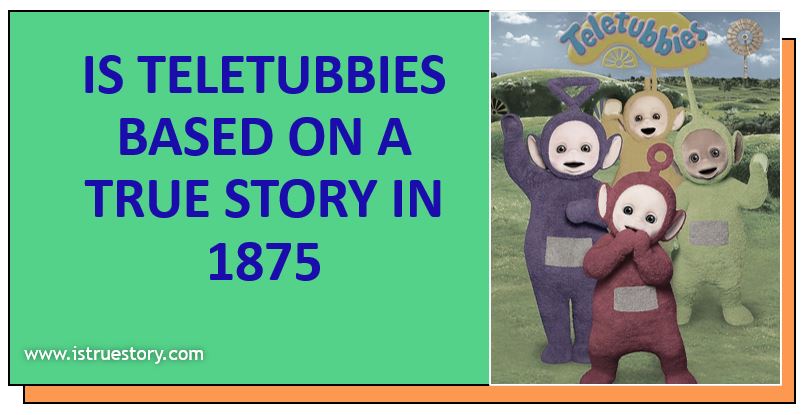
Because the show looked so unusual, many viewers began asking questions over the years. Some wondered whether the show was inspired by real events. Others believed the series hid a deeper meaning. Internet rumors even suggested that Teletubbies might be based on a true story or a strange historical event.
So what is the truth?
Let’s look closely at the origins of the show, the real people behind the costumes, and the myths that continue to surround one of the most famous children’s programs ever created.
The Real Origins of Teletubbies
The simple answer is clear.
Teletubbies is not based on a true story.
The show was created in the United Kingdom by television producers Anne Wood and Andrew Davenport. It first aired on the BBC on 31 March 1997. Their goal was not to tell a historical story. Instead, they wanted to design a television program specifically for toddlers and preschool children.
At the time, most children’s shows focused on school-age kids. Anne Wood believed younger children needed something different. She imagined a program that would feel closer to how babies experience the world.
The creators built the show around a few simple ideas:
- Bright colors
- Slow pacing
- Repetition
- Music and movement
- Friendly characters
All of these elements were chosen because researchers knew they help very young children understand television better.
That decision shaped everything about the show.
Instead of complex stories, each episode shows the characters exploring their world, dancing, and watching short videos on the television screens built into their bellies.
This unusual style made the show feel strange to adults, but toddlers loved it.
What Is the Story Behind Teletubbies?
The series follows four characters who live in a grassy, futuristic land called Teletubbyland.
The main characters are:
| Character | Color | Signature Item |
|---|---|---|
| Tinky Winky | Purple | Red handbag |
| Dipsy | Green | Black and white hat |
| Laa-Laa | Yellow | Orange ball |
| Po | Red | Scooter |
The Teletubbies spend their days exploring their environment, greeting the rising Sun Baby, and watching short videos about children from around the world.
The structure of each episode is intentionally repetitive. A short film showing real children appears on the Teletubbies’ belly screens. Then the characters often watch it again.
While this may seem unusual to adults, repetition helps toddlers recognize patterns and learn language.
Because of its unique design, the show quickly became a global phenomenon.
Within a few years, Teletubbies was broadcast in more than 120 countries.
Are There Real People Inside the Teletubbies?
Yes. Behind every Teletubby was a real performer.
Each character was played by an actor wearing a specially designed costume. These suits were large, heavy, and difficult to perform in. The actors had to move slowly and exaggerate their body language so that very young viewers could easily understand their actions.
The original performers included:
- Simon Shelton as Tinky Winky
- John Simmit as Dipsy
- Nikky Smedley as Laa-Laa
- Pui Fan Lee as Po
These actors rarely spoke during filming. Most of the voices were added later in the studio. Instead, their job was to communicate through movement and expression.
Performing inside the costumes was physically demanding. The actors often filmed outside in the English countryside, sometimes under very hot studio lights.
Yet their performances helped bring the characters to life in a way that still feels magical today.
Was Teletubbyland a Real Place?
Surprisingly, yes.
The famous green hills of Teletubbyland were not created with computer graphics. The original set was built in a real countryside location near Wimpstone in Warwickshire, England.
Producers carefully shaped the landscape to create the perfect rolling hills. A large underground dome was built beneath the hill where the characters lived.
The design team wanted the environment to feel:
- Natural
- Bright
- Safe
- Almost dreamlike
The location became so recognizable that fans sometimes tried to visit it. Eventually, the site was returned to its natural state to prevent tourism from damaging the land.
Did One of the Teletubbies Pass Away?
One of the most common questions online concerns the actors behind the characters.
In 2018, actor Simon Shelton, who played Tinky Winky in the original series, passed away at the age of 52. His death was widely reported in the media.
Shelton had performed in the role during the show’s early seasons and helped define the character that millions of children loved.
However, his passing had no connection to the show’s story or production. It simply reflected the passage of time since the series first aired nearly three decades ago.
Other actors from the original cast have continued their careers in entertainment and theater.
Do Teletubbies Support LGBTQ?
Over the years, Teletubbies has occasionally been drawn into cultural debates.
One of the most famous controversies involved Tinky Winky’s red handbag. In the late 1990s, a few commentators claimed that the character symbolized LGBTQ identity.
However, the creators repeatedly explained that this interpretation was never intended. The handbag was simply chosen as a playful prop for the character.
Anne Wood described the Teletubbies as gender-neutral figures designed to appeal to all children. The characters were meant to feel friendly and universal rather than tied to specific identities.
Despite the debate, the show itself contains no political or social message about sexuality.
It remains a preschool program focused on friendship, curiosity, and exploration.
Why Teletubbies Felt So Strange to Adults
Many adults watching the show for the first time felt confused.
Why did the characters repeat words?
Why were the stories so simple?
Why did episodes move so slowly?
The answer lies in how very young children learn.
Child development experts advised the creators during production. Research suggested that toddlers respond best to content that includes:
- Repetition
- Clear movements
- Simple language
- Predictable patterns
The show was built entirely around these principles.
In other words, what seemed strange to adults was exactly what toddlers needed.
The Internet’s “Dark Theories” About Teletubbies
As the show grew famous, the internet began inventing strange theories about it.
Some claimed that Teletubbies represented survivors of a dystopian world. Others suggested the characters were part of a hidden psychological experiment.
A few rumors even suggested that the show was inspired by real historical events.
None of these theories are supported by evidence.
Most began as jokes on forums and social media. Over time, they spread online and started to look like real stories.
Journalists and researchers who have interviewed the creators consistently confirm the same truth:
Teletubbies was simply designed as an experimental preschool television program.
There was never a secret backstory.
Why the Show Became a Global Phenomenon
Despite its unusual style, Teletubbies became one of the most successful children’s shows in television history.
Several factors helped the program reach worldwide popularity.
1. Universal Language
The characters used simple words and sounds rather than complex dialogue. This made the show easy to translate into many languages.
2. Visual Storytelling
Bright colors and expressive movements helped children understand the story even without spoken language.
3. Repetition
Young viewers quickly learned the show’s structure and began anticipating familiar moments.
4. Memorable Music
The cheerful theme song became so popular that it reached number one on the UK music charts.
Together, these elements created a program that toddlers everywhere could enjoy.
Cultural Impact of Teletubbies
Over time, Teletubbies became more than just a television show.
It turned into a cultural phenomenon.
The brand expanded into:
- Toys and merchandise
- Books and DVDs
- Theme park attractions
- International stage shows
The characters also appeared in educational campaigns and charity programs.
Many adults who grew up in the late 1990s and early 2000s now remember the show with nostalgia.
For many families, Teletubbies was one of the first programs their children ever watched.
So, Is Teletubbies Based on a True Story?
After examining the facts, the answer is simple.
No. Teletubbies is not based on a true story.
The series was created by television producers who wanted to design a new kind of preschool entertainment. The show’s strange and colorful world was carefully built to match how very young children learn and explore.
While internet rumors have invented darker interpretations, none of them have any factual basis.
Instead, the real story behind Teletubbies is much simpler.
It is the story of creative television producers experimenting with a new idea — and accidentally creating one of the most recognizable children’s shows in the world.
Quick Facts About Teletubbies
Here are a few interesting details about the show:
- First aired: 1997 on BBC
- Created by: Anne Wood and Andrew Davenport
- Total episodes: Over 480 across original and revival series
- Countries broadcast: 120+ worldwide
- Original filming location: Warwickshire, England
These facts show how a simple concept turned into a global phenomenon.
The Enduring Mystery of Teletubbyland
Even today, Teletubbies continues to spark curiosity.
The show’s dreamlike world feels unlike typical television. Its pacing is unusual. Its characters communicate in playful sounds rather than long conversations.
Yet that strangeness may be exactly why it succeeded.
The creators were not trying to follow television traditions. They were trying to understand how babies see the world.
And in doing so, they created something unforgettable.
Before we finish, if you enjoy exploring the truth behind famous movies, TV shows, and cultural mysteries, Is True Story regularly investigates the real facts behind popular entertainment.
Whether you’re curious about classic television, historical events, or surprising rumors, the goal is always the same: separate myth from reality and uncover the real story behind what we watch.

Jessica Savitch, with a deep passion for journalism, brings her expertise to istruestory.com as a dedicated author. MA in Arts & Journalism.
i loved this artical
This post was really fascinating! I always thought of Teletubbies as just a quirky kids’ show, but learning about its potential real-life origins and darker myths adds such an intriguing layer. It’s amazing how something so colorful could have such complex storytelling beneath the surface. I’d love to see more deep dives like this!
This was such an intriguing read! I never knew there were so many theories about the origins of Teletubbies. The darker myths add a whole new layer to my childhood memories. It’s fascinating how something so whimsical can have such complex interpretations. Thanks for shedding light on this!
This post was fascinating! I had no idea about the darker myths surrounding the Teletubbies. It really makes you look at the show in a different light. I’m intrigued by the idea that there might be real inspirations behind the characters. Thanks for shedding light on this!
This post was fascinating! I had no idea about the various theories surrounding the Teletubbies. It’s intriguing to think that something so seemingly innocent has such a complex and possibly dark background. Definitely going to dive deeper into those myths!
This was such an interesting read! I always thought Teletubbies was just a quirky kids’ show, but the origins and the darker myths really add a whole new layer to it. I had no idea there were theories about the symbolism behind the characters. It makes me want to rewatch the series with a fresh perspective!
This post was such an interesting read! I never knew the origins of Teletubbies could be tied to deeper themes. It makes me appreciate the show even more now that I know there’s a true story behind it. Thanks for sharing these insights!
This was a fascinating read! I always wondered about the origins of Teletubbies and how such a unique concept came to be. The connections you made to real-life influences were really eye-opening. Thanks for shedding light on this nostalgic show!