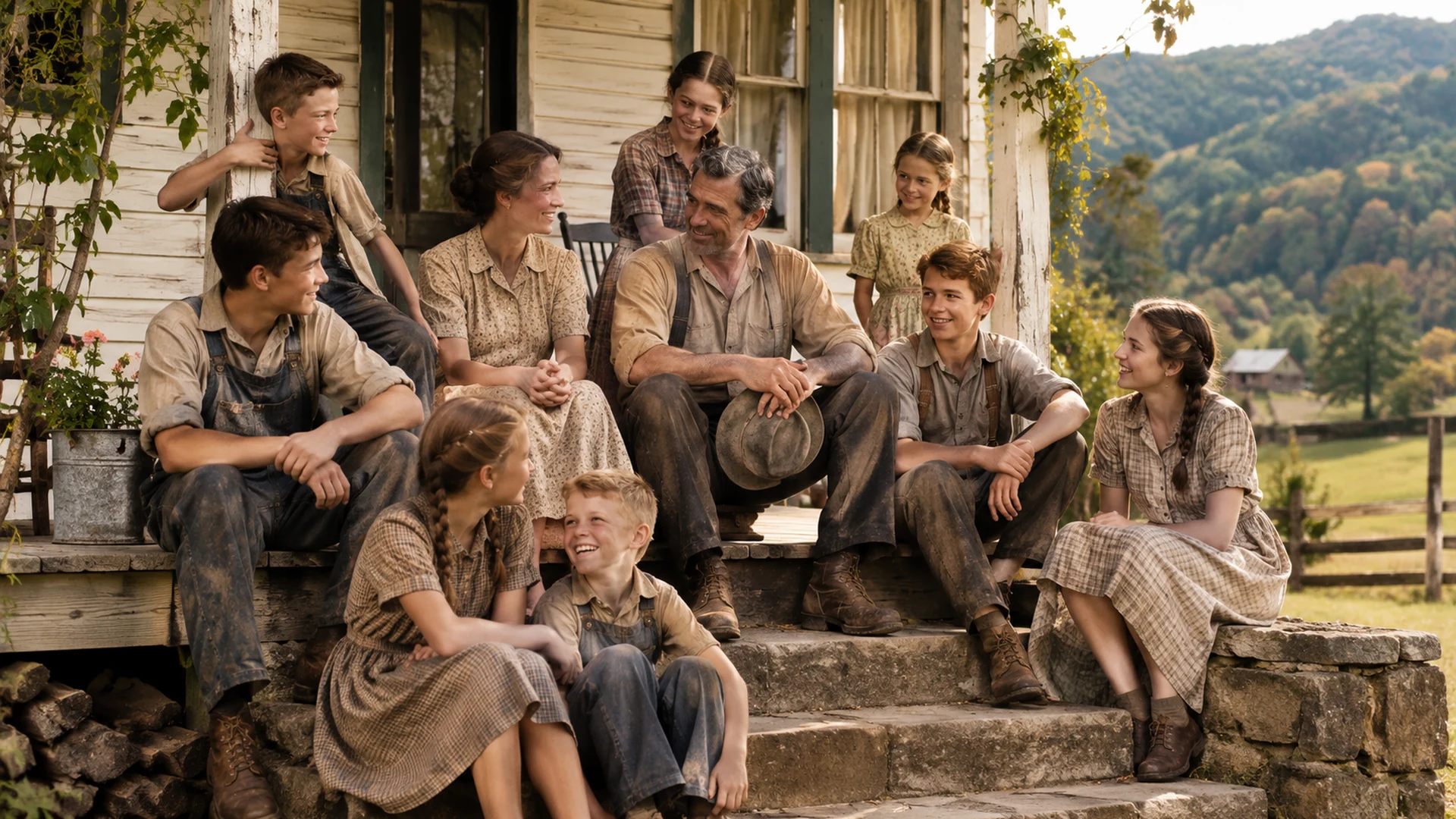
Every evening, the Walton family gathered around the table, traded stories and faced another challenge together. Their home felt so lived-in that viewers often wondered: could these people have existed outside a television script?
Yes, The Waltons was based on a true story in an important sense. Creator Earl Hamner Jr. used his childhood in Schuyler, Virginia, and his experiences with seven siblings as the foundation for the series. But the Walton family was fictional. Names, events and some relationships were changed to create a continuing television drama. The Virginia Department of Historic Resources confirms that Hamner’s boyhood home and village inspired the show.
The most surprising detail is that the real family had eight children, while the television family had seven.
Was The Waltons Based on a True Story?
The Waltons is best described as an autobiographical family drama, not a documentary. It was inspired by real people living through the Great Depression, but it did not promise that every episode happened exactly as shown.
Hamner was born in Schuyler in 1923, the oldest child of Earl Hamner Sr. and Doris Giannini Hamner. Their family lived in the Blue Ridge region of Virginia, where work could be uncertain and everyone had to contribute. The real house was a modest company dwelling connected to Schuyler’s soapstone industry, not an imaginary Hollywood landmark. Virginia placed it on its state landmarks register in 2004.
That makes The Waltons similar in approach to the real-life inspirations behind Little House on the Prairie. Both dramas turn family experiences and historical settings into stories, rather than recreating the past minute by minute.
Who Was Earl Hamner Jr., the Real John-Boy Walton?
John-Boy, the thoughtful eldest Walton son who dreams of becoming a writer, is the clearest stand-in for Earl Hamner Jr. Both grew up in large Virginia families. Both cared deeply about words and wanted a life that extended beyond their hometown.
In the series, Richard Thomas played John-Boy for much of the show’s run. Hamner himself provided the familiar narration, speaking as an older man looking back on his youth. That choice added an unusual touch: the person whose memories inspired the drama also became its reflective voice.
Hamner’s 1961 novel Spencer’s Mountain drew on his upbringing; its story helped lead to the 1971 Christmas television film The Homecoming. CBS then developed The Waltons, which began in 1972 and ran for nine seasons. Encyclopedia Virginia’s biography of Hamner traces that progression.
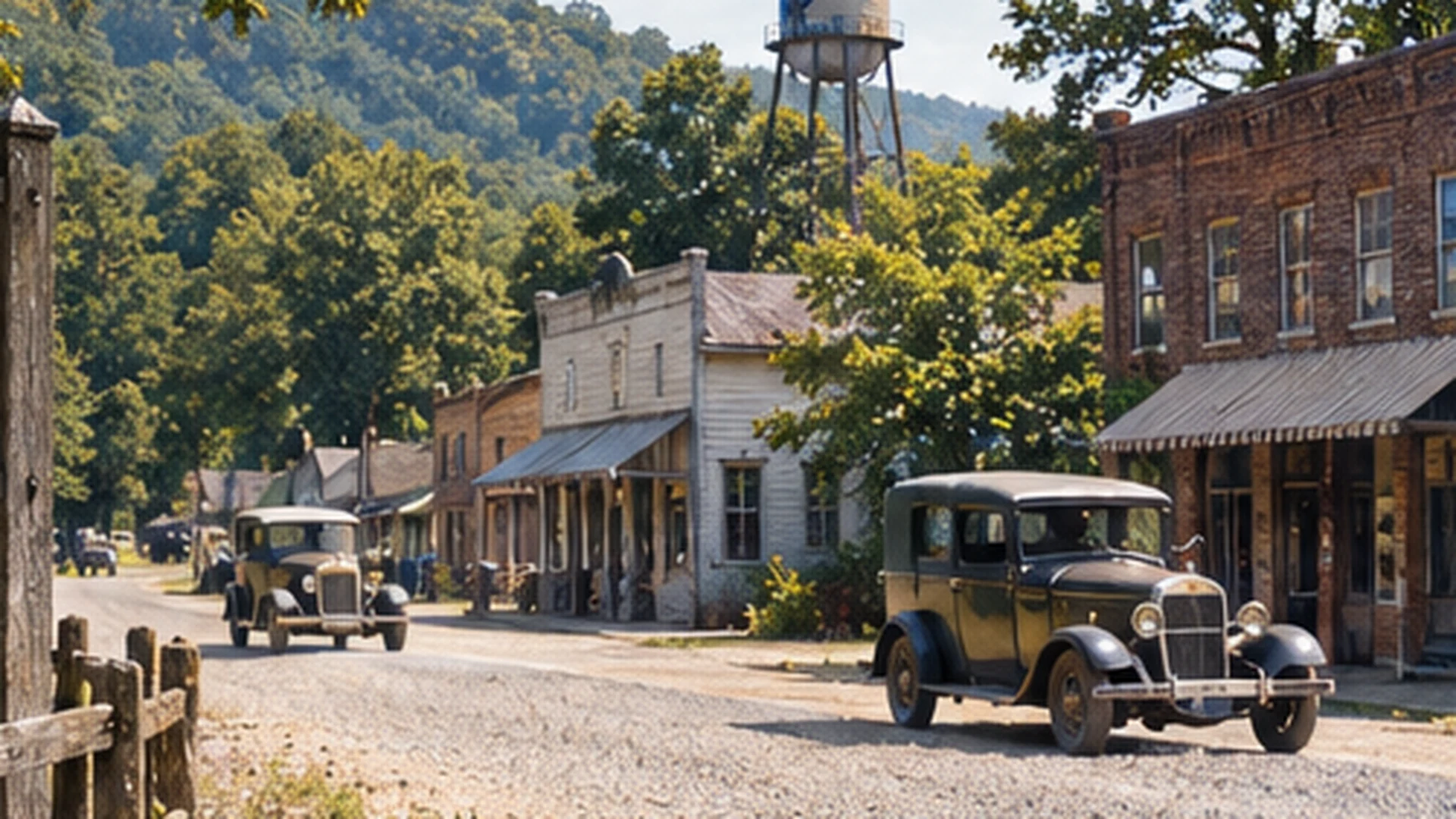
Meet the Real Hamner Family Behind The Waltons
The Hamners were not merely distant inspiration. Many of the show’s central characters had identifiable family counterparts. The Earl Hamner House’s family guide records these connections:
- Earl Hamner Jr. inspired John-Boy Walton.
- Earl Hamner Sr. and Doris Hamner inspired John and Olivia Walton.
- Clifton Hamner helped inspire Jason; Marion Hamner inspired Mary Ellen.
- Audrey Hamner inspired Erin; Nancy Hamner inspired Elizabeth.
- James Hamner inspired Jim-Bob.
- Paul and Bill Hamner were both reflected in the single character Ben.
This is why counting the children on the show can be misleading. The real parents raised eight children, but the script combined two brothers into one television role. The family structure was close to reality, not an exact copy.
There were also meaningful differences between the parents on screen and in life. Hamner recalled a strongly religious mother and a father who did not share her religious outlook. Their different beliefs did not stop them from having a loving marriage, a contrast that helped give the TV parents a believable bond.
Are Any of The Waltons Stories Actually True?
Yes. Some experiences and themes came directly from Hamner’s memories, although the finished episodes often added invented incidents and dialogue. The best example is a Christmas story at the heart of the franchise.
During the Depression, Earl Hamner Sr. worked away from Schuyler after local soapstone jobs disappeared. He travelled home at weekends. A long walk from the bus stop was part of that journey. According to The Guardian’s account of Hamner’s life, a snowy Christmas Eve walk in 1933 helped inspire The Homecoming.
That does not mean every person John-Boy encounters in the Christmas story was real. The truthful starting point was the uncertainty of waiting for a father to reach home safely. The adventures built around it were shaped for drama.
Other details also had roots in everyday life: crowded family meals, arguments among brothers and sisters, churchgoing, concern about money, and a young person’s desire to study and write. In an essay later republished by the Nelson County Historical Society, Hamner described his family’s garden, preserved food, kitchen table and his father’s pride in his children’s education.
This is also the reason dramas such as Call the Midwife can feel true without being literal records: the setting and shared experiences may be historical, even when individual scenes are dramatized.
Was There a Real Jim-Bob Walton?
Yes. Jim-Bob Walton was based on James Edmund Hamner, one of Earl Hamner Jr.’s younger brothers. James was the youngest son in the real family, although he was not the youngest child; his sister Nancy was younger.
The screen character was played by David W. Harper. Like the rest of the family, Jim-Bob had fictional adventures and characteristics, so the actor’s storylines should not be treated as a biography of James Hamner.
James followed a very different career from most of what viewers saw on television. He served in the U.S. Army, worked in banking and spent about 35 years as a systems analyst at the University of Virginia. He died in 2004 at age 67. The Associated Press obituary published in The Washington Post identifies him as the inspiration for Jim-Bob.
James also lived in the family’s Schuyler home for many years. That real house remained a direct link between the family’s private life and the television memories watched by millions.
How Much of The Waltons Show Was Fictional?
There is no trustworthy percentage that measures how much of The Waltons happened in real life. A figure such as 70 or 80 percent would make the answer sound precise without evidence.
A more helpful way to separate fact from fiction is to consider three layers:
- Real foundation: the Hamner family, their home in Schuyler, Depression-era hardship and Earl’s ambition to write.
- Adapted memories: family discussions, community relationships and experiences such as waiting for a parent to return home.
- Created for television: the Walton surname, the fictional mountain community as presented on screen, combined siblings and many episode plots.
The social setting also shifted as the series progressed. Its episodes followed the family through the 1930s and toward the Second World War. That broader history was real, even though the Walton family’s particular experiences were scripted.

Hamner did not try to reproduce every childhood moment. He used what he remembered to tell new stories about growing up.
Did Michael Learned and Ralph Waite Fall in Love?
They acknowledged deep love and mutual attraction, but they did not become a romantic couple. Michael Learned played Olivia Walton and Ralph Waite played John Walton. Their warmth on screen led fans to wonder whether the actors shared a real romance.
At a June 2025 cast gathering, Learned said that she and Waite cared for each other deeply but deliberately kept their relationship platonic. She said they respected both their friendship and their work. People’s June 12, 2025 report documents her comments. Waite died in 2014.
So the answer depends on what is meant by love. Yes, they described real affection. No, there is no basis for presenting them as an off-screen married couple or confirming a secret affair. Their close friendship is part of the show’s behind-the-scenes history, not proof that the Walton parents’ fictional marriage was real.
Why The Waltons Still Feels Real Today
What makes the show memorable is not the claim that every storyline happened. It is the way ordinary moments carry weight. One child worries about school. A parent worries about work. A family shares a meal when money is tight. People disagree, make up and grow older together.
Hamner’s own memories supplied that emotional foundation. In fact, he returned repeatedly to the same themes in his writing: home, belonging, education, hope and the quiet work of looking after one another.
It is an approach viewers may recognize in other semi-autobiographical television stories, including Derry Girls and its creator’s childhood inspiration, or in the question of what really inspired Gilmore Girls. A believable family story does not need every scene to be an exact historical event.
So, was The Waltons based on a true story? Yes, on Earl Hamner Jr.’s real home, relatives and memories. The Waltons themselves were fictional people, but the love, tensions and hopes that brought them to life came from a family that truly existed in Virginia.

I am Jeremy Jahns – Your Cinematic Explorer
Immerse in movie reviews, Hollywood insights, and behind-the-scenes stories.