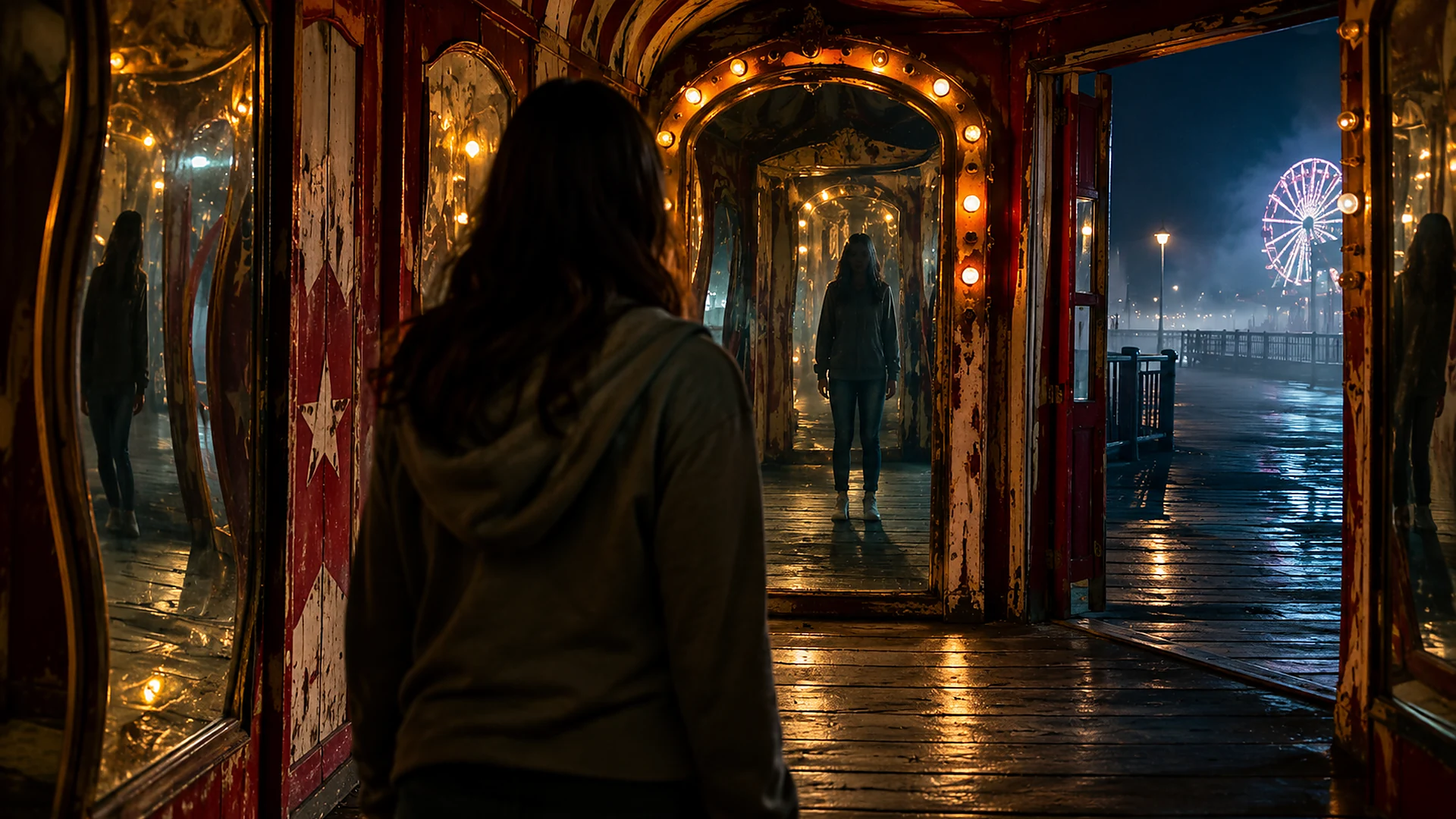
No, Us is not based on a true story. Jordan Peele’s 2019 horror film tells a fictional tale about a family confronted by people who look exactly like them. There is no documented real-life case behind Adelaide Wilson, her double Red, or the underground society known as the Tethered.
But the film does have real roots. Peele drew on a classic television story about doubles, a major 1986 American charity event, and questions about who gets to live comfortably while others suffer.
Is Us Based on a True Story?
Us is an original fictional horror story, not a retelling of a crime, a secret experiment, or an actual case of people living beneath the United States. Peele wrote and directed the film, which stars Lupita Nyong’o as Adelaide and Red, alongside Winston Duke, Shahadi Wright Joseph, and Evan Alex as the Wilson family.
In interviews, Peele discussed the film as a story about doubles and the fears people project onto others. His explanation in a Golden Globes interview focuses on a frightening idea: the enemy may resemble us rather than come from somewhere far away.
The attacks are invented, but the inequality behind the story is real. If you enjoy separating a horror movie’s premise from its factual background, see our look at the real inspiration behind The Strangers.
What Was the Real Inspiration Behind Us?
Peele has identified several influences, but two give viewers especially useful clues: a television episode about an impossible double and a very real public event from the year in which the film begins.
The Twilight Zone Episode That Inspired Jordan Peele
One important influence was Mirror Image, a 1960 episode of The Twilight Zone written by Rod Serling. In it, a woman at a bus station becomes convinced that a person identical to her is trying to replace her. The fear comes from an ordinary setting becoming suddenly untrustworthy.
Peele named the episode as an inspiration in an Irish Times interview. The British Film Institute’s discussion with Peele also explores his interest in doubles and the fear of seeing another version of yourself.
Us builds a much larger world around that idea. Instead of one mysterious copy, an entire family meets its doubles.
The Real 1986 Hands Across America Campaign
Hands Across America really happened on May 25, 1986. Millions of participants joined hands across parts of the United States in a fundraising effort to address hunger and homelessness. The planned human chain crossed 16 states and Washington, D.C., although it was not a perfectly unbroken line. CBS News’ retrospective documents the event and its charitable goal.
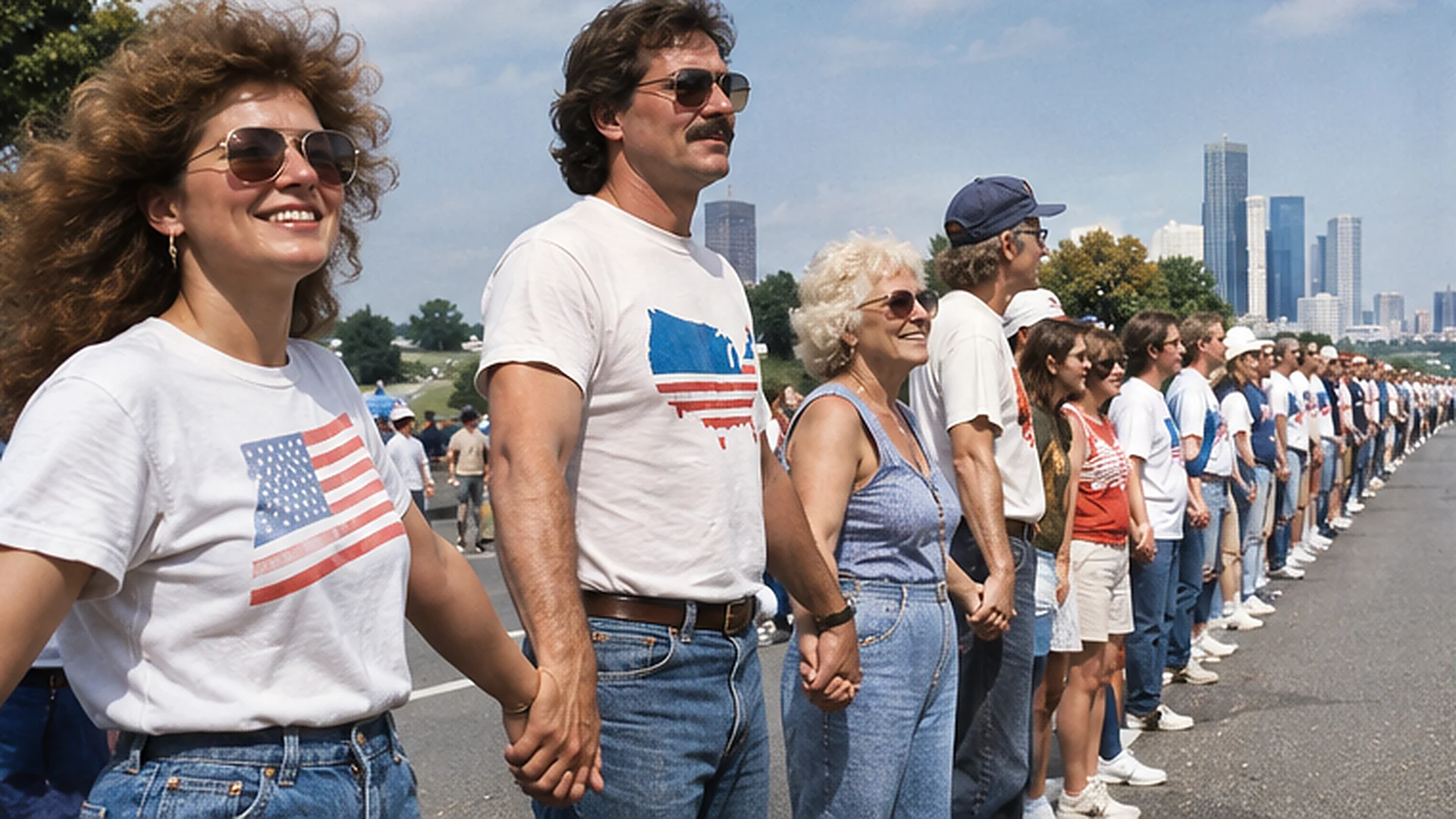
In the film, that hopeful image takes on a darker meaning. The Tethered eventually create their own line of linked people above ground. Peele told the BFI that images of the original campaign had frightened him as a child. The charity drive is historical fact; the Tethered’s version is invented for the movie.
What Is the Story Behind Us?
The film opens in 1986, when young Adelaide wanders into a funhouse near the Santa Cruz boardwalk and encounters someone who looks like her. Years later, she returns to the area for a family holiday with her husband Gabe and their children, Zora and Jason.
Four disturbing doubles soon appear outside the family’s holiday home. The visitors are part of a much larger group called the Tethered, who have lived below ground.
What starts as a family trying to survive a home invasion turns into a story about two groups connected by circumstance and separated by opportunity. For another example of supernatural-looking horror built from a fictional mythology, read whether The Grudge has a true-story basis.
Spoiler warning: The sections below explain the Tethered and reveal the film’s ending.
What Is the Real Meaning Behind the Movie Us?
The simplest reading is that Us asks us to face the parts of ourselves, and our society, that we would rather ignore. In an NPR interview carried by Texas Public Radio, Peele described the title as having several meanings: a family, a community, a country, or humanity.
The title also suggests U.S., the United States. The Wilsons live in safety and enjoy a holiday, while their doubles have been left in miserable conditions. That contrast invites viewers to think about inequality, privilege, and people whose struggles remain unseen.
There is another layer: the fear of an outsider. At first, the Tethered appear to be an unknown enemy. But they have the same faces as the people they attack. Peele has connected this idea to social division and the habit of seeing other groups as threats. His comments to the Los Angeles Times make that social concern explicit.
The central idea is not that every person secretly has an evil twin. It is that calling one group us and another group them can hide how closely their lives are connected.
Are the Tethered in Us Actually Evil?
The Tethered commit terrible acts, but the film does not present them as purely evil. They attack and kill people, and those choices are frightening. Yet their lives have also been marked by confinement, neglect, and a lack of freedom.
According to Red’s account, the Tethered were created to help control the people living above ground. Their makers then abandoned them. The movie never clearly identifies the organization behind the project or explains every detail of how it worked. Calling it a proven government experiment would confuse the film’s fictional backstory with real history. Rotten Tomatoes’ explanation notes those unanswered questions.
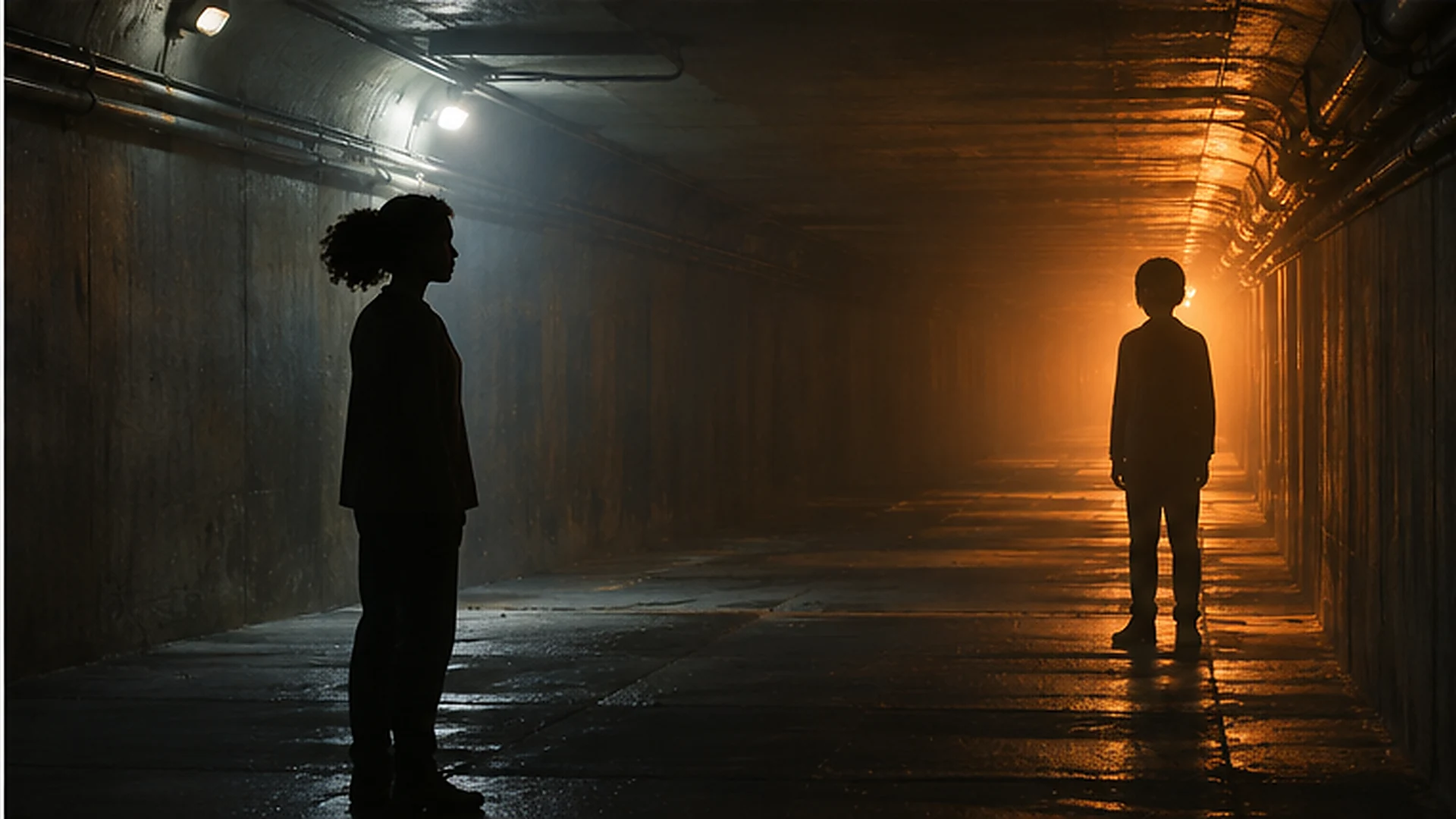
That is the moral trap Peele sets. The Wilsons need to protect themselves, but the people attacking them also have a story of suffering. Understanding why the Tethered are angry does not excuse their violence. It does make the easy labels of hero and monster harder to use.
Other horror films ask us to question what lies behind a frightening image. Our article on the real and fictional elements of Insidious explores a different kind of fear.
Was the Mom in Us a Tethered? The Ending Explained
Yes. The adult Adelaide we follow throughout most of Us was originally one of the Tethered. The final flashback reveals that the two young girls exchanged places inside the funhouse in 1986.
The child who originally lived underground attacked the surface-world Adelaide, took her place with her family, and grew up to become the mother we know. Meanwhile, the original Adelaide was trapped below. She later became the woman called Red and led the Tethered’s uprising.
That means Red was the original human Adelaide, while the movie’s apparent heroine was the underground double. Lupita Nyong’o portrays both adult women. The ending does not imply that the Wilson children are Tethered or that the family’s other members secretly exchanged places.
In an interview discussed by Esquire, Peele connected the switch to the film’s question of who deserves the labels hero and villain. The viewer has spent the story identifying with one woman, only to learn what she did to survive.
Jason’s final look at his mother adds tension, but it is deliberately unclear exactly how much he understands. There is no confirmed second identity swap involving Jason. That ambiguity is part of the ending, not a missing real-world fact.
Which Parts of Us Are Real and Which Are Fictional?
| Element | Status | What to know |
|---|---|---|
| Hands Across America | Real | A national charity event held in May 1986. |
| The Twilight Zone: Mirror Image | Real creative influence | A 1960 fictional TV episode about a double. |
| Santa Cruz boardwalk | Real location | A California setting used within a fictional plot. |
| The Wilson family and Red | Fictional | Characters created for the film. |
| The Tethered and their underground world | Fictional | No verified real society or experiment matches the story. |
The table shows why inspired by real life is not the same as based on a true story. Peele uses familiar history, places, and fears to make an invented situation feel possible.
Why Us Is More Than Just a Horror Movie
The cleverest move in Us is not simply revealing that someone has a double. It is changing whose side the audience thinks it has been on. Once we know the truth about Adelaide and Red, earlier scenes carry a different meaning.
The same idea explains the film’s link to Hands Across America. A chain of people can mean hope and unity, but in the hands of the Tethered it becomes a demand to be noticed. The image is familiar; the perspective changes.
If stories that bend our sympathy interest you, our examination of the reality behind Incident in a Ghostland looks at another disturbing fictional horror narrative.
So, is Us based on a true story? No. Its secret doubles, identity swap, and underground uprising are fiction. What makes the movie memorable is how Peele uses those inventions to ask a real question: What happens when we stop seeing the people we call them as part of us?
I am Jeremy Jahns – Your Cinematic Explorer
Immerse in movie reviews, Hollywood insights, and behind-the-scenes stories.