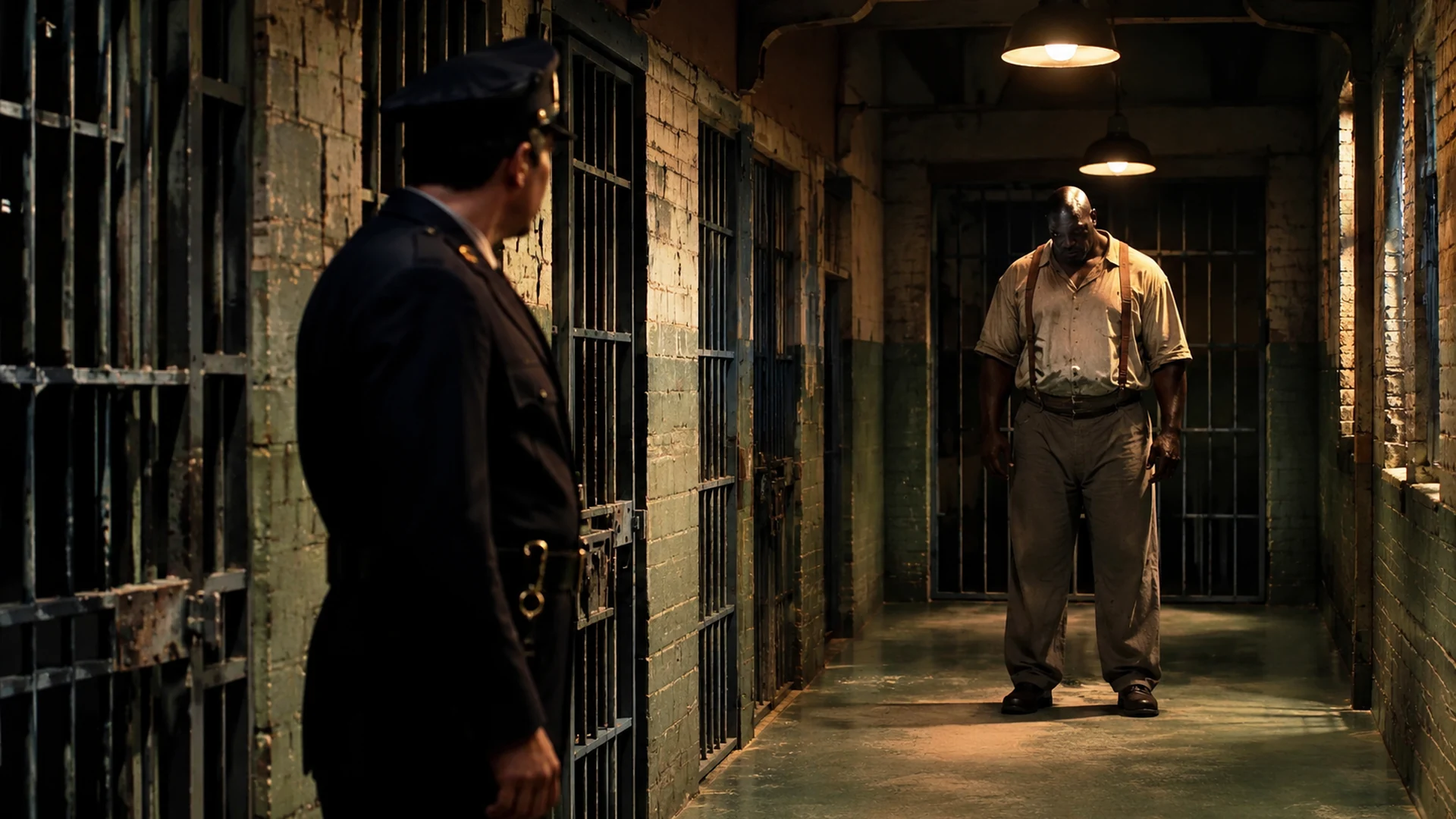
Some movies stay with you long after the screen goes dark. The Green Mile is one of them. Its most painful moment is not a frightening miracle. It is the sight of a gentle man facing punishment for a crime he did not commit.
Is Green Mile based on a true story? No. The 1999 film is adapted from Stephen King’s fictional novel, first released in six monthly parts in 1996. John Coffey and Paul Edgecomb are invented characters, not people identified in historical prison records. Yet the film feels real because it deals with racial prejudice, wrongful convictions, the death penalty, and the cost of failing to listen. Stephen King’s official book page confirms the novel’s origin and publication history.
The comparison many viewers make with George Stinney Jr., a Black teenager executed in 1944, is important but often overstated. Their stories have similarities; there is no verified statement establishing Stinney as King’s direct inspiration.
Spoiler notice: This article explains John Coffey’s innocence and the movie’s ending.
What Is the Story Behind The Green Mile?
The story begins in the 1930s at Cold Mountain Penitentiary, a fictional prison in the American South. Paul Edgecomb, played by Tom Hanks, oversees the cellblock where condemned prisoners spend their final days. The prisoners walk along a green-floored corridor to the execution room. The guards call this passage the Green Mile.
Then John Coffey arrives. Played by Michael Clarke Duncan, he is a very large Black man sentenced to die for the murders of two young sisters, Katie and Cora Detterick. The arrest seems damning: officers found him holding the dead girls and crying. Yet his gentle behavior unsettles Paul and the other guards.
Coffey is afraid of the dark. He speaks softly. Most strikingly, he can take pain and sickness out of other people. He heals Paul’s serious infection, restores a mouse named Mr. Jingles after it is injured, and later heals the prison warden’s wife. These events belong to supernatural fiction, not medical or criminal history.
Frank Darabont directed and wrote the 1999 adaptation. King’s official film listing confirms the production and principal cast. Darabont also directed The Shawshank Redemption, another Stephen King prison story. Readers curious about that film’s origins can explore our Shawshank Redemption true-story investigation.
The mystery in The Green Mile is not simply whether Coffey is guilty. It is whether people will recognize goodness when it comes from someone they already fear.
Is John Coffey Based on a True Story?
No. John Coffey is a character Stephen King created for fiction. There is no confirmed real prisoner with his story, his healing ability, or the exact events shown in the film. His name and fate should not be presented as a disguised biography.
Why do so many people search for the real John Coffey? Part of the answer is Michael Clarke Duncan’s performance. His character is physically powerful but emotionally vulnerable. The contrast makes his situation feel personal rather than distant.
Another reason is the setting. Courts, prison guards, racial inequality, and executions were real features of American history. When an invented person is placed inside a recognizable historical problem, viewers can easily assume the whole story came from a case file.
King has also written other frightening stories that invite questions about real-life origins. Our article on whether Misery was based on a true story explores the difference between a fictional character and real-world influences.
George Stinney Jr.: The Real Historical Case Viewers Compare with The Green Mile
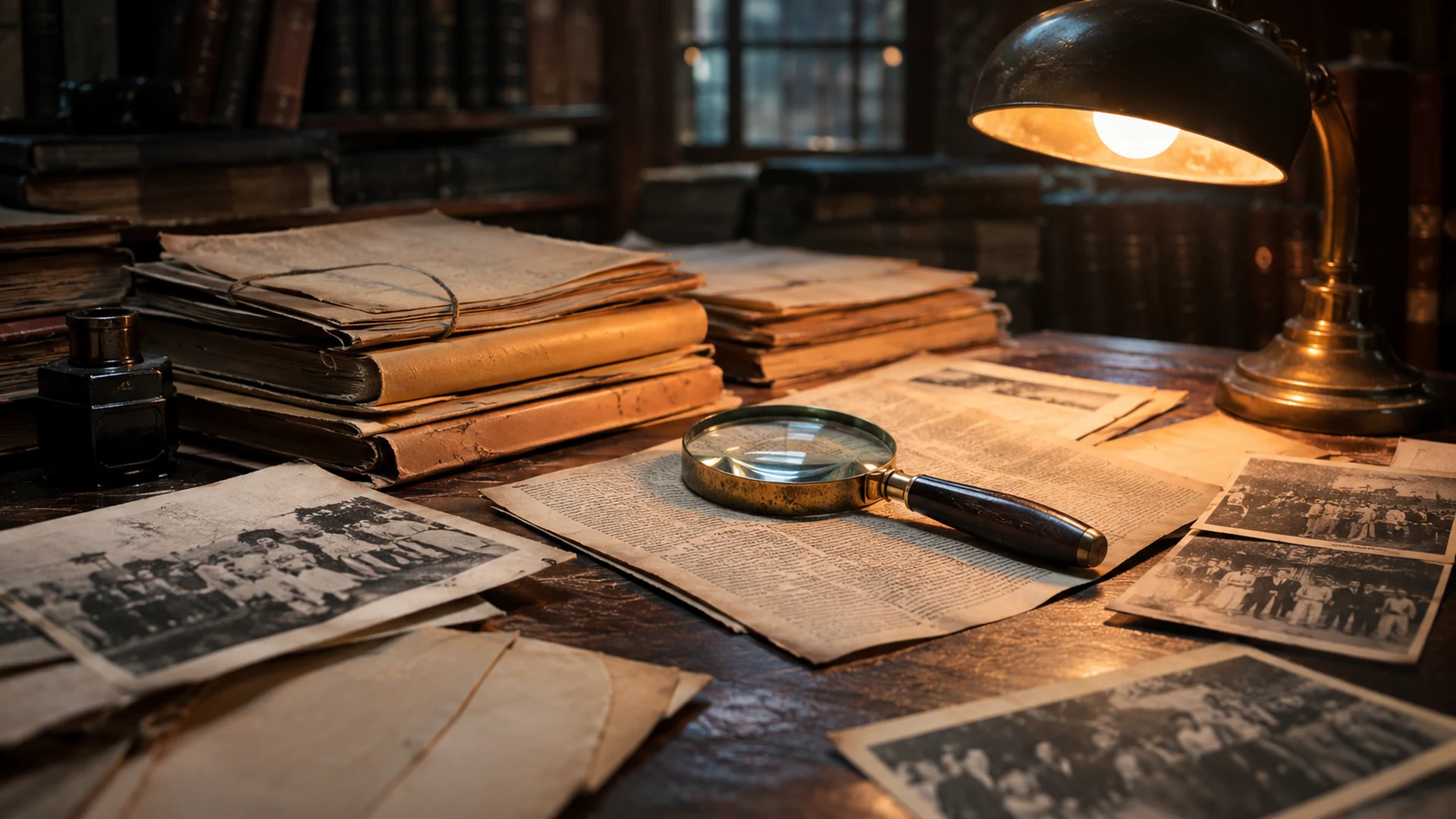
George Stinney Jr. was a real 14-year-old Black boy executed in South Carolina on June 16, 1944. He had been convicted of killing two white girls, Mary Emma Thames and Betty June Binnicker. His trial lasted only a few hours, and the jury deliberated for roughly ten minutes.
Police said George had confessed, but no written confession was produced at trial. His lawyer did not mount an effective defense or appeal. In December 2014, Judge Carmen Mullen vacated his conviction after finding that the 1944 proceedings violated fundamental constitutional protections. The ruling addressed the lack of due process; it did not establish the identity of the actual killer. These points are documented by the Death Penalty Information Center’s case report and the Innocence Project’s account.
That history deserves attention on its own terms. It is not evidence that George was the secret real-life John Coffey.
What are the similarities and differences?
Both accounts involve a Black person accused of killing two white girls, a death sentence, and troubling questions about justice. Those parallels explain why the comparison spread.
But the differences are essential. George was a 14-year-old child living in 1940s South Carolina. Coffey is an adult fictional prisoner in a 1930s story with supernatural powers. In The Green Mile, the audience learns who committed the murders. In Stinney’s real case, the 2014 court ruling vacated a deeply flawed conviction without resolving who killed the girls.
A parallel is not proof of inspiration. Without a reliable statement by King or contemporaneous documentation, claiming that the movie is based on Stinney’s life goes beyond the evidence.
The broader social question also appears in Harper Lee’s work. Our guide to To Kill a Mockingbird and its real-world background examines prejudice and unfair trials in a different fictional story.
Was John Coffey Innocent in The Green Mile?
Yes. John Coffey is innocent of the murders of Katie and Cora Detterick. Near the end of the story, the audience learns that another prisoner, William “Wild Bill” Wharton, killed the children.
When Coffey was discovered with the girls, he had not been attacking them. He was trying to save them with his extraordinary healing gift. His failure left him distraught. The men who arrested him saw a large stranger holding two dead children and assumed the worst.
Later, Coffey shows Paul what happened through a supernatural vision. The guards finally understand that the condemned man was trying to help.
Darabont discusses Coffey’s innocence directly in a published Creative Screenwriting interview. He explains that the character’s moral nature matters more than a simple suspenseful twist. This is a useful distinction: the film wants us to care not just about an error in a verdict, but also about the human being harmed by it.
Why Did John Coffey Say “I Couldn’t Help It”?
The line sounds like an admission when heard without context. That is why it matters so much.
John means that he could not save the girls, not that he murdered them. He had tried to reverse the harm and bring them back, but his ability was not enough. He was grieving his failure to help.
To the officers, those words seemed to fit the accusation. To the audience, once the truth is revealed, they mean almost the opposite. His sorrow was mistaken for guilt.
This is one of the story’s most revealing moments. A person can speak honestly and still be misunderstood when everyone around him has already chosen an explanation. The movie turns that misunderstanding into a lasting tragedy.
Why Did John Coffey Accept His Execution?
After learning the truth, Paul considers whether Coffey can be saved. But John has grown exhausted by the suffering he feels in other people. In the story, his gift gives him unusual insight into cruelty and pain. He is not only hurt by what happens to him; the pain of others overwhelms him too.
John does not want to keep living in a world that feels unbearably cruel. He accepts his approaching death, even though parts of the execution frighten him.
That choice does not make his sentence deserved. It makes the ending harder to watch. An innocent person has reached the point where life feels more painful than death.
Other prison dramas ask what happens when the law and justice pull in different directions. Our Prison Break true-story explainer looks at another fictional story built around a threatened execution and the hope of saving a loved one.
What Does the Green Mile Symbolize?
The Green Mile is the corridor that condemned inmates walk to the execution room. Its green floor gives it a deceptively ordinary name, even though the journey ends in death.
For the prisoners, it is their final walk. For Paul, it becomes a place where professional duty collides with conscience. He is expected to follow the rules, yet he knows a terrible injustice is about to happen.
The strongest question is simple: Can a punishment be lawful and still be wrong? The movie does not need its healing miracles to make that question meaningful.
How Much of The Green Mile Reflects Real History?
Racial inequality and unfair trials
The story takes place during the era of Jim Crow segregation in the American South. Racial prejudice shaped many institutions, including policing and criminal courts. That history helps explain why a Black defendant might face suspicion and unequal treatment. The Death Penalty Information Center’s research on race and capital punishment provides wider context for these long-standing concerns.
Executions by electric chair
The electric chair was a real method of execution used in the United States during the period shown. The film’s prison routines borrow recognizable features of death-row life. But Cold Mountain Penitentiary, the officers, and the events surrounding Coffey are inventions.
The possibility of wrongful conviction
Real criminal cases show why careful evidence, effective legal counsel, and the right to appeal matter so much. An execution cannot be undone after a conviction is overturned. The George Stinney Jr. case shows how deeply a failure of due process can affect a family and a community long after the legal case ends.
This is where The Green Mile connects with history most strongly: not through a claim that its supernatural plot happened, but through the real possibility of an irreversible mistake.
Is John Coffey Meant to Be a Religious Figure?
Many viewers see Christian symbolism in the character. John Coffey’s initials are J.C., the same as Jesus Christ. He heals others, shows mercy, suffers despite his innocence, and carries pain that is not his own.
That is an interpretation of the movie’s themes rather than evidence of a real miracle or a confirmed one-to-one religious allegory. Viewers may understand Coffey as a figure of sacrifice while still recognizing that the narrative is fictional.
What matters is the moral question his character creates: what does it mean to recognize goodness in someone whom society has already condemned?
What Happens to Paul Edgecomb at the End?
The final scenes show Paul living far longer than most people. Mr. Jingles, the mouse Coffey healed, also survives for an extraordinary length of time. Paul suspects the unusual longevity is connected to John’s supernatural gift.
But Paul does not experience his long life as a simple reward. He has outlived loved ones and carries the memory of helping execute an innocent man.
Darabont has discussed the irony of Paul living with the emotional burden of an execution long after the event. In the director’s interview, he treats the ending as something viewers can interpret rather than a mystery with one fixed explanation.
John could remove physical suffering, yet Paul must live with a pain that cannot be healed so easily: guilt.
Why The Green Mile Still Feels Like a True Story
There is no historical John Coffey. There is no evidence of a prisoner performing the miracles shown on screen. And King’s novel is a work of imagination.
Still, the film understands something recognizable about real life. Fear can cloud judgment. People can be judged by their appearance. Innocence can be difficult to prove when a community has already decided who is guilty.
Michael Clarke Duncan’s performance gives those ideas an emotional center. Coffey is not simply a symbol of unfairness. He is frightened, loving, confused, and kind. His humanity makes the injustice feel immediate.
That is why the story stays with people. Its supernatural events may be invented, but its questions about mercy and responsibility are not.
The Truth Behind John Coffey’s Last Walk
The Green Mile is not based on a true story. Stephen King invented the characters and plot, and the film adapted that fiction in 1999. The real George Stinney Jr. case is a disturbing historical parallel, not a proven source for the novel or the movie.
What makes the story powerful is not the possibility that John Coffey once existed. It is the fear that people like him can be misunderstood, that systems can fail, and that some mistakes cannot be repaired.
In the end, the film leaves us with a question more important than whether its miracles were real: when someone seems powerless to defend themselves, are we willing to look carefully enough to see the truth?

I am Jeremy Jahns – Your Cinematic Explorer
Immerse in movie reviews, Hollywood insights, and behind-the-scenes stories.