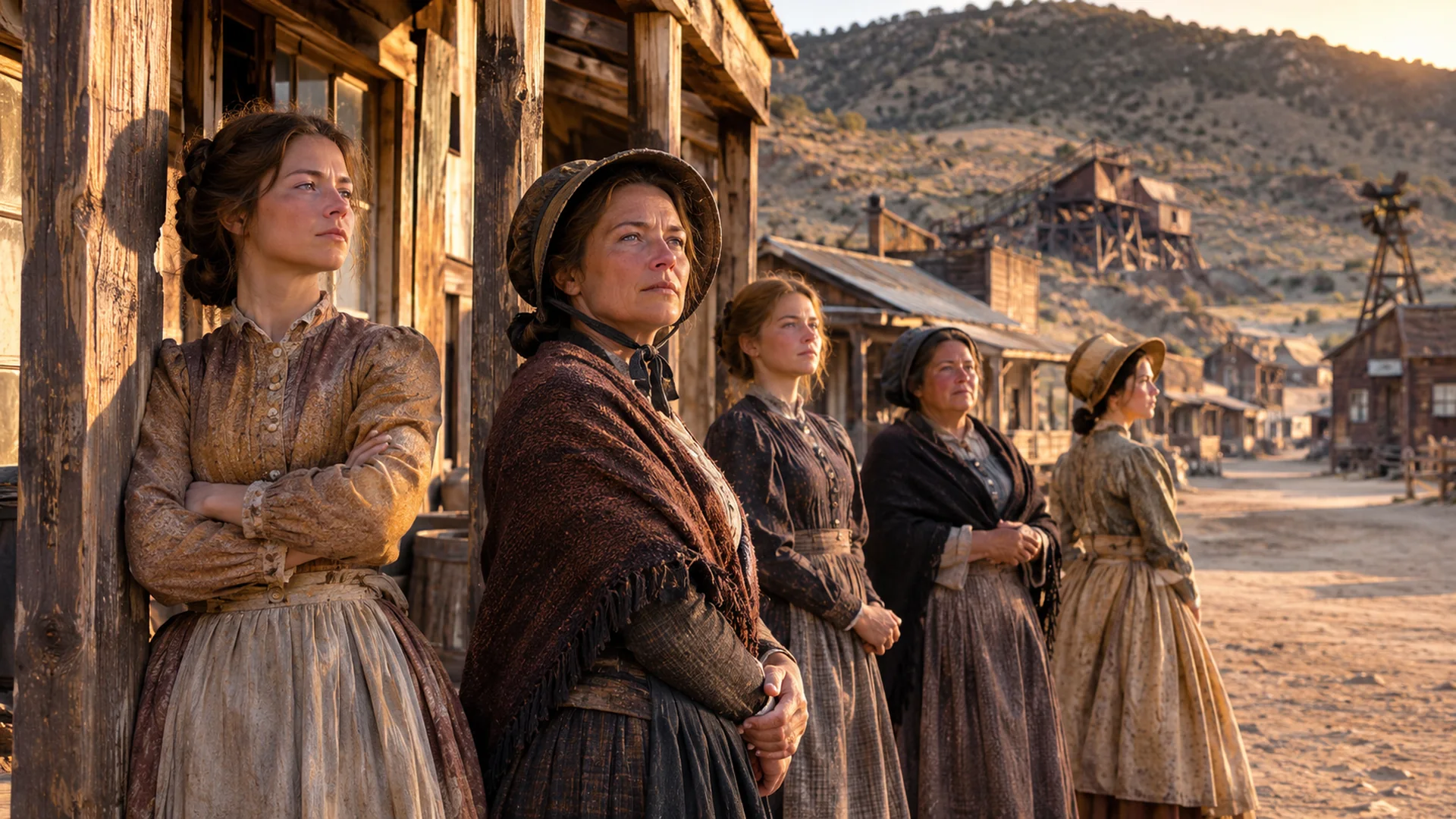
Picture a mining town in the American West where a terrible accident has left most of its men dead. The women must run homes, protect their families and decide whether their town has a future. That is the powerful starting point of Netflix’s Godless. But did it really happen?
No, Godless is not a retelling of one verified true story. Its characters, outlaw feud and climactic conflict are fictional. Yet its main idea has a real historical source: writer-director Scott Frank said he learned about mining communities where deadly accidents left women struggling to rebuild their lives. The result is historical inspiration, not a documentary.
Is Godless Based on a True Story?
The seven-episode Western, released by Netflix in 2017, is set in 1880s New Mexico. An outlaw named Roy Goode escapes his violent former mentor, Frank Griffin, and finds shelter near La Belle, a mining settlement largely inhabited by women after a disaster. Griffin’s search for Roy draws the community into danger. You can confirm the basic setting and premise in Netflix’s official series description.
It helps to divide the show into two parts. The idea of a community trying to survive after a mining tragedy has a historical basis. The specific La Belle community, its people, and the story of Griffin’s gang are a drama created for television.
That mix of believable history and invented adventure is common in Western storytelling. For another example of the genre working with America’s past, see our examination of the history behind News of the World.
What Real Events Inspired Netflix’s Godless?
The most revealing evidence comes from Scott Frank himself. In a 2017 public radio interview, Frank explained that his longtime researcher, Mimi Munson, had been reading about mining towns in the Southwest. She told him about accidents that killed men in a community and left women with difficult choices. Some families moved away; others stayed.
Frank saw the possibilities in that situation. Instead of focusing only on miners and gunfighters, he could explore what happened to people who suddenly had to take on new responsibilities. In a separate interview broadcast by Fresh Air, he discussed the same research and how it helped shape his Western.
Importantly, those interviews do not identify one fully documented La Belle mine collapse as the direct source for every event in the series. It would be misleading to treat the show’s mass death, its named victims, or its aftermath as a precise reconstruction of a single accident.
The historical idea is more general, and more interesting: when a mining community lost workers and family members, the people who remained still needed food, income, safety and some form of government. Godless turns that human problem into a fictional adventure.
Was La Belle a Real Town in New Mexico?
Yes, a real La Belle existed in New Mexico, but it was not the same town shown in Godless. According to Western Mining History’s account of La Belle, the settlement developed during a gold-mining rush in 1894 in what is now Taos County. It gained a post office in 1895 and declined after the area’s mining hopes failed to produce much lasting wealth.
That date matters. The Netflix drama takes place in the 1880s, while the documented La Belle mining settlement was founded in 1894. There is no sound basis for treating the later mining camp as the exact location of the show’s earlier fictional disaster.
The real town’s story was about the hopes and disappointments of gold prospecting. Its name and mining setting make the comparison tempting, but a shared place-name is not proof that the television plot happened there.
Other period stories also borrow a real historical backdrop while changing people and events. Our look at The Last Samurai and its historical influences shows why those distinctions matter.
Did a Mining Disaster Really Leave Women Running a Town?
Frank’s interviews support the broad inspiration: he was told about southwestern communities where mine accidents killed large numbers of men, leaving women to decide whether to leave or keep the settlement going. That is a real piece of the show’s development history.
But the series takes the idea to an unusually dramatic extreme. La Belle is shown as almost entirely female, and the women become central to a violent showdown. Those details work as a story, not as verified casualty figures or a proven account of one town’s defense.
It is also worth resisting a simple idea that women in the nineteenth-century West only became important after men died. Women already worked, raised children, ran businesses, traveled and helped hold communities together. The disaster in Godless makes their work impossible for other characters to ignore.
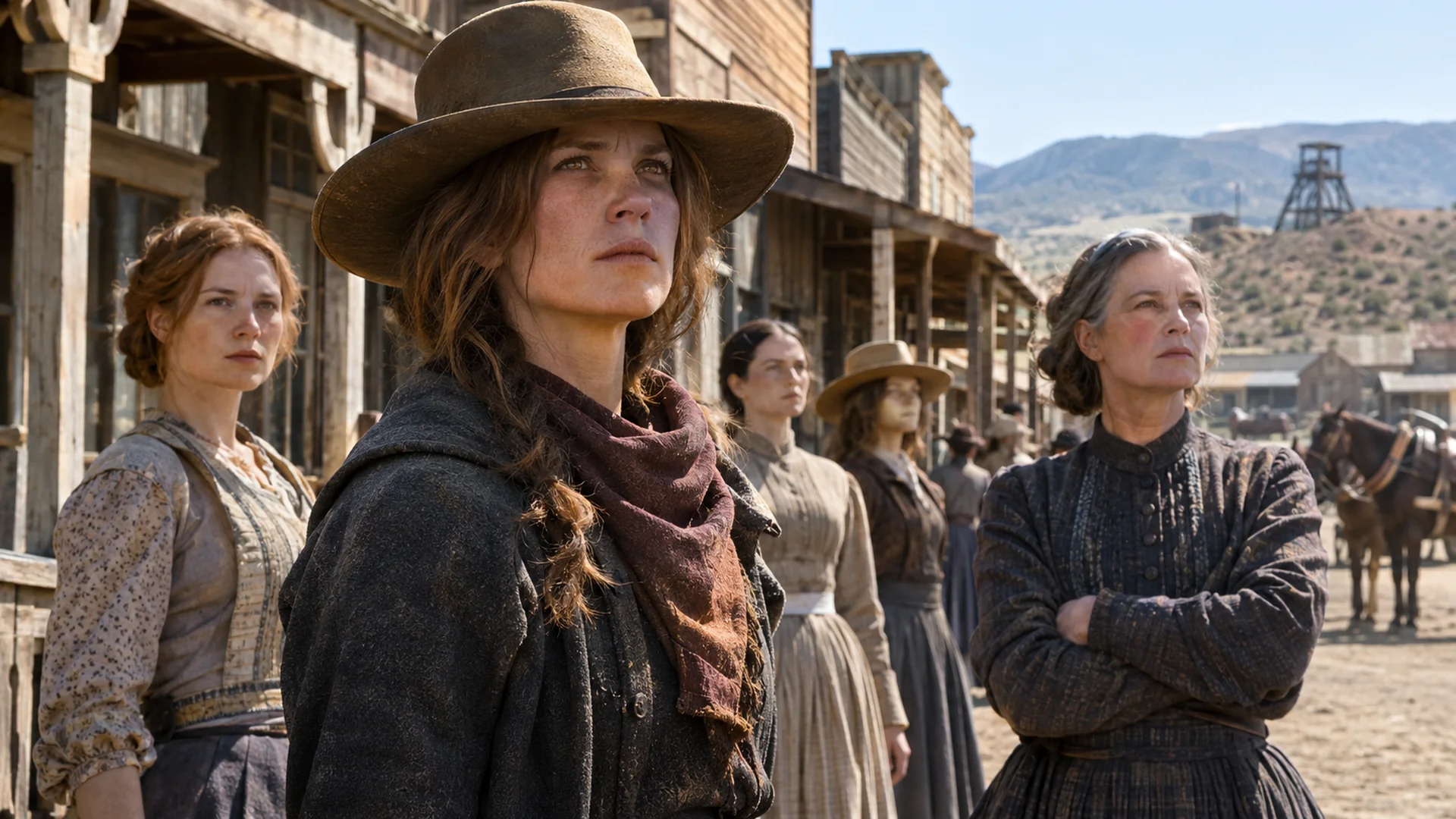
That is why the setting has emotional weight even without a matching historical incident. The people at the center of the story must face grief and fear while making choices that affect everyone around them. Readers interested in another work where women respond collectively to danger can explore the real-life background of Women Talking. Its circumstances are very different, but the question of who gets to decide a community’s future connects the two stories.
Were Roy Goode and Frank Griffin Real Outlaws?
Roy Goode and Frank Griffin are fictional characters. There is no verified historical outlaw case that maps onto their relationship and the story told in Godless.
Roy Goode
Roy is a young former member of Griffin’s gang who is trying to escape the violent life he knew. Jack O’Connell plays Roy Goode, not Jeff Daniels. Netflix’s official 2016 casting announcement names O’Connell as Roy and Daniels as Griffin.
Roy fits a familiar Western pattern: an outlaw searching for a chance to become someone better. That pattern may remind viewers of other frontier tales, but a resemblance is not evidence that Roy was based on Billy the Kid, Jesse James or another specific figure.
Frank Griffin
Jeff Daniels plays Frank Griffin, the dangerous gang leader who pursues Roy. Frank’s authority, cruelty and obsession belong to the story’s imagined world. He reflects the Western genre’s long tradition of frightening outlaws; that does not make him a biography of a particular real bandit.
For a modern film that also uses crime and the Western tradition, see our guide to whether Hell or High Water is a true story.
How Historically Accurate Is Godless?
The answer depends on what you are measuring. Godless often feels convincing because of its frontier landscapes, harsh conditions, mining economy and fear of violence. Those details help the fictional world seem lived in. But the show should not be used as a record of exactly what happened in a specific New Mexico town.
Its strongest historical link is the social question at its center: what happens when people face an unexpected loss and must rebuild a community? The villain’s pursuit, Roy’s personal journey, and the dramatic final battle serve that fictional story.
The women are not simply background figures waiting for a gunfighter to save them. Their decisions and disagreements give the town a life beyond the central outlaw feud. The show’s version of frontier independence is shaped by a writer’s choices as much as by history.
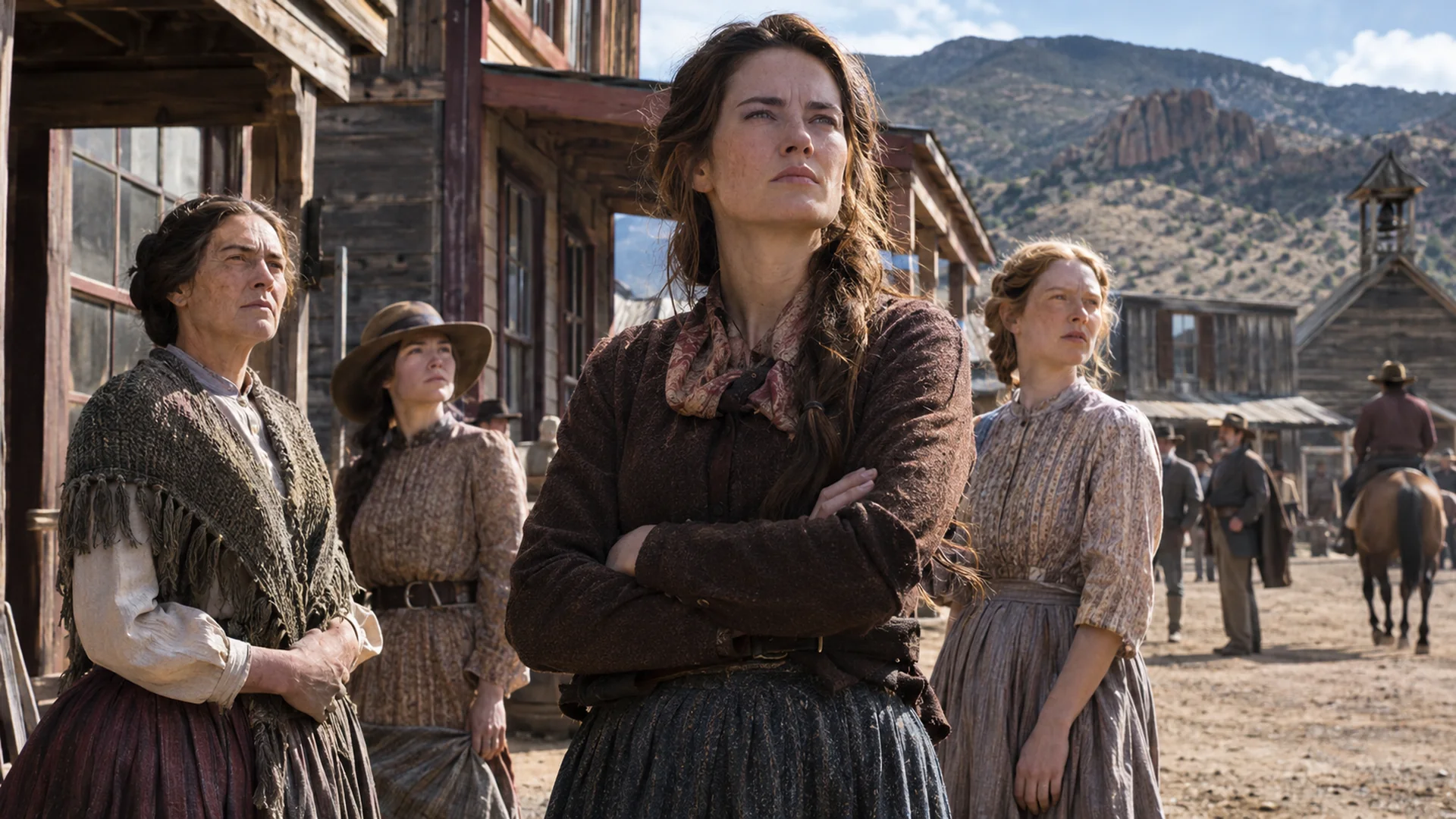
A useful way to watch is to separate period atmosphere from documented events. Wooden storefronts or the realities of mining may fit the broad era. A scene involving Roy and Griffin remains a scene in a scripted Western unless independent evidence shows otherwise.
How Scott Frank Created the Netflix Western
Frank wanted to make a Western while finding something fresh within a familiar genre. His research into mining communities gave him a different point of view: the women who stayed when their lives were turned upside down.
In interviews with public radio and the Los Angeles Times, Frank discussed the development of the project and his interest in traditional Western elements, including outlaws, gunfights and complicated family-like bonds. The series brings those familiar elements together with a town whose women have their own stories.
That combination explains why viewers sometimes assume the show must be based on real events. It has specific dates, a recognizable region and a community built around a believable tragedy. But realistic detail does not turn invented people into historical figures.
Common Questions About the Godless True Story
Is Godless a true story or fiction?
It is fiction inspired by historical accounts. Scott Frank drew on research about mining disasters and women left behind, but the plot is not a direct account of a single confirmed incident.
Was there a real all-women town called La Belle?
A real La Belle was established in New Mexico in 1894, but the show’s mostly female 1880s settlement is a fictional setting. The two should not be treated as the same historical community.
Did Frank Griffin’s gang really attack La Belle?
There is no credible evidence that the fictional showdown between Griffin’s gang and the women of the series took place in the real La Belle. It is a dramatic ending written for the show.
So, is Godless based on a true story? Not in the usual sense. Its most striking idea comes from history, but the people and their adventure are Scott Frank’s creation. Knowing where the real inspiration ends makes the series more rewarding, not less: behind its gunfights is a question about survival, responsibility and the people who keep a town alive.

I am Jeremy Jahns – Your Cinematic Explorer
Immerse in movie reviews, Hollywood insights, and behind-the-scenes stories.