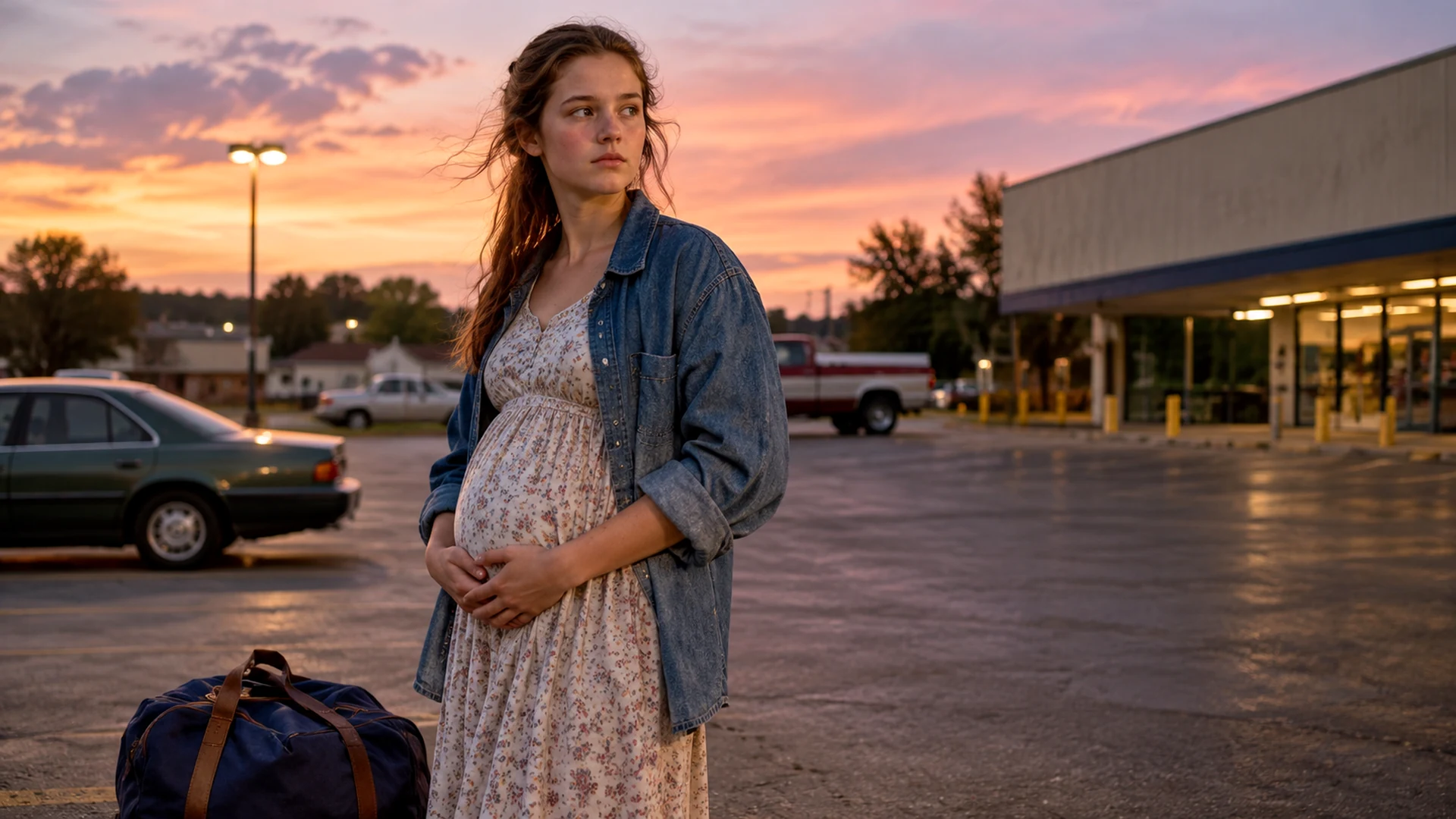
A pregnant teenager left outside a Walmart with almost nothing. A baby born inside the store. Strangers who become a family. Novalee Nation’s journey in Where the Heart Is sounds like the kind of remarkable human-interest story that might have appeared in the news. So, is the Novalee Nation true story real?
No. Novalee Nation is a fictional character, and the Walmart birth is a story event, not a verified account of a particular mother. There is one important real-life connection, though: novelist Billie Letts said Novalee was inspired in part by someone she had taught. That does not make the character’s full life a true story.
Was Novalee Nation a Real Person?
There is no established record of a real Novalee Nation whose life followed the events of Where the Heart Is. She first appeared in Billie Letts’ 1995 novel, then reached a wider film audience when Natalie Portman played her in the 2000 adaptation. The book is sold as fiction, and the film is based on that novel rather than on a documented case. The publisher’s description sets out the invented story of a seventeen-year-old girl stranded in Sequoyah, Oklahoma.
That distinction matters. A novelist can borrow a memory, a personality or a difficult situation from life while making up the events that follow. The result may feel true without being a biography.
What Inspired Billie Letts to Create Novalee Nation?
The strongest answer comes from Letts herself. In the PBS documentary feature A Teller of Tales, she explains that Novalee was based partly on a former student. She also connects Forney Hull to someone she knew who worked in a used bookstore.

Letts made another point in that interview: she changed and added so much to people who inspired her that they might not recognize themselves in the characters. That is a useful clue about her writing method. The people were starting points, not ready-made plots.
Letts was from Oklahoma, and her novel gives small-town relationships an important role. According to Publishers Weekly’s original review, the novel moves from Novalee’s harsh circumstances toward the unusual people who help her settle in. The warmth of those connections is part of what makes the fictional setting believable.
There is no reliable basis for identifying Letts’ former student as the person who secretly lived in a Walmart or gave birth there. The author described inspiration for a character, not proof that the central episode really happened.
Where Is Novalee Nation From?
Novalee comes from Tennessee. In the story, she and her boyfriend, Willy Jack Pickens, are heading west toward California. They stop at a Walmart in Sequoyah, Oklahoma, and he leaves without her. The film’s official synopsis confirms that she is traveling from Tennessee to California when their journey ends abruptly.
The original novel describes an unsettled childhood, including foster homes and trailer parks in Tennessee. That background helps explain why Novalee dreams of a stable house and a family she can trust.
Oklahoma becomes her new home, not because she planned to settle there, but because her new friends give her somewhere to belong. Her journey is less about reaching California than discovering what home actually means.
Another fictional young woman learning to survive without a secure home appears in Where the Crawdads Sing. The plots differ, but both invite readers to ask how much emotional realism comes from real events.
Did Novalee Really Give Birth Inside a Walmart?
She gives birth in Walmart in the novel and film, but the event belongs to fiction. The story has Novalee secretly living in the store after Willy Jack abandons her. She makes it through the days without a proper home. When she goes into labor, Forney Hull comes to her aid, and the birth attracts public attention.
The plot is not merely an online rumor about the movie. It appears in the publisher’s book synopsis, in Kirkus Reviews’ 1995 description of the novel, and in accounts of the film.
What is not established is an actual Walmart delivery that served as the direct historical model for Novalee’s story. Real people can face pregnancy without housing, but it would be misleading to turn that general reality into a specific undocumented claim about Novalee.
The episode works as a dramatic turning point. A place where Novalee is trying to remain invisible suddenly becomes the place where everyone sees her. Her need for shelter and support can be compared with the real struggles behind Maid, although Maid has a separate memoir-based source and is not connected to Letts’ novel.
Why Did Novalee Name Her Baby Americus?
Novalee calls her daughter Americus because she wants the child to have a strong, meaningful name. Earlier in the story, photographer Moses Whitecotton encourages her to choose a strong name. When Americus is born, Novalee follows that idea.
This is a character choice, not a clue to a hidden real-life identity. Americus is an unusual name that makes a new beginning feel possible. That symbolism is an interpretation of the story, not an explanation that Letts publicly confirmed.
The name also tells us something about Novalee. She has been treated as disposable, but she wants her daughter to grow up knowing she has value. By choosing a name with confidence, Novalee takes one small decision into her own hands.
Did Novalee Love Forney Hull?
Yes. Novalee loves Forney, even though she has trouble admitting it. Forney is the gentle librarian who cares for her and helps deliver Americus. Their relationship grows through small acts of kindness rather than grand romantic promises.

At one stage, Novalee pushes him away. She has lived with rejection for so long that she doubts she deserves someone who treats her well. Her words do not always match what she feels.
In the 2000 film, Novalee eventually acknowledges her love. She seeks Forney out, and the story ends with their marriage in the Walmart where her life changed. The movie’s ending answers the relationship question clearly, even if the way they reach it is full of painful hesitation.
Forney is also a reminder of the character’s real-world roots. In the PBS interview, Letts described drawing part of Forney from a man who worked in a used bookstore. That real inspiration does not mean Novalee and Forney’s romance happened to the people who inspired them.
How Much of Where the Heart Is Was Fictional?
The central plot and the people in it are fictional. The novel was first published in 1995 and later became the 2000 film directed by Matt Williams. The film information and synopsis identify Natalie Portman as Novalee and James Frain as Forney.
| Story element | What can be verified |
|---|---|
| Novalee Nation | Fictional character partly inspired by a former student of Billie Letts. |
| Birth inside Walmart | Event in the novel and film; not established as Novalee’s real-life experience. |
| Forney Hull | Fictional librarian; Letts drew part of his character from a bookstore worker. |
| Americus Nation | Novalee’s fictional daughter; the name reflects a wish for strength. |
| Family, poverty and belonging | Real human challenges explored through an invented story. |
The novel and film tell broadly the same story, but an adaptation is not a historical record. A film can condense events, shift relationships and simplify a book’s ending. Neither version should be used as evidence that a particular family lived through every scene.
For a useful contrast, The Pregnancy Pact is discussed in connection with a reported real-world incident, while Novalee’s central Walmart narrative comes from fiction. Similar subjects do not mean similar levels of factual support.
Why Novalee Nation’s Story Still Feels Real
The most convincing part of Where the Heart Is is not the unusual birth. It is what happens afterward. Novalee finds people who return her kindness, teach her skills and help her become a parent with a sense of direction.
That blend of fiction and recognizable hardship explains why audiences keep asking about the Novalee Nation true story. A similar distinction matters in Esperanza Rising, another novel where a fictional character’s struggles invite questions about real-life inspiration.
So the answer is clear: Novalee Nation was not a documented real mother whose life was filmed. She was a character created by Billie Letts, with some traits drawn from a former student. The movie’s power comes from a fictional young woman finding the family and home she once believed she could never have.

I am Jeremy Jahns – Your Cinematic Explorer
Immerse in movie reviews, Hollywood insights, and behind-the-scenes stories.