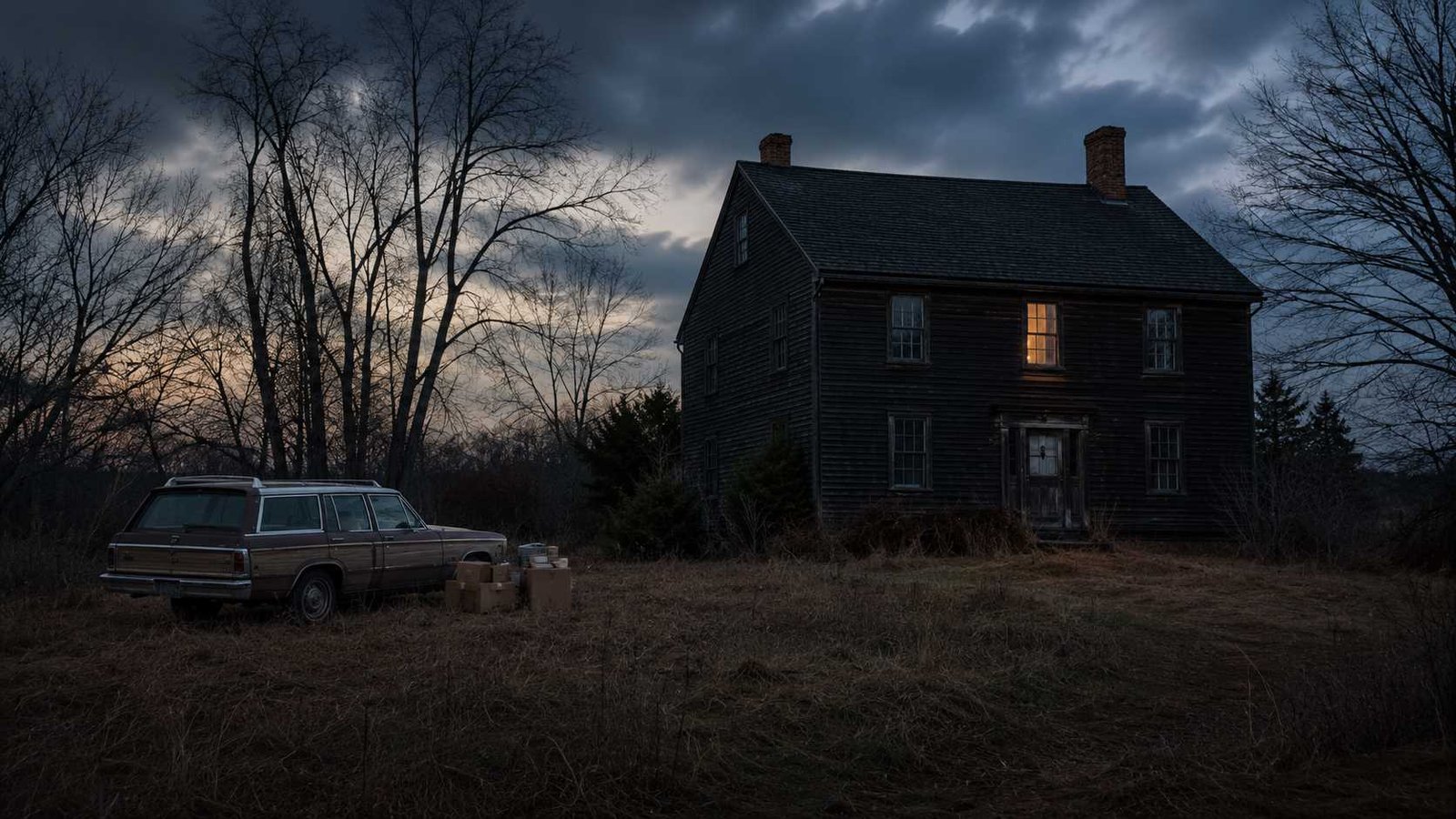
The Conjuring presents these events as part of a terrifying true story. That claim has helped make the movie more frightening than an ordinary ghost tale. It suggests that somewhere behind the demons, possessions, and jump scares, a real family lived through something similar.
So, is the story of The Conjuring true?
The most honest answer is partly.
The Perron family was real. Their farmhouse was real. Ed and Lorraine Warren were real paranormal investigators, and they did visit the family. The Perrons also said they experienced unexplained events inside the house.
However, the movie is not a factual recreation of those experiences. Its demonic villain, possession scenes, attempted child murder, and final exorcism were heavily fictionalized or created for the screen.
Andrea Perron, the eldest Perron daughter, has said that the film is about 95 percent fiction and five percent hard truth. Warner Bros., meanwhile, describes it as the true story of the Warrens helping a family terrorized by a dark presence. Both statements reveal something important: the movie began with real people and real claims, but Hollywood turned those claims into a carefully designed horror story.
The real family behind The Conjuring
Roger and Carolyn Perron moved into an old farmhouse in Harrisville, Rhode Island, with their five daughters in 1971.
Their daughters were Andrea, Nancy, Christine, Cindy, and April. The family remained at the property until 1980.
According to the Perrons, unusual incidents began soon after they arrived. They reported missing objects, doors moving without explanation, strange sounds, unpleasant smells, and mysterious figures inside the house.
Not every reported spirit seemed threatening. Andrea Perron has described some presences as harmless or even comforting. Others were said to be frightening and aggressive.
Carolyn reportedly experienced the most troubling events. She claimed that she woke with unexplained bruises and felt that something inside the house had focused its attention on her.
These accounts came mainly from members of the Perron family. They are personal testimony rather than independently proven evidence of ghosts or demons. Still, several family members have continued to tell similar versions of the story decades later.
That consistency is one reason the true story of The Conjuring remains so interesting. The Perrons may not be able to prove that their house was haunted, but they have repeatedly said that something unusual happened there.
What reportedly happened inside the farmhouse?
The movie takes the family’s experiences and compresses them into a short, violent crisis. The real accounts describe a much slower story.
The Perrons lived in the farmhouse for nearly ten years. Their reported experiences developed gradually rather than exploding over a few terrifying days.
Family members have described beds shaking, doors opening, voices, unexplained footsteps, objects changing position, and figures appearing inside the home. One daughter reportedly claimed that she saw a spirit resembling an old woman. Another spoke about a male presence in the house.
Carolyn became deeply interested in the property’s history. She reportedly visited local libraries and spoke with people who knew stories about the area.
Over time, the family connected some of their experiences to people who had previously lived on or near the land. This is where history, local legend, family memory, and paranormal belief began to mix together.
The film simplifies all of this by blaming nearly everything on one evil woman: Bathsheba Sherman.
The real story is far less certain.
How Ed and Lorraine Warren became involved
Ed and Lorraine Warren were a married couple from Connecticut who investigated reported hauntings and demonic activity.
Ed described himself as a demonologist. Lorraine said she was clairvoyant and could sense spirits or spiritual energy. Together, they became involved in several cases that later inspired books and films.
The Warrens visited the Perron farmhouse after learning about the family’s claims. Lorraine reportedly believed that a dark presence had attached itself to Carolyn.
The couple’s arrival is one of the basic facts the movie gets right. However, their real involvement was not as long or heroic as the film suggests.
In the movie, the Warrens move into the center of the family’s life. They install equipment, document paranormal events, protect the children, confront Bathsheba, and save Carolyn through an improvised exorcism.
According to the Perron family’s account, the Warrens’ involvement ended after a disturbing séance.
Roger Perron reportedly became angry about what happened during that session and ordered the Warrens to leave. The family then continued living in the house for several more years.
That is a major difference. The Warrens did not defeat an evil force and restore peace to the home in one dramatic night.
The séance that frightened the Perron family
The movie’s final act shows Carolyn becoming fully possessed by Bathsheba. She tries to kill one of her daughters, and Ed Warren performs an exorcism to save her.
The real family described a frightening séance, but not the Hollywood exorcism shown on screen.
According to Andrea Perron, she secretly watched the session even though the children were not supposed to be present. She later said her mother appeared to speak in an unfamiliar voice, rose from her chair, and was thrown across the room.
That account comes from Andrea’s memory of the event. There is no scientific record proving that Carolyn levitated or became possessed.
Roger reportedly believed that the séance had placed his wife in danger. He then told the Warrens to leave the property.
The film changes this painful family memory into a victory. Ed performs an exorcism, Lorraine reminds Carolyn of a loving family moment, and the evil presence is defeated.
That ending gives viewers emotional relief. It also creates a satisfying heroic role for the Warrens.
Real life offered no such clear ending.
Was Bathsheba Sherman really a witch?
Bathsheba Sherman was a real woman. Almost everything else the movie says about her is doubtful.
She was born Bathsheba Thayer in Rhode Island in 1812 and married Judson Sherman. She lived during the nineteenth century and died in 1885.
In The Conjuring, Bathsheba is described as a witch and Satanist who sacrificed her baby, cursed the land, and hanged herself from a tree.
Historical reporting has found no reliable evidence supporting those claims.
There is no confirmed record showing that Bathsheba practiced witchcraft, worshipped Satan, sacrificed a child, or was convicted of murdering a baby. She also did not die by hanging herself in 1863 as the film suggests.
Historical accounts place her death in 1885, when she was in her seventies. Research also indicates that she lived near the farmhouse rather than inside the Perron home itself.
The movie’s portrayal had consequences beyond the screen. Bathsheba’s grave became a target for visitors, vandals, and paranormal enthusiasts. The Burrillville Historical Society worked to restore her damaged gravestone, while local historians tried to correct the frightening story attached to her name.
This is where the true story becomes uncomfortable.
A real woman who cannot defend herself was turned into a demonic movie villain. Local rumors became entertainment, and entertainment began to look like history.
Bathsheba Sherman may have existed, but the witch in The Conjuring is essentially a fictional character.
How much did The Conjuring change?
The film kept the names of the Perrons, the Warrens, and Bathsheba Sherman. It also used the farmhouse setting and the family’s claims of unusual activity.
Nearly everything else was reshaped to create a faster and more frightening story.
| Movie scene or detail | What is known about real events |
|---|---|
| The Perron family moved into an old Rhode Island farmhouse | True |
| The family had five daughters | True |
| They reported unexplained activity | True as a family claim |
| Ed and Lorraine Warren investigated | True |
| Bathsheba lived in the farmhouse | Not supported by historical evidence |
| Bathsheba was a proven witch and child killer | No reliable evidence |
| Bathsheba hanged herself after cursing the land | Fictionalized |
| Carolyn was fully possessed by Bathsheba | A paranormal claim, not proven |
| Carolyn tried to murder her daughter | Created for the movie |
| Ed Warren performed an exorcism | The real event was described as a séance |
| The Warrens defeated the haunting | The family remained in the house until 1980 |
The movie also reduces the amount of time involved. The real family lived with their reported experiences for years. The film makes the haunting feel immediate and rapidly escalating.
It also changes the emotional center of the story.
The Perron family’s account is about a family trying to understand a house they could not easily leave. The movie becomes a battle between the Warrens and a clear demonic enemy.
That shift makes the story easier to follow, but much less accurate.
Why did the family stay for so long?
This question appears often because horror films teach us a simple rule: when a house becomes dangerous, leave.
Real families do not always have that option.
The Perrons had invested their money in the property. They had five children and needed a stable home. Moving again would have required resources they did not easily have.
The family eventually left in 1980 and moved to Georgia. Andrea later said Carolyn felt she could not survive another winter in the farmhouse.
Whether the cause was paranormal activity, emotional strain, the condition of the old house, or a combination of factors, the family’s fear appears to have felt genuine to them.
That does not prove that a demon lived in the home. It does show why the story should be treated with some human sensitivity.
Behind the profitable film franchise was a family that says it spent years feeling unsafe.
Is the real Annabelle doll haunted?
Annabelle is another example of a real object surrounded by disputed claims and heavy movie invention.
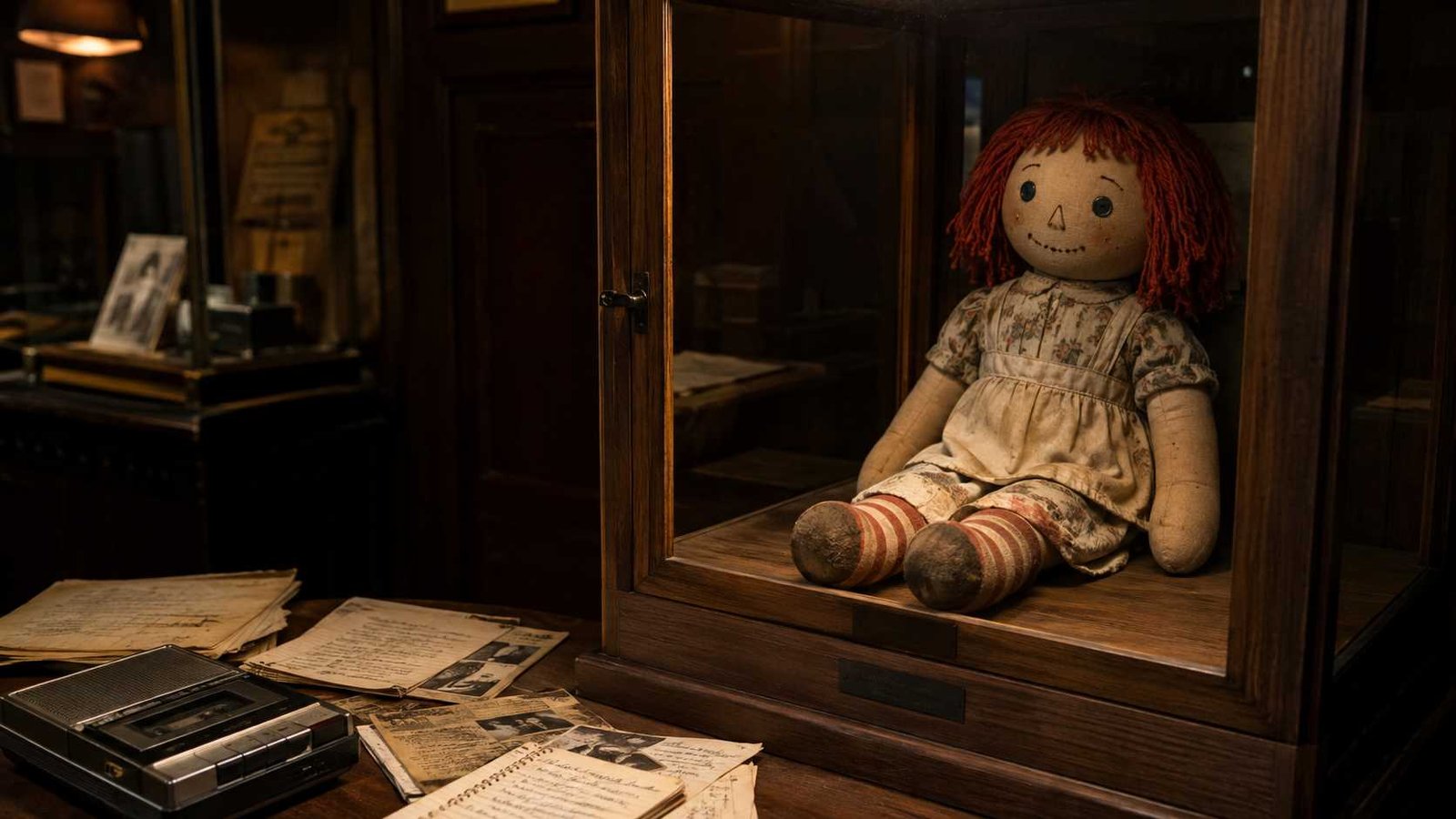
A doll called Annabelle does exist. However, it does not look like the cracked porcelain figure seen in the films.
The real object is a large Raggedy Ann cloth doll with red yarn hair.
According to the Warrens’ account, a nursing student named Donna received the doll in 1970. Donna and her roommate claimed that it moved, changed positions, and appeared to leave messages.
The Warrens concluded that the doll was not controlled by the spirit of a young girl. They claimed an inhuman presence was using it to gain access to a person.
Those are the Warrens’ paranormal conclusions. They have not been independently proven.
The doll was later kept inside a display case as part of the Warrens’ collection. The frightening porcelain design, satanic cult attack, murders, and much of the storyline seen in the Annabelle films were created for entertainment.
So, are The Conjuring and Annabelle real?
The people and the cloth doll are real. The supernatural explanations remain unverified, while most of the movie plots are fictional.
What actually happened to the Smurl family?
The Smurl family’s story belongs to a different Warren case. It later inspired The Conjuring: Last Rites, released in 2025.
Jack and Janet Smurl lived in a duplex in West Pittston, Pennsylvania, with their children and Jack’s parents.
The family said unusual events began after they moved there in the 1970s. Their claims included strange sounds, terrible odors, moving objects, dark figures, physical attacks, and disturbing encounters they believed were caused by a demon.
Ed and Lorraine Warren investigated the home in 1986. They concluded that several spirits and one demonic presence were involved.
The case received wide media attention and became the subject of the book The Haunted and a 1991 television film.
However, the Smurl case was strongly disputed.
Skeptics argued that convincing evidence had not been produced. Some critics called the story a hoax. Later occupants reportedly said they did not experience the same activity in the home.
The Smurls maintained that their experiences were real. They eventually moved from the property, and the story became one of the Warrens’ most famous investigations.
As with the Perron case, we can confirm the family, house, publicity, investigation, and allegations. We cannot confirm that a demon caused what the family reported.
Are all The Conjuring movies based on true stories?
Several movies in the franchise use real names, places, court cases, or paranormal claims as starting points.
That does not make every scene true.
The Conjuring
The first film was inspired by the Perron family’s reported experiences in Rhode Island.
The Conjuring 2
The second movie drew from the Enfield poltergeist case in England. Members of the Hodgson family reported strange events, especially around two young daughters. The case attracted reporters, researchers, skeptics, and paranormal investigators.
The film greatly expands the Warrens’ role and adds the demonic nun Valak as its central villain.
The Conjuring: The Devil Made Me Do It
This movie used the real murder case of Arne Cheyenne Johnson, whose defence team attempted to raise demonic possession as an explanation.
The court did not accept possession as a legal defence. The film adds an occult conspiracy and supernatural investigation that were not part of the established court record.
The Conjuring: Last Rites
The 2025 film was inspired by the Smurl family’s alleged haunting. Its creators took major dramatic liberties, and actor Patrick Wilson openly noted that they were not making a documentary.
Annabelle and The Nun films
These movies are even more fictional.
Annabelle was inspired by a real cloth doll and the Warrens’ claims about it. The Nun films build stories around Valak, a character designed for the movie universe rather than a documented Warren investigation.
The franchise works by placing fictional stories around small pieces of reality. Real names and locations make the horror feel possible. The supernatural villains make it cinematic.
Is it safe to watch The Conjuring?
There is no reliable evidence that watching The Conjuring can summon a spirit, attract a demon, or cause paranormal activity.
The real concern is its effect as an intense horror movie.
The British Board of Film Classification describes the film as containing strong horror, jump scares, supernatural attacks involving adults and children, demonic possession, bloody images, and references to suicide.
For many adult horror fans, that is part of the entertainment. They enjoy the tension while understanding that they are physically safe.
Other viewers may experience:
- Anxiety after the film
- Trouble sleeping
- Nightmares
- Fear of darkness or being alone
- Distress linked to religious or supernatural themes
Mayo Clinic lists frightening films among possible triggers for nightmares, while Cleveland Clinic notes that some people may be more likely to experience nightmares after watching a scary movie.
People who already struggle with panic, intrusive thoughts, severe anxiety, or recurring nightmares may decide that the movie is not worth the discomfort.
You can also reduce its emotional impact by watching during the day, lowering the volume, avoiding it before sleep, or watching with someone you trust.
The danger is not a curse. It is simply that a well-made horror film can stay in your imagination longer than expected.
Why does the story feel so believable?
The Conjuring does not begin by showing a monster. It begins with a family.
There are breakfast conversations, moving boxes, tired parents, playful children, and an old house that needs work. These ordinary details make the fear feel close to home.
The film also treats Ed and Lorraine Warren as calm professionals. They use cameras, recorders, interviews, and case files. This gives supernatural events the appearance of an investigation.
Most importantly, the movie repeatedly reminds viewers that it is connected to real events.
That statement changes how we watch. A creaking door feels more disturbing when we believe someone once heard it. A dark cellar becomes more frightening when we think a real family stood there.
The film’s strength is not that it proves ghosts exist. It is that it makes belief feel emotionally reasonable for two hours.
The truth is quieter than the movie
The story of The Conjuring is true in the way many films based on real events are true.
There was a family named Perron. They lived in a Rhode Island farmhouse. They reported experiences they could not explain. Ed and Lorraine Warren visited them, and a séance reportedly ended badly.
Those are the roots of the story.
The possessed mother, murderous witch, child sacrifice, demonic curse, and lifesaving exorcism belong mainly to Hollywood.
Bathsheba Sherman was a real person, but there is no solid historical evidence that she was the evil witch shown in the film. Annabelle is a real cloth doll, but its supernatural reputation depends on personal accounts. The Smurl family also reported disturbing experiences, but their demonic explanation remains disputed.
Perhaps that uncertainty is why the franchise continues to fascinate people.
A completely fictional ghost can be dismissed when the credits roll. A story attached to real names, old houses, frightened families, and unresolved testimony is harder to forget.
The facts do not prove that the events were paranormal. They do prove that real people believed something frightening had entered their lives.
And sometimes, belief is enough to create a story that refuses to stay in the dark.
Frequently asked questions
Is The Conjuring based on a true story?
Yes, it was inspired by the Perron family’s reported experiences in a Rhode Island farmhouse and the involvement of Ed and Lorraine Warren. However, many major scenes and supernatural details were invented or heavily changed.
How accurate is The Conjuring?
It accurately uses the names of the Perron family, the Warrens, and Bathsheba Sherman. It also reflects the family’s general claim that strange events occurred. The possession, attempted child murder, exorcism, and portrayal of Bathsheba as a proven witch are not supported as factual history.
Did Carolyn Perron really become possessed?
Andrea Perron has described a séance during which her mother behaved strangely, spoke in an unfamiliar voice, and appeared to rise from her chair. This is family testimony, not independently verified proof of possession.
Did Ed Warren perform an exorcism?
There is no reliable evidence that Ed performed the dramatic exorcism shown in the film. The real incident was described as a séance, after which Roger Perron told the Warrens to leave.
Was Bathsheba Sherman a real person?
Yes. Bathsheba Sherman was a nineteenth-century Rhode Island woman. There is no reliable historical evidence that she was a witch, Satanist, child murderer, or the demonic force presented in the film.
Is Annabelle a real doll?
Yes. The real Annabelle is a Raggedy Ann cloth doll. Claims that it moved or was controlled by an inhuman presence came from its owners and the Warrens and have not been scientifically verified.
Is it safe to watch The Conjuring?
Watching the movie does not have any proven paranormal risk. It does contain intense horror, possession scenes, jump scares, threats to children, and disturbing images. Sensitive viewers may experience anxiety or nightmares.
What actually happened to the Smurl family?
The Smurls said their Pennsylvania home was affected by violent supernatural activity. The Warrens supported their claims, while skeptics questioned the evidence. The family eventually moved, and later occupants reportedly did not experience the same events.
Are The Conjuring movies completely true?
No. Several films begin with real cases or people, but the plots are shaped for horror entertainment. Each movie combines reported events, disputed claims, and fictional characters or scenes.

Jessica Savitch, with a deep passion for journalism, brings her expertise to istruestory.com as a dedicated author. MA in Arts & Journalism.