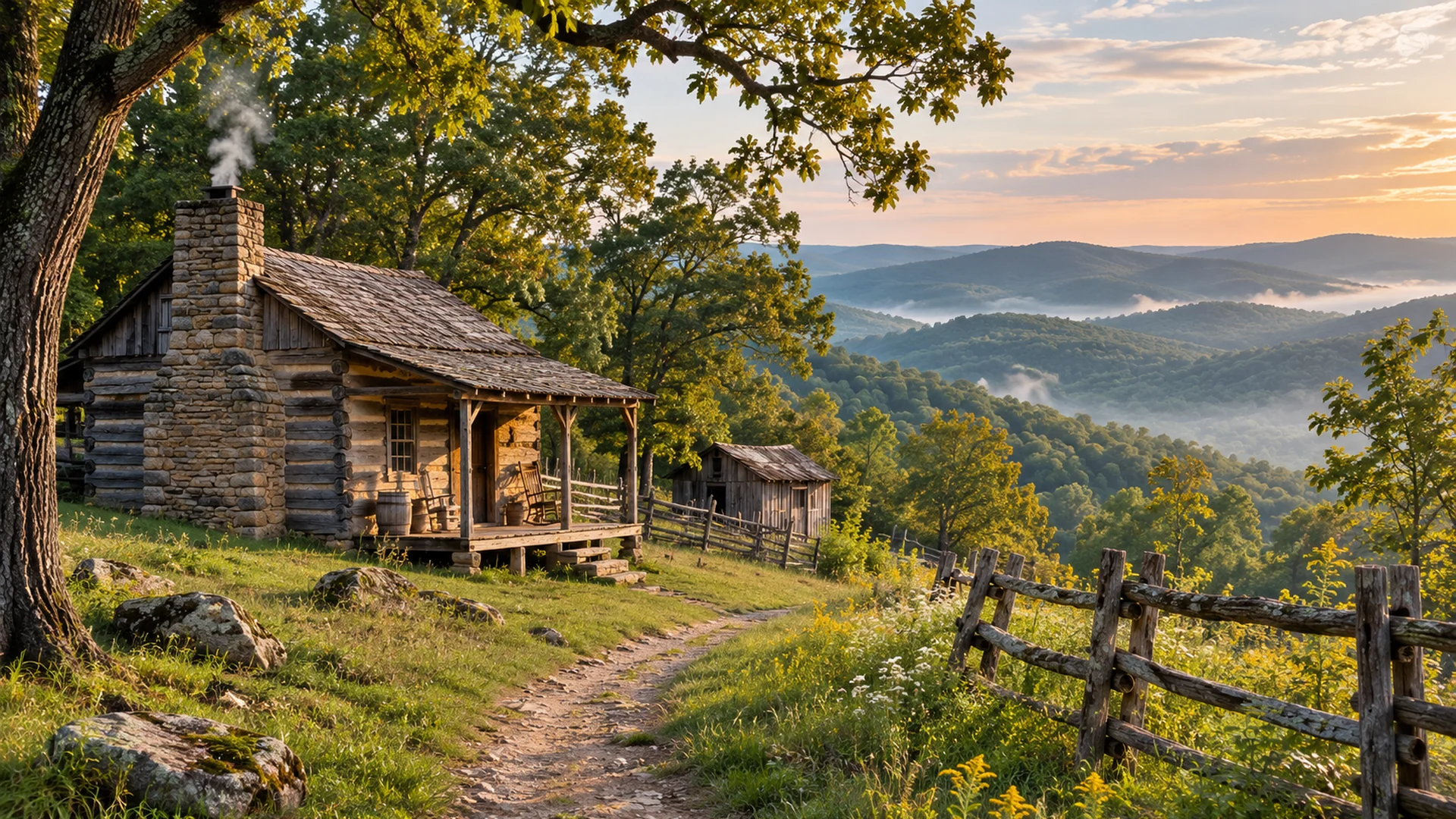
No, The Shepherd of the Hills is not a true story in the strict sense. Harold Bell Wright’s 1907 novel is fiction shaped by real people, homes and landscapes in Missouri’s Ozark Mountains. Its setting is authentic, and some characters have identifiable inspirations. But the central events were written as a novel, not recorded as a factual history.
There is also a 1941 film starring John Wayne. It takes even greater liberties with the original story. Knowing whether you’re asking about the book or the movie makes a difference. The Missouri history exhibit on the novel traces the real places and people behind the book.
At a glance: What is real and what is fictional?
| Part of the story | What the evidence shows |
|---|---|
| 1907 novel | Fiction written by Harold Bell Wright |
| Ozark setting | Real countryside around Branson and the White River region of Missouri |
| Old Matt and Aunt Mollie | Inspired by real residents John and Anna Ross, but fictionalized |
| Uncle Ike | Based on real postmaster Levi Morrill |
| Daniel Howitt and the main plot | Fictional storytelling, not documented biographies or incidents |
| 1941 John Wayne film | Loosely adapted fiction that changes major book characters and conflicts |
What is The Shepherd of the Hills about?
Published in September 1907, the novel follows an older stranger named Daniel Howitt, who arrives among families living in the Ozark hills. The story also centers on Old Matt, Aunt Mollie, Young Matt and Sammy Lane. Old wounds, personal secrets and local tensions shape their relationships. As the stranger becomes part of the community, forgiveness and reconciliation become central themes.
It is a story about more than one individual. Wright uses a small mountain community to explore what happens when grief or resentment is allowed to grow, and what changes when people show one another compassion. You can see the book’s original publication details and opening pages in the 1907 text of the novel.
That blend of a believable setting and an invented narrative is familiar in other classics. Our explanation of the real-life inspiration behind Anne of Green Gables looks at another novel whose world feels lived-in without being a literal account of one person’s life.
The real Ozark people who inspired the book
John and Anna Ross: The models for Old Matt and Aunt Mollie
Wright spent time in the Ozark country near what is now Branson, Missouri. There he developed a friendship with John and Anna Ross. Their homestead and the people he met nearby helped him build the world of his novel. The official Shepherd of the Hills historical account identifies the Rosses as inspirations for the characters Old Matt and Aunt Mollie.
But the distinction matters: an inspiration is not the same as a biography. Wright borrowed traits and impressions, then shaped them to serve his fictional plot. In later correspondence reported by the Branson Globe, he described Old Matt and Aunt Mollie as close character portraits rather than exact copies of their real-life counterparts.
Levi Morrill: The real Uncle Ike
The clearest one-to-one connection is Uncle Ike, the kindly postmaster. He was modeled on Levi Morrill, who operated the Notch post office in the Ozarks. Local public-radio reporting from KSMU on Morrill and the Notch post office explains the link. The homestead and former post-office site also have a National Register of Historic Places record.
In his later comments about the book, Wright singled out Uncle Ike as the character most directly drawn from a real individual. That is stronger evidence than a claim that every major character has a known real-life identity.
Was the shepherd himself a real person?
There is no comparable evidence that Daniel Howitt, the shepherd of the title, represents one documented man whose experiences match the book. He is best understood as a fictional character serving the novel’s themes of guidance, mercy and second chances. Real people may have shaped how Wright imagined him, but that does not turn his storyline into a historical record.
Is Old Matt’s Cabin a real place?
Yes, the cabin tradition has a real basis. Visitors to the Branson area have long connected the Ross homestead with Old Matt’s Cabin. The Show Me Missouri historical collection explains that tourists traveled to the area after the novel appeared, hoping to see the setting they had read about. The attraction’s homestead history describes how the property developed into a place for tours and performances.
Still, a genuine homestead is not proof that the arguments, dangers or happy endings in the novel happened exactly as written. The location belongs to history; the dramatic events belong to literature.
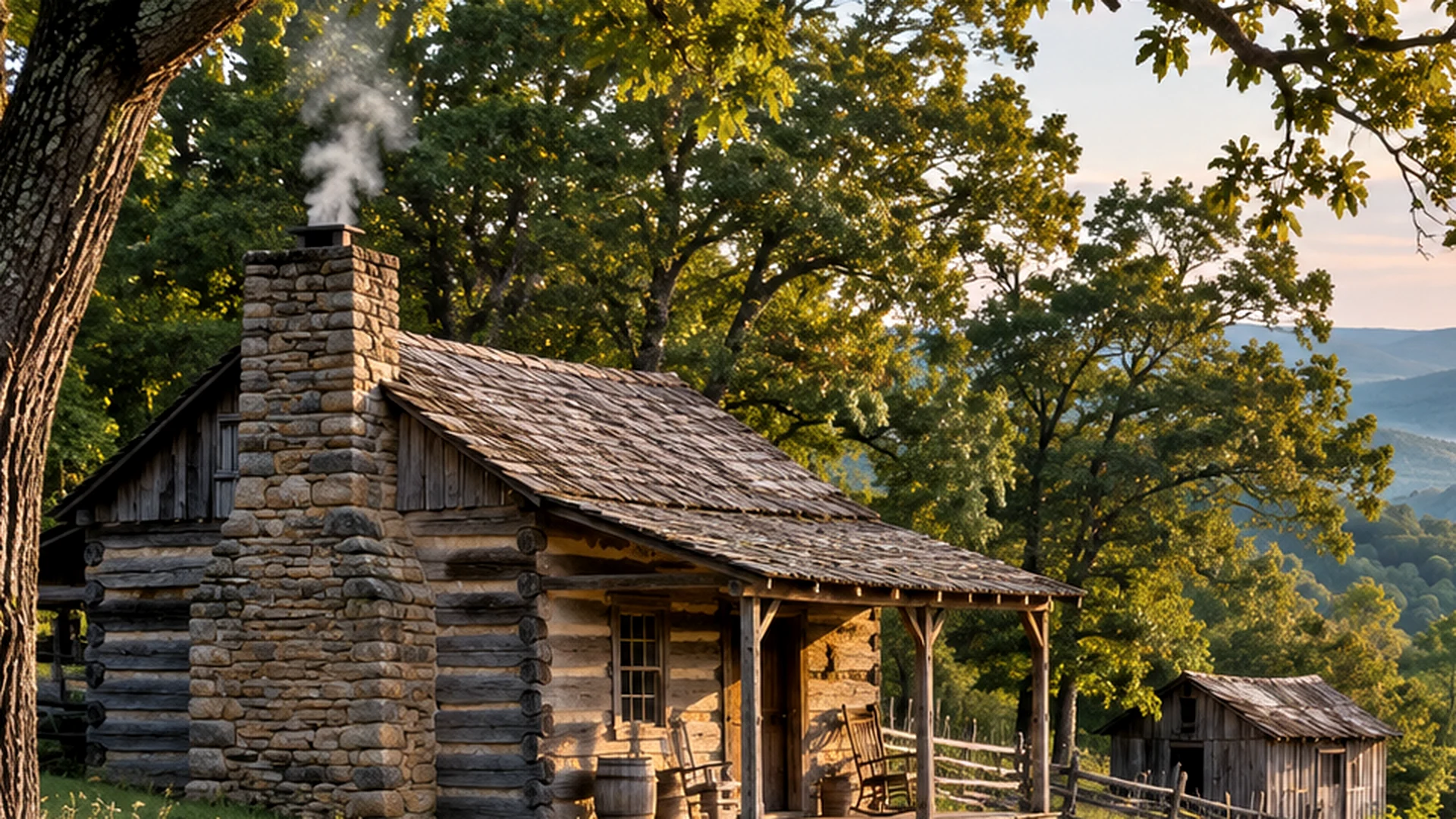
This distinction also appears in American frontier writing. For example, Little House on the Prairie and its real-life roots raises related questions about the gap between remembered places, historical experience and the way an author tells a story.
What parts of the novel did Wright invent?
The novel’s overall sequence of events, family conflicts, revelations and resolutions should not be treated as confirmed local history. Wright used the region’s terrain, speech, work and traditions to give his story texture, then created a plot meant to move readers.
Even the atmosphere can blur the line. Stories about isolated settlements, difficult travel and strong community bonds had real meaning in the Ozarks. That makes a made-up encounter feel possible. It does not mean that the encounter was recorded, or that a fictional character’s wrongdoing can be pinned on a real resident.
The novel also draws on mountain folklore and references the Bald Knobbers, an actual nineteenth-century vigilante movement in Missouri. The the historical account discusses that background. It does not establish the book’s particular confrontations as true events. Real social history is the backdrop, not a scene-by-scene script.
Is the 1941 Shepherd of the Hills movie based on a true story?
No. The movie is an adaptation of Wright’s novel, not a film reconstructing a documented case. The American Film Institute catalog lists its July 18, 1941 release, director Henry Hathaway and principal stars John Wayne, Betty Field and Harry Carey.
John Wayne plays Young Matt, while Harry Carey plays Daniel Howitt. The 1941 version changes their relationships and gives the story more of a dark mountain-feud and Western-drama tone. It turns important character roles and motivations into something quite different from Wright’s book. Turner Classic Movies details how freely the screenplay departs from the novel.
The difference extends to filming locations. Although the action is set in the Ozarks, AFI documents filming of the forest-fire scene in California’s San Bernardino Mountains. A real-looking landscape on screen is not, by itself, evidence of an actual Ozark incident.
So there are two layers of fiction: a novel inspired by the real Ozarks, and a movie that makes substantial changes to that novel. Readers comparing books with screen versions may also enjoy our look at whether Where the Crawdads Sing is a true story.
Why did the fictional story have such a real impact on Branson?
The biggest true story here may be what happened after publication. Wright’s descriptions attracted curious readers to the Ozarks. Missouri’s historical exhibit links the book’s success with the growth of travel to the region following the arrival of rail service. Tourists sought out the scenery, local families and landmarks they recognized from the pages.
The real homestead later became associated with stage performances and heritage tourism. According to the Shepherd of the Hills attraction history, its outdoor theater opened in 1960; the organization continues to present an outdoor drama based on the book. A fictional novel helped shape how visitors imagined a real place, and the place in turn helped keep the story alive.
That is worth remembering when a place or person feels too specific to have been invented. Real scenery can make fiction powerful. If you like exploring that boundary, our collection of novels inspired by true stories offers more examples.
Common questions about the true story
Did Harold Bell Wright live in the Ozark Mountains?
He spent repeated visits in the region and stayed near the Ross homestead. Those visits informed his descriptions of the land and community. It is more accurate to say that he spent time there than to assume the novel recounts his own life.
Were Sammy Lane and Young Matt real people?
They are fictional characters. Although Wright knew people in the area, there is no reliable basis for presenting Sammy and Young Matt as a documented couple who lived out the novel’s plot.
Can you visit the setting of The Shepherd of the Hills?
Yes. The Ozark hills around Branson, Missouri, are real, and the Shepherd of the Hills historic homestead and attraction are linked to the book’s legacy. Visiting them brings you closer to the landscapes that inspired Wright, not to a record of every fictional event.
The truth behind the hills
The Shepherd of the Hills is best described as fiction with genuine historical roots. John and Anna Ross helped inspire memorable characters; Levi Morrill gave Wright a real-life model for Uncle Ike; and the Missouri Ozarks supplied the setting. Wright transformed those materials into his own story of pain, community and forgiveness. The 1941 film then transformed that story again.
The people and places mattered. The events, as told in the book and movie, should not be mistaken for a verified true story.

I am Jeremy Jahns – Your Cinematic Explorer
Immerse in movie reviews, Hollywood insights, and behind-the-scenes stories.