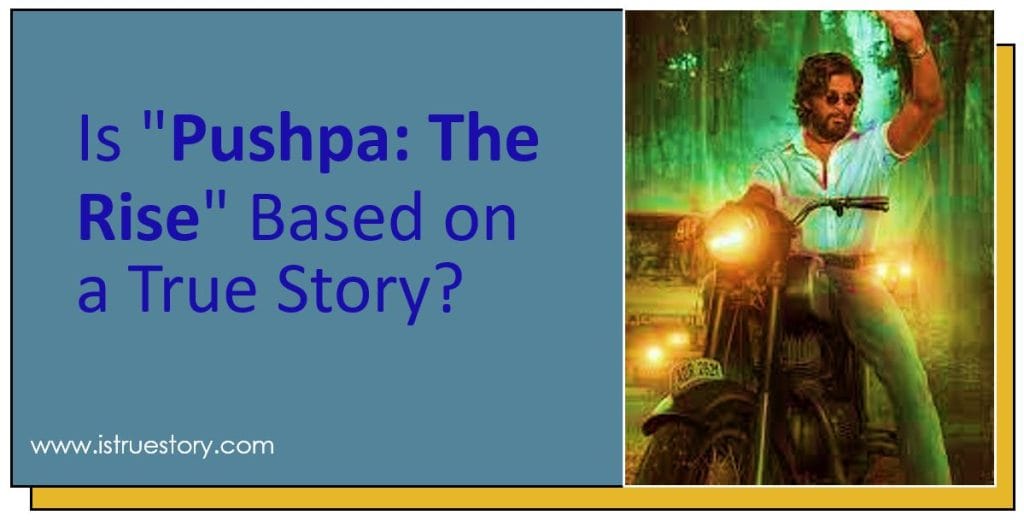
That leads many viewers to ask the same question:
Is Pushpa: The Rise based on a true story?
The short answer is no, the film is not a direct biography of a real person. But the longer answer is much more interesting. The movie takes inspiration from real smuggling activities, real locations, and real social issues in southern India. It blends facts and fiction to create a story that feels believable.
Let’s break it down carefully and explore what parts of the film come from reality and what parts were created purely for cinematic drama.
The Basic Story of Pushpa
The film follows Pushpa Raj, played by Allu Arjun. Pushpa is a poor laborer who works in the forests of Andhra Pradesh. His job involves illegally cutting and transporting red sandalwood, a rare and valuable type of wood.
At first, he is just a small worker in the smuggling chain. But he has ambition. He is smart, fearless, and determined to rise above the system that keeps people like him at the bottom.
Over time, Pushpa climbs the ladder of the illegal smuggling network. He outsmarts rivals, challenges corrupt officials, and slowly becomes a powerful figure in the underworld.
The film was directed by Sukumar, who created a world that feels gritty and realistic. That realism is exactly why people believe the story might be true.
The Real Inspiration Behind the Film
While Pushpa Raj himself is fictional, the environment around him is very real.
The film is heavily inspired by red sandalwood smuggling, a serious issue that has existed for decades in parts of India.
What Is Red Sandalwood?
Red sandalwood is a rare tree found mainly in the forests of Andhra Pradesh.
This wood is extremely valuable because it is used in:
- luxury furniture
- musical instruments
- traditional medicine
- high-end carvings
Due to its rarity, red sandalwood can sell for thousands of dollars per ton on international markets.
Because of this high value, illegal smuggling networks developed in forest regions. Criminal groups cut down the trees and transport them secretly across borders.
The government has tried for years to stop this trade, but the business remains active in some areas.
This real-world problem became the foundation for the story of Pushpa.
Why the Story Feels So Real
One reason the movie resonates with audiences is that it captures the social reality of people living near these forests.
Many workers in these regions are poor laborers who get involved in smuggling operations simply to survive.
The film shows:
- daily forest labor
- illegal logging operations
- corruption among officials
- power struggles inside smuggling gangs
These elements are based on real patterns seen in the region, even though the characters themselves are fictional.
Director Sukumar researched these environments and used them to build the world of the film.
Was Pushpa Raj a Real Person?
No historical records show a real smuggler named Pushpa Raj who lived the exact story shown in the movie.
The character is a composite creation meaning he represents many different personalities and stories combined into one fictional figure.
Think of Pushpa as a symbolic character.
He represents:
- poor workers in illegal industries
- ambitious outsiders rising in criminal networks
- rebels who challenge powerful systems
This approach is common in cinema. A fictional character is used to explore real issues.
The Real Red Sandalwood Smuggling Networks
The biggest real-world connection to the movie is the illegal trade of red sandalwood.
For decades, authorities in southern India have battled smuggling groups that cut down protected trees and sell them overseas.
Smuggling operations usually follow a chain like this:
- Forest laborers cut the trees
- Middlemen transport the logs
- Organized networks move the wood across borders
- International buyers purchase it at very high prices
These networks sometimes involve hundreds of workers.
Some real smuggling cases have even led to violent confrontations between smugglers and forest officers.
The movie draws heavily from these realities.
Did Director Sukumar Use Real Stories?
Director Sukumar has mentioned in interviews that the idea for the film came from stories about red sandalwood smuggling.
He was fascinated by how ordinary laborers could become powerful figures within these illegal networks.
Instead of telling one real biography, he built a fictional narrative around:
- the environment
- the economy of smuggling
- the hierarchy of criminal groups
This creative decision allowed the film to explore social issues while still delivering an exciting cinematic story.
The Meaning Behind the Name Pushpa
An interesting detail about the film is the origin of the name Pushpa.
According to reports, Sukumar drew inspiration from real names he encountered while researching forest communities.
In some regions, names like Pushpa or Pushparaj appear in everyday life. The director adapted the name into a strong cinematic identity.
The character Pushpa Raj therefore feels authentic, even though he is fictional.
The Film’s Cultural Impact
When Pushpa: The Rise released, it quickly became a massive hit across India and internationally.
Fans loved:
- the rugged style of Pushpa Raj
- the forest setting
- the memorable dialogue
- the powerful soundtrack
One line from the movie became especially famous:
“Pushpa… Pushpa Raj… I will rule.”
The film also turned actor Allu Arjun into a global sensation.
His performance captured the arrogance, confidence, and vulnerability of a man fighting to climb the social ladder.
Fiction vs Reality in the Movie
Let’s quickly separate what parts of the film are real and what parts are fictional.
Elements Inspired by Reality
- red sandalwood smuggling
- forest labor communities
- corruption around illegal trade
- criminal networks in timber smuggling
Elements That Are Fiction
- the character Pushpa Raj
- the exact storyline of the smuggling empire
- the dramatic rivalries and confrontations
- many of the film’s action sequences
In other words, the setting is real, but the story is fictional.
Why Movies Often Use Real Inspiration
Films often use real situations to build fictional stories.
This approach works well because:
- The story feels believable.
- Audiences connect emotionally.
- The film can explore real social issues.
Many famous movies follow this pattern.
They don’t retell history exactly. Instead, they capture the spirit of real events.
Pushpa: The Rise follows that tradition.
The Larger Story Continues
The film was designed as the first part of a larger story.
Its sequel, Pushpa 2: The Rule, continues the rise of Pushpa Raj and expands the conflict between smugglers and authorities.
While the story becomes even more dramatic, it still keeps the same realistic backdrop of forest smuggling.
Why the Film Resonates Worldwide
Even viewers outside India connect with the story because the themes are universal.
The film explores:
- ambition
- survival
- class struggle
- power and corruption
Pushpa’s journey from a poor laborer to a feared leader fits a classic storytelling structure seen in many global crime dramas.
That universal structure helped the film reach audiences far beyond its original region.
Final Verdict
So, is Pushpa: The Rise based on a true story?
The honest answer is this:
The movie is not a true biography, but it is deeply inspired by real events and real social conditions.
The character Pushpa Raj is fictional. However, the world he lives in illegal red sandalwood smuggling in southern India is very real.
Director Sukumar used that reality as the foundation for a dramatic, larger-than-life story about ambition and survival.
And that blend of truth and fiction is exactly why the movie feels so powerful.
A Final Thought
Great films often start with a simple question: What if we told a fictional story inside a real world problem?
That’s exactly what Pushpa: The Rise does.
It takes a genuine issue illegal forest smuggling and builds a cinematic legend around it.
And in doing so, it creates a character who feels almost real, even if he never actually existed.

I am Jeremy Jahns – Your Cinematic Explorer
Immerse in movie reviews, Hollywood insights, and behind-the-scenes stories.