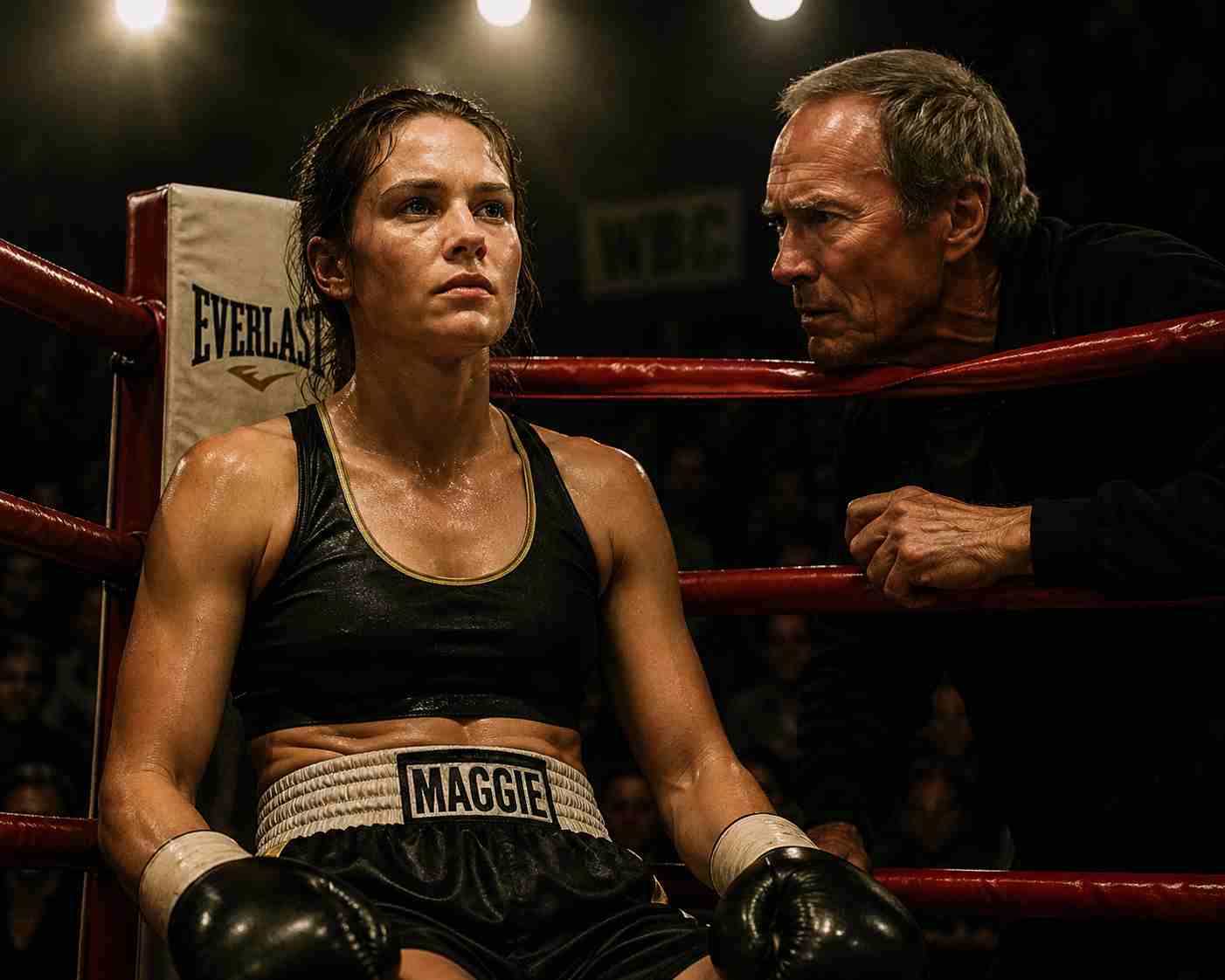
You watch Million Dollar Baby, and it doesn’t feel like just another boxing movie. It hits deeper. The pain feels real. The silence feels heavy. And by the end, you’re left wondering… did something like this actually happen?
Here’s what matters: the film is not based on one true story, but it is grounded in real experiences, real people, and real struggles from the boxing world.
The real source behind the story
The film comes from a book called Rope Burns: Stories from the Corner by F.X. Toole.
That name sounds like a writer, but he was actually a boxing trainer. His real name was Jerry Boyd. He spent years inside gyms, working with fighters and watching their lives up close.
So when he wrote these stories, he wasn’t guessing. He was writing what he had seen.
That’s why everything feels raw and believable.
Was Maggie Fitzgerald a real person?
No, Maggie Fitzgerald wasn’t a real boxer.
But she feels real because she represents many women who fought in the sport when it was still struggling to be taken seriously.
Think about it:
- Women had fewer matches
- Lower pay
- Less respect from promoters and audiences
Maggie’s journey reflects that reality. A late start. A strong will. A quiet hunger to prove herself.
She’s fictional, but her fight is not.
The injury that changed everything
One moment in the film stays with almost everyone.
Maggie gets hit after the bell. She falls badly. Her neck snaps against the stool.
Yes, in the movie, she becomes paralyzed after breaking her neck.
This exact incident didn’t happen in real life. But the danger is very real.
Boxing has seen:
- Severe spinal injuries
- Brain trauma
- Fighters losing their lives in the ring
So while Maggie’s specific case is fictional, the risk behind it is something every boxer lives with.
What Maggie goes through after the fight
After the injury, Maggie’s life changes completely.
She loses movement. She loses control. And slowly, she loses hope.
Her family shows up, but not with love. They care more about money than her condition. That part of the story feels uncomfortable because it reflects something real many people face—being alone when it matters most.
Eventually, Maggie asks Frankie to help her die.
This is where the film becomes deeply personal and difficult. It raises questions about dignity, suffering, and choice.
Frankie’s decision and what follows
Frankie Dunn is not just a trainer. He becomes Maggie’s family.
When she asks for help, he struggles. You can see it in every scene. He doesn’t want to lose her, but he also can’t watch her suffer.
In the end, he gives her what she asks for.
After that, he disappears.
The film doesn’t tell you where he goes or what happens next. That silence is intentional. It leaves you sitting with the weight of his decision.
The story about Frankie’s daughter
There’s another quiet story running in the background.
Frankie keeps writing letters to his daughter. Every single one comes back unopened.
We never get the full story. No big explanation. Just silence.
But that silence says a lot.
It shows a man who has already lost something important long before Maggie came into his life. That’s why his bond with Maggie feels so strong. She becomes the second chance he never had.
Why the story feels so close to reality
Even though the film isn’t based on one real case, it feels true because it’s built from real pieces.
You see it in:
- The old boxing gyms
- The way trainers talk
- The small, quiet moments between fights
Nothing feels exaggerated. Nothing feels fake.
It’s simple, grounded, and honest.
And that’s what makes it powerful.
The impact the film left behind
When the movie came out, it didn’t just entertain people. It stayed with them.
It won major awards, including:
- Best Picture
- Best Actress (Hilary Swank)
- Best Director (Clint Eastwood)
- Best Supporting Actor (Morgan Freeman)
But more than awards, it sparked conversations.
People talked about:
- The risks of boxing
- The emotional cost of ambition
- The difficult choices at the end of life
So, how true is it?
If you’re looking for a real-life Maggie Fitzgerald, you won’t find one.
But if you’re looking for truth in emotion, struggle, and human experience, it’s everywhere in this film.
That’s the reason it stays with you.
Not because it happened exactly this way…
but because it could have

Jessica Savitch, with a deep passion for journalism, brings her expertise to istruestory.com as a dedicated author. MA in Arts & Journalism.