Every March, cities around the world turn green. People wear shamrocks, attend parades, and celebrate Saint Patrick’s Day with music, food, and Irish pride. But behind the bright festivals and popular myths stands a real man whose life was far more painful, brave, and surprising than most people realize.
The true story of St. Patrick is not about lucky charms or magical legends. It is the story of a frightened teenager kidnapped by pirates, forced into slavery, and later transformed into one of the most important religious figures in Irish history. 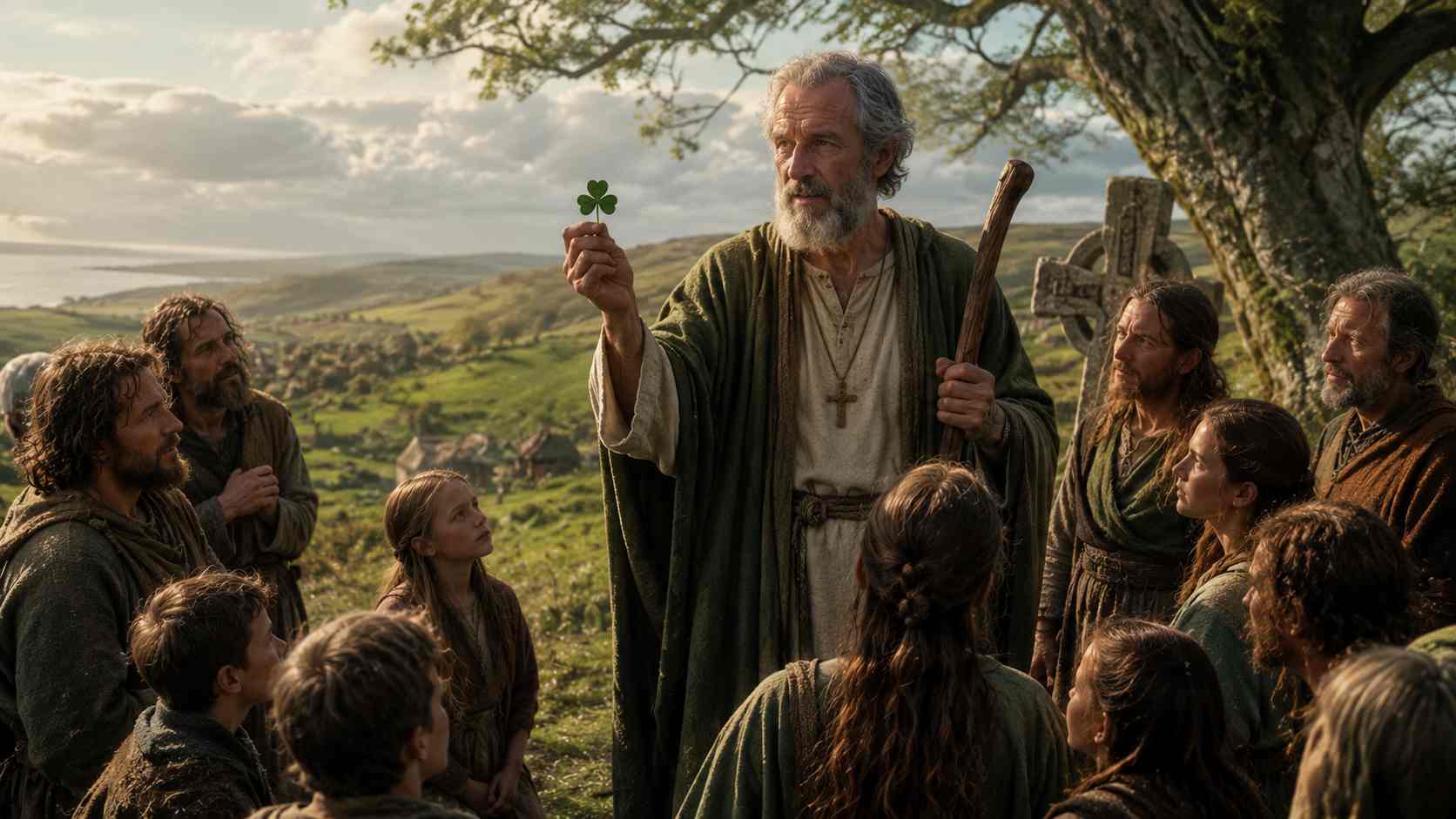
Many parts of Saint Patrick’s story became mixed with folklore over the centuries. Some tales were symbolic. Others were exaggerated by storytellers. Yet the core of his journey is very real and deeply human.
What makes Patrick’s story powerful is not perfection. It is survival, faith, forgiveness, and purpose.
The Boy Who Was Not Irish
One of the biggest surprises in the true story of St. Patrick is this simple fact: Patrick was not born in Ireland.
Historians believe he was born in Roman Britain sometime during the late fourth century, possibly around AD 385 to 390. At that time, Britain was under Roman control, and Patrick came from a Christian family connected to the church.
His real name may have been “Maewyn Succat,” though historians still debate this point. The name “Patrick” likely came later from the Latin name Patricius.
As a child, Patrick lived a relatively comfortable life. His father was a church deacon, and his grandfather was a priest. Yet Patrick later admitted in his writings that he was not deeply religious during his early years.
Then everything changed.
According to Patrick’s own writings, he was around sixteen years old when Irish raiders attacked his village. He was kidnapped, taken across the sea, and sold into slavery in Ireland. This terrifying event became the turning point of his life.
Unlike many ancient figures whose stories survive only through rumors, Patrick actually left behind personal writings. His autobiography, called Confessio, remains one of the most important sources historians use today.
Life as a Slave in Ireland
For six years, Patrick lived as a slave in Ireland.
He worked mainly as a shepherd, often alone in harsh weather while watching animals on isolated hillsides. The loneliness deeply affected him. In his writings, Patrick described fear, hunger, cold nights, and emotional suffering.
Yet this painful period also changed him spiritually.
Patrick explained that during slavery he began praying constantly. He wrote about praying hundreds of times during the day and night. Faith became his comfort when everything else was taken away.
The emotional part of the true story of St. Patrick is not just his suffering. It is the strange transformation that happened because of it. A careless teenager slowly became someone driven by spiritual purpose.
Historians believe Patrick learned the Irish language during these years. That later became one of the reasons he could communicate so effectively with Irish communities after returning as a missionary.
Eventually, Patrick claimed he heard a divine voice in a dream telling him to escape.
The Dangerous Escape That Changed Everything
Patrick’s escape from slavery sounds almost like a movie scene, but historians believe the core story is genuine because it comes directly from Patrick himself.
He wrote that he traveled roughly 200 miles to reach a ship waiting on the Irish coast. The journey alone would have been dangerous for a runaway slave with little food or protection.
At first, sailors refused to take him onboard. Later they changed their minds.
Patrick eventually returned home to Britain and reunited with his family after years of captivity. Most people would have tried to forget Ireland forever after such trauma.
Patrick did the opposite.
That is one of the most remarkable parts of the true story behind Saint Patrick.
Instead of living in anger, he later chose to return to the land where he had suffered most.
Why Did Patrick Return to Ireland?
This question sits at the center of Patrick’s legacy.
Why would someone willingly return to the place where he had been enslaved?
Patrick claimed he experienced another vision. In it, he heard the people of Ireland calling him back.
He later trained as a Christian missionary and bishop before returning to Ireland sometime during the fifth century. His mission focused on spreading Christianity across the island.
Patrick traveled widely, preached openly, baptized converts, and worked with local tribal leaders.
The Ireland he entered was deeply connected to Celtic traditions and local spiritual practices. Patrick did not erase Irish culture overnight, as some legends suggest. Historians say Christianity spread gradually through many missionaries over time. Patrick became the most famous because of his writings and later influence.
Still, his courage was extraordinary.
He entered unfamiliar territories where violence was possible. Local kings controlled regions independently, and missionaries were not always welcomed warmly.
Yet Patrick continued. 
The Shamrock Story Explained
One of the most famous legends connected to Saint Patrick involves the shamrock.
According to tradition, Patrick used the three leaves of a shamrock to explain the Christian idea of the Holy Trinity: Father, Son, and Holy Spirit.
Did this really happen?
Historians are uncertain.
There is no direct mention of shamrocks in Patrick’s surviving writings. The story likely developed centuries later through Irish Christian tradition. However, it became one of the most enduring symbols linked to Patrick and Ireland itself.
Even if the exact event cannot be proven, the legend reflects Patrick’s practical teaching style. He often explained complex religious ideas in ways ordinary people could understand.
Today, shamrocks remain one of the strongest symbols of Saint Patrick’s Day celebrations around the world.
Did Saint Patrick Really Drive Snakes Out of Ireland?
Probably not.
This is one of the biggest myths behind Saint Patrick’s Day.
Scientific evidence shows that post-Ice Age Ireland likely never had native snakes in the first place. The island became separated from mainland Europe before snakes could naturally spread there.
So where did the legend come from?
Many historians believe the snake story was symbolic. In Christian storytelling, snakes often represented evil or pagan beliefs. The legend may have symbolized Patrick helping Christianity grow while older spiritual traditions slowly declined.
Over centuries, symbolic stories became treated like literal history.
That happens often with famous historical figures.
The real Patrick was already fascinating without needing magical snake battles.
The Real Patrick Versus the Holiday Image
Modern Saint Patrick’s Day celebrations are filled with green clothes, giant parades, pub gatherings, and festive branding. Much of this developed long after Patrick’s death.
Ironically, historians say the color originally linked to Saint Patrick was blue, not green.
Green became dominant later because of Ireland’s landscape, nationalist symbolism, and shamrock traditions.
The holiday itself also changed dramatically after Irish immigration spread worldwide, especially in the United States. Cities like New York and Chicago transformed Saint Patrick’s Day into massive public celebrations.
Some traditions connected to the holiday have little to do with Patrick’s actual life.
The true story of St. Patrick is quieter and more personal than the modern party image. It is about captivity, survival, forgiveness, and spiritual conviction.
That deeper story often gets buried beneath commercial celebrations.
What Patrick Actually Wrote
One reason historians trust parts of Patrick’s story is because his own writings still survive.
Two documents are especially important:
- Confessio
- Letter to the Soldiers of Coroticus
These writings reveal Patrick’s personality directly. He sounded humble, emotional, and deeply aware of his limitations.
He never described himself as perfect or powerful.
In fact, Patrick admitted he lacked formal education compared to other church leaders of his time. He worried about criticism and often defended his mission work against doubters.
That honesty makes his writings feel surprisingly modern.
Patrick also strongly condemned violence and slavery in his letters. After experiencing slavery himself, he spoke emotionally against human cruelty.
For historians, these texts matter because they separate the real Patrick from centuries of legend.
The Myth Behind Saint Patrick’s Day
The myth behind Saint Patrick’s Day is not just about snakes or shamrocks. It is the idea that Patrick’s life was simple.
It was not.
The real Patrick lived during political chaos after the decline of Roman influence in Britain. Travel was dangerous. Slavery was common. Religious conflict existed across regions.
Patrick’s life was shaped by fear, exile, and uncertainty.
Over time, storytellers turned him into something larger than human. Medieval writers added miracles, dramatic legends, and heroic myths to his story.
That process happened with many historical religious figures.
Some myths helped inspire faith. Others made the stories easier to remember.
But beneath all of them was still a real person who endured suffering most modern readers can barely imagine.
Why Saint Patrick Still Matters Today
People continue connecting with Patrick’s story because it reflects themes that never disappear.
Loss.
Fear.
Identity.
Second chances.
Patrick experienced trauma early in life, yet he refused to let bitterness define him forever. Instead, he transformed pain into purpose.
Even readers who are not religious often find something meaningful in that journey.
The true story of St. Patrick also reminds us how easily history becomes mixed with entertainment. Over centuries, facts blur together with myths until the original human story almost disappears.
That is why revisiting real historical figures matters.
Patrick was not a cartoon mascot wearing green clothes. He was a frightened teenager taken from home who later returned to help the people of the land where he once suffered.
That alone is extraordinary.
Was Saint Patrick Perfect?
No.
And that may be why his story feels believable.
Patrick lived in a difficult historical era with complicated religious and political systems. Some historians debate parts of his mission work and the long-term cultural effects of Christian expansion in Ireland.
Yet even critics generally agree on one thing: Patrick’s courage and endurance were real.
He survived kidnapping.
He survived slavery.
He crossed dangerous territories repeatedly.
And somehow, his story survived for more than fifteen centuries.
Very few people leave that kind of mark on history.
The Human Story Behind the Legend
The real Saint Patrick was not chasing fame. He probably never imagined people around the world would someday celebrate a holiday in his name.
What remains most powerful about Patrick is not mythology.
It is humanity.
A lonely shepherd praying in cold fields.
A runaway slave risking everything to escape.
A man choosing forgiveness over hatred.
That is the true story of St. Patrick.
And honestly, it is far more meaningful than the legends alone.

Jessica Savitch, with a deep passion for journalism, brings her expertise to istruestory.com as a dedicated author. MA in Arts & Journalism.