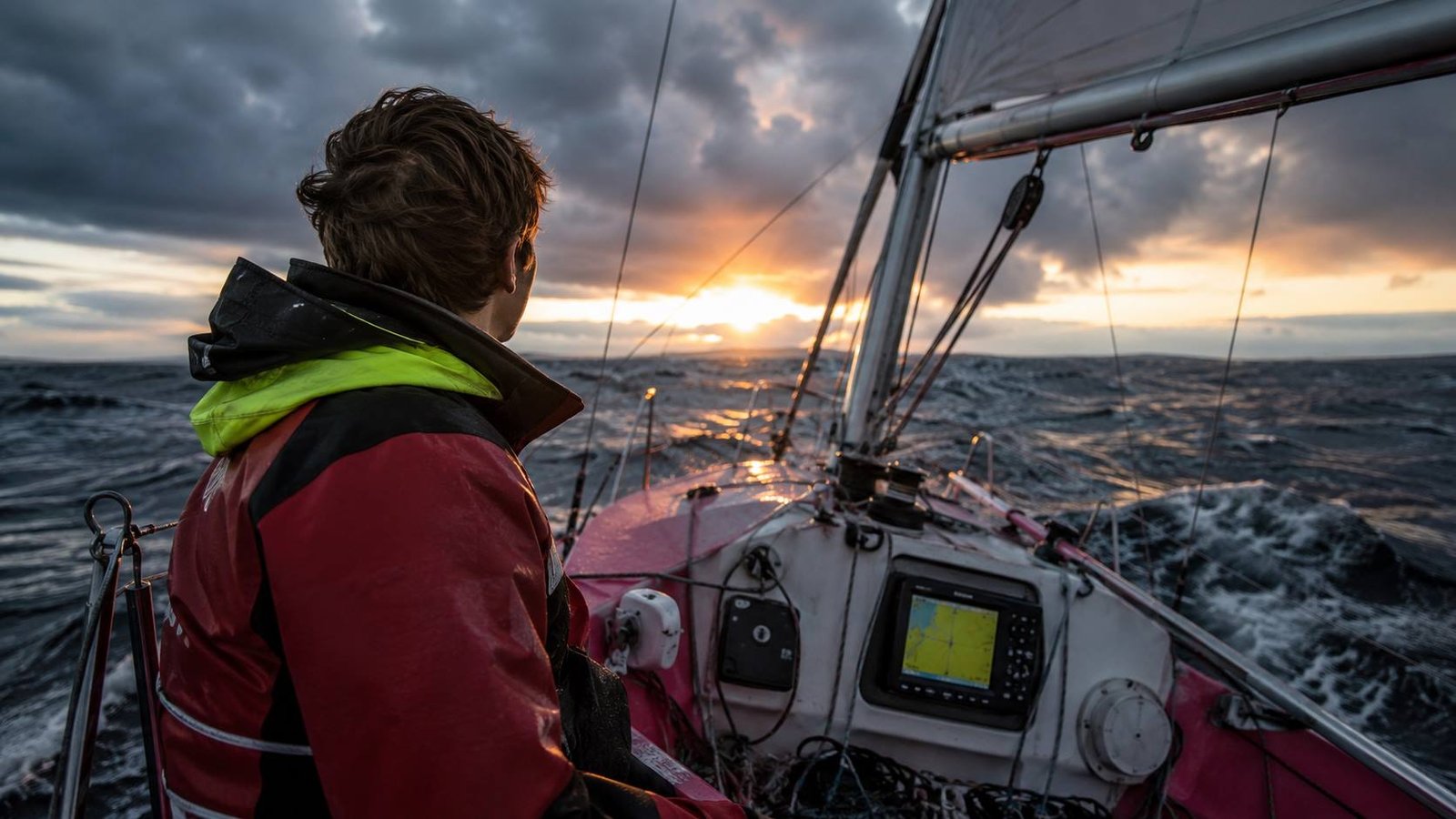
The Netflix movie is based on the remarkable life of Australian sailor Jessica Watson. At only 16 years old, Jessica sailed alone across some of the world’s most dangerous oceans. She spent 210 days at sea before returning to Sydney Harbour on May 15, 2010.
The heart of the film is real. Jessica trained for years, survived violent storms, faced public criticism, and completed the journey aboard her small pink yacht, Ella’s Pink Lady.
Still, True Spirit is a drama, not a documentary. Some characters were combined, certain dangers were exaggerated, and a few scenes were created for emotional effect.
Here is what really happened and what the movie changed.
The real story behind True Spirit
Jessica Watson grew up around boats. Her family lived aboard a cabin cruiser for several years, giving her early experience of life on the water.
Her dream of sailing around the world began when she learned about Jesse Martin, an Australian sailor who completed a solo journey around the globe as a teenager. Jessica was about 12 when she decided she wanted to attempt a similar voyage.
This was not a sudden decision. Before leaving, she studied and trained in several important areas, including:
- Navigation
- Radio communication
- First aid
- Diesel engines
- Ocean safety
- Weather forecasting
- Yacht maintenance
The Queensland Maritime Museum reports that Jessica had already completed thousands of coastal and ocean miles before beginning her major journey. Her boat was a 34-foot Sparkman & Stephens yacht designed to handle difficult offshore conditions.
Jessica left Sydney in October 2009. She sailed through the Pacific, Atlantic, and Indian oceans without stopping at a port or receiving physical assistance at sea.
She returned to Sydney Harbour on May 15, 2010, after 210 days alone. She was two days away from her 17th birthday. Thousands of people gathered on land and in boats to welcome her home.
True Spirit facts at a glance
| Question | What happened in real life? |
|---|---|
| Is Jessica Watson a real person? | Yes. She is an Australian sailor and author. |
| Was she really 16? | Yes. She completed the journey shortly before turning 17. |
| Did she sail alone? | Yes. The voyage was solo, nonstop, and unassisted. |
| How long was she at sea? | 210 days. |
| Was the pink boat real? | Yes. It was called Ella’s Pink Lady. |
| Did she collide with a cargo ship? | Yes. It happened before the main voyage. |
| Did her boat roll in storms? | Yes. She experienced seven knockdowns. |
| Was the boat 15 feet underwater? | Her emergency beacon activated at that depth during the worst knockdown. |
| Is Ben Bryant real? | No. He represents several real advisers and supporters. |
| Is every movie scene accurate? | No. Some scenes were changed or invented. |
Was the cargo ship collision real?
One of the most frightening moments in True Spirit happens before Jessica starts her main journey.
During a trial sail, Jessica falls asleep and her yacht collides with a large cargo ship. Her mast is badly damaged, and many people question whether she is ready to sail around the world.
The collision really happened.
On September 9, 2009, Ella’s Pink Lady collided with a Hong Kong-registered bulk carrier called Silver Yang off the coast of Queensland.
The Australian Transport Safety Bureau investigated the accident. Its report found that neither Jessica nor the ship’s watchkeepers maintained a proper lookout or made full use of the available navigation equipment.
The yacht lost its mast, but Jessica was not injured. She cleared the damaged rigging and managed to motor the boat back toward safety.
Jessica later described the movie’s version of the collision as one of its most accurate scenes. The real accident also became an important test of her determination. Instead of ending her plans, she repaired the yacht and continued preparing.
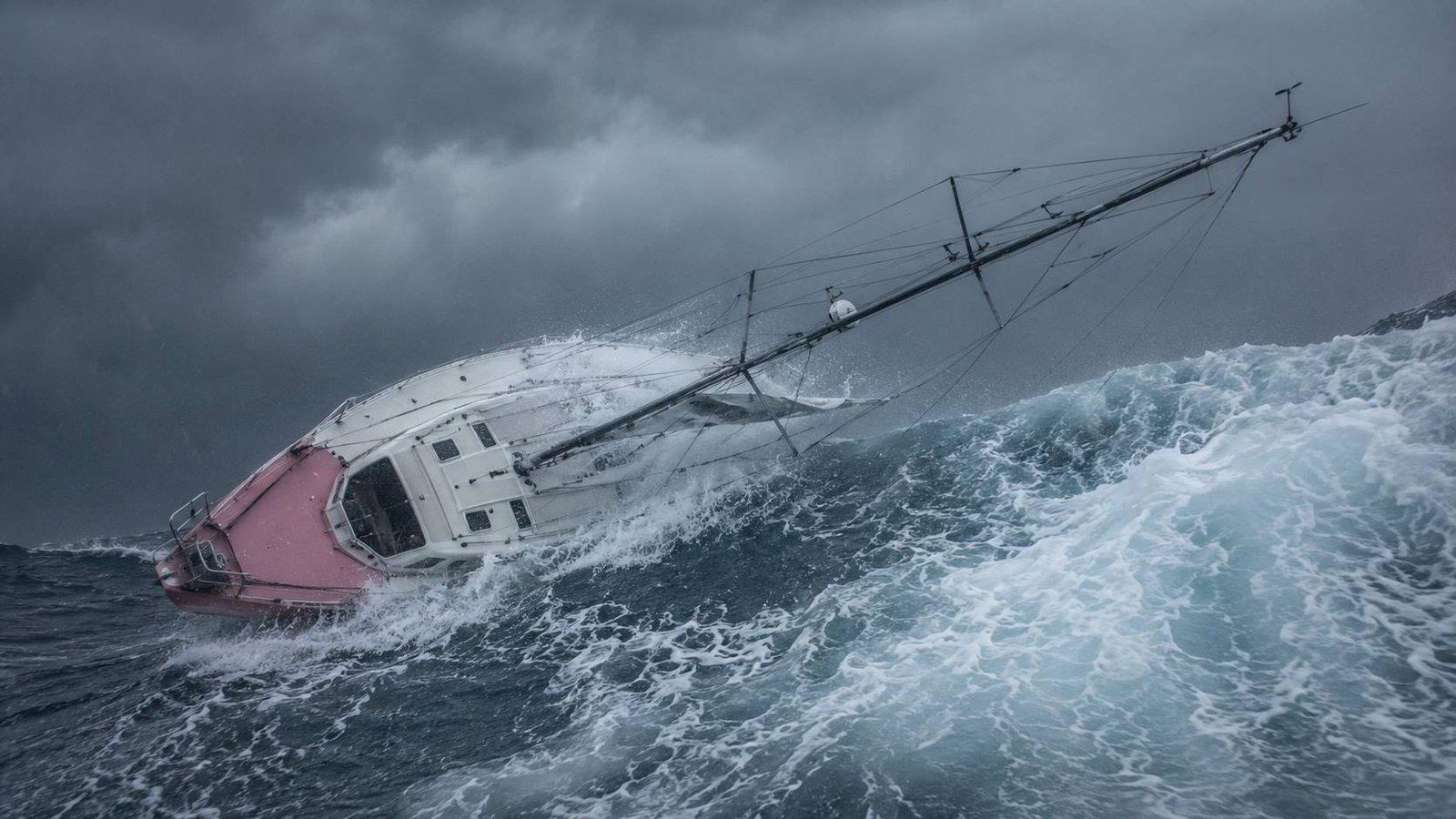
Did Jessica Watson’s boat flip over?
Yes, but the movie changes how the worst rollover happened.
Jessica experienced seven knockdowns during her journey. A knockdown happens when powerful wind or waves push a sailing boat so far onto its side that the mast may touch or enter the water.
During the most serious incident, the emergency beacon aboard Ella’s Pink Lady activated. Jessica has explained that the beacon was designed to activate after being submerged about 15 feet underwater.
So, the part about the boat being pushed underwater is based on a real event.
However, the movie stretches the moment for dramatic effect.
Jessica said her real knockdowns were sideways. The film shows the boat turning more dramatically, almost end over end. It also makes Jessica appear trapped underwater for several minutes. In reality, the worst part probably lasted only seconds, although it felt much longer to her at the time.
This is a good example of how True Spirit handles the real story. The danger is genuine, but the filmmakers make it visually bigger and longer to help viewers feel Jessica’s fear.
Was Ella’s Pink Lady a real boat?
Yes. Ella’s Pink Lady was not invented for the movie.
The yacht was about 34 feet long and based on a respected Sparkman & Stephens design. It had a self-steering system that helped keep the yacht on course when Jessica needed to sleep, eat, make repairs, or check navigation equipment.
The boat was small compared with the huge waves and long distances Jessica faced. That contrast is one reason the story feels almost unbelievable.
After the voyage, the yacht was purchased with government support and placed at the Queensland Maritime Museum. Visitors can now see the real vessel that carried Jessica through her journey.
Netflix created a detailed replica for the film. Jessica said the production team reproduced the instruments, cabin details, and even personal items with surprising accuracy.
Is Ben Bryant a real person?
Ben Bryant, played by Cliff Curtis, is not one specific real person.
In the movie, Ben is an experienced sailor who helps train Jessica. He advises her during storms, argues with her when she takes risks, and becomes an important emotional guide.
Jessica explained that Ben is a composite character. He represents several people who helped her prepare and supported her during the voyage.
These people included members of the team who repaired and prepared her yacht, sailing advisers, weather experts, and others who communicated with her from land.
Creating Ben gave the movie one clear mentor instead of introducing many different advisers. His role reflects real support, even though his personal history and some of his conflicts with Jessica were written for the film.
Was reporter Craig Atherton real?
Craig Atherton, the aggressive television reporter in the movie, was also fictional.
However, the criticism he represents was real.
Before Jessica departed, some journalists, sailing experts, and members of the public questioned whether a 16-year-old should be allowed to attempt such a dangerous journey.
Her collision with Silver Yang increased those concerns. Critics questioned Jessica’s experience and also challenged her parents for supporting the plan.
The movie combines that wider media pressure into one reporter. Craig gives the criticism a face, making the conflict easier to follow. But there was no single journalist who behaved exactly like him throughout the real story.
Did Jessica struggle with dyslexia?
Yes. Jessica has spoken openly about having dyslexia.
The movie shows her struggling with reading and being judged by people who assume learning difficulties mean she is not capable.
That part supports one of the story’s most important ideas: intelligence does not always look the same in every person.
Jessica may have found some classroom tasks difficult, but she could learn complicated sailing systems, study ocean weather, repair equipment, and make serious decisions alone.
The film uses her dyslexia to show why proving people wrong mattered to her. It also makes her achievement more relatable to young viewers who struggle in traditional learning environments.
What did True Spirit change?
The broad story is accurate, but several scenes were altered.
The frying-pan accident
In the movie, a frying pan strikes Jessica during a storm and knocks her unconscious.
This did not happen during the real voyage.
The scene gives the film an immediate physical emergency. It also leaves Jessica unable to respond while her family and advisers wait helplessly on land.
The situation creates suspense, but it is fictional.
The week without wind
The movie shows Jessica becoming trapped in an area with no wind for about a week. She feels lonely, frustrated, and emotionally exhausted.
Jessica did experience quiet periods and isolation, but the specific week-long event was created for the film.
It helps the story show that calm weather can be difficult too. A sailor may fear a violent storm, but being unable to move can create a different kind of mental pressure.
The forgotten hairbrush
The unusual hairbrush scene has some truth behind it.
In the film, Jessica forgets her hairbrush and creates a replacement by joining two forks together.
According to Jessica, she did once use forks as a hairbrush. However, it happened during another sailing trip rather than during the voyage shown in the movie.
The filmmakers moved the event into True Spirit because it was funny, memorable, and suited Jessica’s practical personality.
Ben leaving during the journey
The tension between Jessica and Ben is shaped for the movie.
Because Ben is a fictional combination of several people, his arguments, personal tragedy, and temporary decision to step away should not be treated as exact history.
These scenes give the film a stronger emotional arc. They show Jessica learning to trust her own judgment instead of depending completely on a mentor.
The final storm
Jessica really did survive severe storms and seven knockdowns.
The film’s final storm combines danger, family fear, technical failure, and emotional struggle into one large cinematic event. The sideways knockdowns are shown more dramatically, and the time underwater is extended.
The movie changes the physical details, but it does not invent the basic danger. Jessica truly faced huge seas, violent winds, and a knockdown serious enough to activate her emergency beacon.
How accurate is True Spirit to the real story?
True Spirit is accurate about the main journey and Jessica’s emotional experience, but less exact about individual scenes.
The following parts are strongly based on real events:
- Jessica was 16 during the voyage.
- She sailed alone without stopping.
- Her boat was called Ella’s Pink Lady.
- She collided with a cargo ship before leaving.
- The yacht was dismasted in the collision.
- She faced strong public criticism.
- Her parents supported the voyage.
- She experienced seven knockdowns.
- Her emergency beacon activated during the worst storm.
- She spent 210 days at sea.
- Large crowds welcomed her back to Sydney.
The movie changes supporting characters and the timing of certain events. It also adds physical dangers, such as the frying-pan injury, and increases the length and visual force of the underwater sequence.
A fair description would be that True Spirit is emotionally faithful but cinematically dramatized.
It protects the truth at the center of Jessica’s story: a teenage sailor prepared carefully, entered the open ocean alone, overcame fear and criticism, and returned home safely after seven months.
Did Jessica Watson officially break a world record?
This part of the story is complicated.
Jessica was widely celebrated as the youngest person to sail solo, nonstop, and unassisted around the world. Australian news reports and public institutions have often described her achievement in those terms.
However, sailing authorities questioned whether her route met the technical distance used for an official round-the-world sailing record.
The World Sailing Speed Record Council has used a minimum theoretical distance of around 21,600 nautical miles for round-the-world record routes. Different sources report different figures for Jessica’s actual or calculated distance because they use different ways of measuring her path.
Jessica’s own website says she sailed more than 22,000 nautical miles. Other sources have reported lower calculated distances when judging the official record route.
There was another issue: the official record body did not recognize a youngest-person category. Jessica has therefore argued that people were debating rules for a record that did not formally exist.
The movie avoids most of this dispute. It focuses on completing the voyage rather than receiving an official title.
That choice makes emotional sense, but readers should understand the difference. Jessica’s journey was real and extraordinary. The argument concerned record definitions, not whether she completed a long solo voyage across the world’s major oceans.
What happened when Jessica returned home?
Jessica entered Sydney Harbour on May 15, 2010.
Thousands of people watched from the shore and from boats. Her family waited for her, and national media covered her arrival.
Then-Prime Minister Kevin Rudd called her an Australian hero. Jessica responded that she did not consider herself a hero. She said she was an ordinary person who had a dream, worked hard, and proved what could be achieved.
The movie recreates this homecoming and also includes real footage during the closing credits. The size and emotion of the welcome were not Hollywood inventions.
Jessica later received national recognition, including being named Young Australian of the Year. She also published her memoir, True Spirit, using material from her journals and video logs. The book became the main basis for the Netflix film.
What is the true story behind the movie True Spirit?
The true story is not simply that a teenager entered a boat and somehow survived.
Jessica spent years building the skills needed for the journey. She faced a serious collision before she even started. She repaired her boat, continued despite criticism, and accepted that she would be alone for months.
At sea, she had to manage sleep, food, navigation, equipment failures, weather, loneliness, and fear. There was no rescue team beside her. Advice could come through radio contact, but the physical work and immediate decisions were hers.
That is where the movie is most truthful.
It shows that courage does not mean feeling no fear. Courage means understanding the danger, preparing for it, and continuing when fear arrives.
Questions viewers often ask
Is True Spirit based on a real story?
Yes. The Netflix movie is based on Jessica Watson’s real solo sailing voyage and her memoir, True Spirit. She spent 210 days at sea and returned to Sydney in May 2010.
Did Jessica Watson’s boat flip over?
Her boat experienced seven knockdowns. The worst pushed the yacht far enough underwater to activate its emergency beacon. Jessica said the real knockdowns happened sideways and lasted much less time than the movie suggests.
Did Jessica Watson really sail alone?
Yes. Her journey was solo, nonstop, and unassisted. She could communicate with people on land, but no one joined her aboard the yacht or physically helped her during the voyage.
Did Jessica Watson stop anywhere?
No. Stopping at a port or accepting physical supplies would have ended the voyage’s nonstop and unassisted status.
How old was Jessica Watson when she finished?
She was 16 years old. She arrived in Sydney two days before her 17th birthday.
Is Ben Bryant based on a real sailor?
Ben is a composite character. He represents several real advisers, repair workers, weather experts, and sailing supporters who helped Jessica.
Did Jessica Watson’s parents support her?
Yes. Her parents supported the journey, although her father initially had more doubts than her mother. They also faced heavy public criticism for allowing their daughter to attempt it.
Where is Ella’s Pink Lady now?
The real yacht is displayed at the Queensland Maritime Museum in Brisbane, Australia.
Why Jessica Watson’s story still matters
Movies often tell us that extraordinary people are born different. Jessica Watson’s story suggests something more useful.
She was not fearless. She was prepared.
She made mistakes. She experienced doubt. She faced criticism from people who thought she was too young, too inexperienced, or simply unrealistic.
Yet she continued learning.
That is the real spirit behind True Spirit. The movie changes some events, but its central message remains honest. A young person set an enormous goal, prepared seriously, survived real danger, and returned with a story that continues to inspire people around the world.
So, is True Spirit a true story?
Yes. Its biggest moments come from Jessica Watson’s real life. The film adds drama around the edges, but the achievement at its center needed very little Hollywood help.

Jessica Savitch, with a deep passion for journalism, brings her expertise to istruestory.com as a dedicated author. MA in Arts & Journalism.