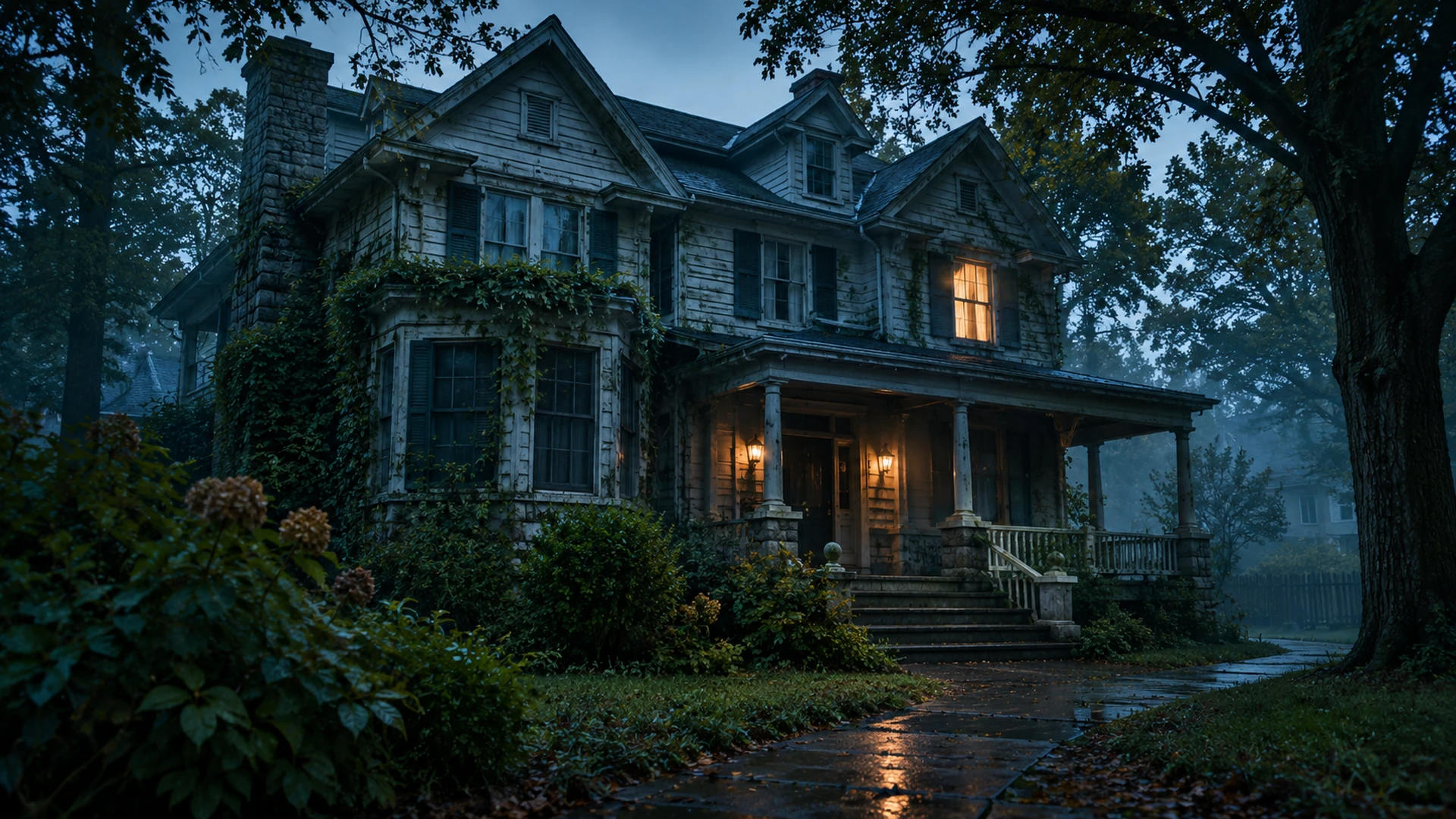
A family moves into a beautiful house, the doors begin to move on their own, and a disturbing secret seems to live inside the walls. Add a title that looks like a street address and a claim about real events, and it is easy to wonder: is 616 Wilford Lane a true story?
The short answer is no confirmed true story has been identified. The 2021 horror film is a scripted thriller, not a documented account of a real haunted property. Its advertising does use true-story language, but independent reporting has found no evidence that the characters or central events came from an actual case. The movie also borrows a genuine piece of biblical manuscript history: the number 616. Those two things should not be confused. Apple TV’s official film listing provides the promotional description, while The Cinemaholic’s fact-checking explainer identifies the narrative as fiction.
Is 616 Wilford Lane Based on a True Story?
There is no verified crime report, named real family, or documented haunted-house case that can be tied to the movie’s main plot. That does not prove that no real experience influenced a writer’s imagination. It means a precise real-world origin has not been established by reliable, public evidence.
616 Wilford Lane was directed by Mark S. Allen and Dante Yore, who wrote the screenplay with Howard Burd. It was released to video-on-demand audiences on May 18, 2021, according to the contemporary announcement from Rue Morgue. This is a conventional credited dramatic production, not a documentary reconstruction.
What Is the 616 Wilford Lane Movie About?
Jim, a widowed father, moves with two teenage girls into an impressive new home, hoping to escape the pain of losing his wife. Instead of peace, the family encounters unsettling behavior, a frightening house history, and people in town who seem reluctant to tell them everything. Bloody Disgusting’s 2021 release coverage names John Littlefield as Jim, Jessica Chancellor as Randy, and Alyson Gorske as Staci.
Moving objects, strange footage, and secretive neighbors suggest a haunting. Eric Roberts plays David, another man tied to the town.
For much of its running time, the setup feels familiar. What makes this particular film different is the direction it takes near the end: the house may not be telling the story the audience thinks it is. If you enjoy that divide between a believable home setting and an invented nightmare, our look at whether Incident in a Ghostland is true explores a different kind of frightening fiction.
Why Does the Movie Claim a True-Story Connection?
The confusion begins with the marketing. The film description used by Rotten Tomatoes and Apple TV describes it as a crime caper inside a paranormal thriller and says it was born out of a true story. That wording implies a real connection but does not name the incident, people, dates, or records needed to check it.
There is an important difference between a distributor’s promotional claim and a verified historical account. A tagline may be designed to add mystery. It is not, by itself, proof. No reliable production interview or public record reviewed for this article establishes that the film dramatizes a particular crime.
Other haunting movies make stronger, more traceable claims about their origins, even when the alleged supernatural events remain disputed. Our guide to the real claims behind The Conjuring shows why separating reported experiences from what a film depicts is so important.
Is 616 Wilford Lane a Real House or Address?
The movie’s title sounds wonderfully specific. A house number and a street name can make a made-up location feel as if it belongs on a map. But the film’s address has not been verified as a real haunted property, and there is no reliable evidence connecting a house called 616 Wilford Lane to the incidents shown on screen.
Entertainment reporting has placed filming in and around Auburn, California. That only means real locations could have stood in for fictional scenes. A physical filming site, if identified, would not make the movie’s supposed haunting a true event. The Cinemaholic also reports that the titled address is not an actual Auburn location.
This is a common point of confusion with haunted-house films. A real building may appear on camera while its history, residents, and ghost stories are invented. For a comparison involving a family whose alleged haunting was publicly discussed, see the story behind The Haunting in Connecticut.
What Does 616 Mean in the Movie?
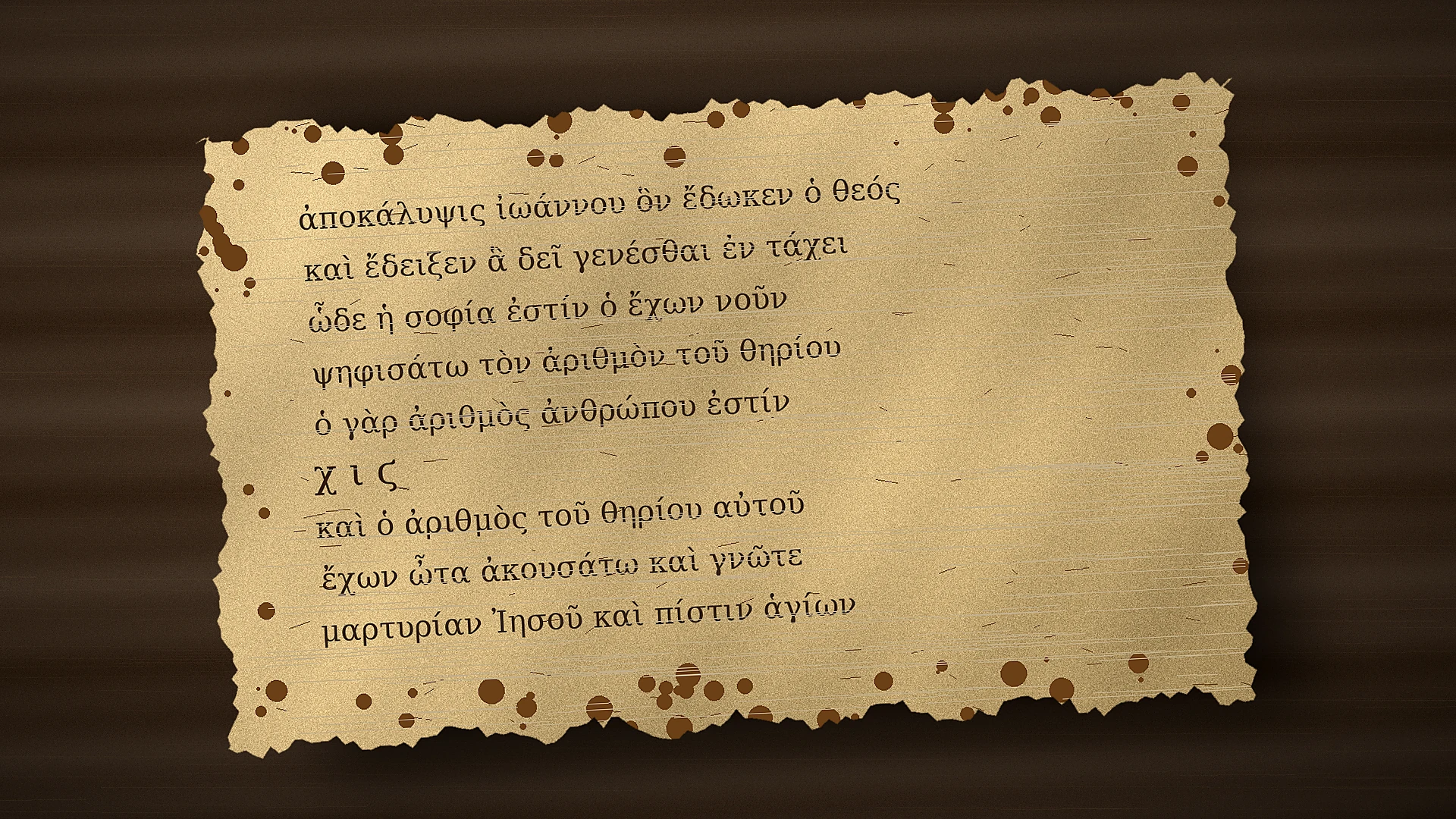
This is where the film touches genuine history. The number 616 is an ancient variant of the more familiar 666 in Revelation 13:18, the biblical passage commonly called the number of the beast. An early Greek manuscript known as Papyrus 115 contains the 616 reading. It is a real manuscript issue, not a horror-film invention.
What Does Papyrus 115 Actually Prove?
It proves that some early copies of Revelation transmitted 616 where others had 666. It does not prove that 666 was a modern mistake or that scholars have settled the number’s meaning. The film’s opening presentation makes the discovery sound more final than the evidence supports.
In a 2007 study of Papyrus 115, biblical scholar P. J. Williams discusses the 616 variant and several possible explanations. The papyrus fragments were published in 1999, so describing 616 as a wholly new discovery made in 2005 is misleading. A later academic paper by Craig Koester explains why both numbers are often examined in relation to the ancient name Nero Caesar.
616 Wilford Lane Ending Explained: What Was Really Happening?
Spoiler warning: The ending changes how nearly every strange event in the house should be understood.
The apparent family is part of a planned fraud. Jim, Randy, and Staci are not actually father and daughters. They are con artists who have staged the signs of a haunting and used the property’s violent history to put pressure on people involved in the sale. Their goal is a financial settlement, not escape from a ghost.
Jim’s closeness to the real-estate agent Austyn serves the plan. The group needs evidence of the house’s troubling past and wants to argue that the truth was hidden from them. The supposedly paranormal scenes are tricks intended to look convincing on camera. The scene-by-scene ending analysis at Average Movie Reviews lays out the later revelations.
There is one more turn. After the payout, Staci poisons Jim and Randy and leaves with the money. The film reveals that Robin, who had played a mother figure in their operation, previously warned Staci that the others might turn against her. What first looked like a curse becomes a story about deception, greed, and betrayal.
Which Haunted-House Horror Movies Have Real-Life Inspirations?
If you want a horror film with a documented event behind at least part of its story, The Amityville Horror provides a useful contrast. The 1974 DeFeo family murders were real, while the later haunting claims have been disputed. Our guide to the real Amityville history separates the confirmed crime from the supernatural story that followed.
What is the scariest movie ever based on a true story? There is no objective number-one answer: fear is personal, and even the phrase “based on true events” covers everything from documented crimes to disputed paranormal claims. It is more useful to ask which exact events can be checked? than to trust a frightening trailer.
Is Gary Hinge a Real Person?
Gary Hinge is not a real missing person from 616 Wilford Lane. He is the fictional missing hiker portrayed by Eric Mencis in a different 2021 horror film, Horror in the High Desert. The movie uses fake documentary interviews to make its disappearance feel genuine. Its fictional plot has been linked to the real, unresolved disappearance of hiker Kenny Veach, but Gary himself is a character, not a documented victim. TV Guide’s cast listing confirms the role, and The Reelness discusses the Kenny Veach parallel.
In the end, 616 Wilford Lane succeeds at one particular trick: it turns a house number, an authentic ancient manuscript variant, and a true-story-sounding marketing line into the feeling that something genuinely happened there. But the available evidence does not identify a real Wilford Lane haunting behind the story. The film is fiction, with a real historical reference to 616.

I am Jeremy Jahns – Your Cinematic Explorer
Immerse in movie reviews, Hollywood insights, and behind-the-scenes stories.