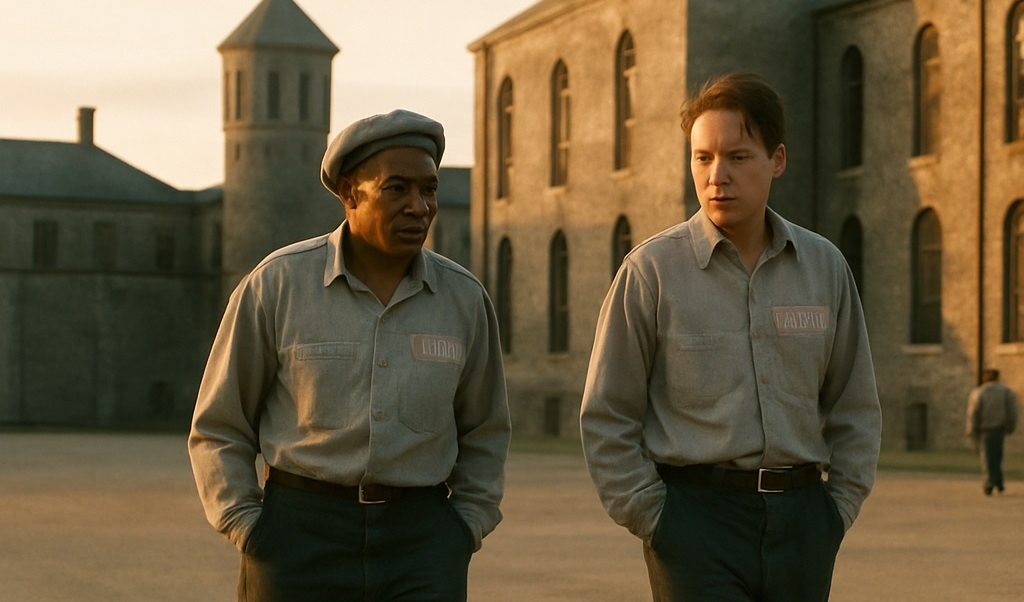
Here’s what matters: the film is not a true story, but it’s rooted in real emotions, real prison history, and real human stories that shaped the world Stephen King wrote about. The line between fiction and reality isn’t as far apart as you might think.
Where the Story Actually Comes From
The Shawshank Redemption is based on Rita Hayworth and Shawshank Redemption, a novella from Stephen King’s 1982 collection Different Seasons. King created Andy Dufresne and Ellis “Red” Redding from imagination, not from actual trial records or newspaper stories.
But the heart of the story corruption, wrongful convictions, abusive wardens, and the fight for hope inside a brutal system comes from conditions that once existed in American prisons. Several accounts note that Maine and Ohio prison histories helped shape the tone King captured so well. Those details explain why the film feels grounded, even when the plot is fiction.
What Is the True Story Behind Shawshank Redemption?
Let me explain it simply. There is no single true story that the film directly adapts. Instead, it pulls from patterns that have appeared across real prison life for decades.
Writers, journalists, and historians point to a mix of real influences:
- Corrupt prison administrations
- Abuse of solitary confinement
- Real cases of innocent men stuck in the system
- Hard labor programs that mirrored Shawshank’s tone
A number of real-world parallels especially those involving prison tunnels, laundry-room abuse, and warden scams have been documented in U.S. prisons from the early 1900s to the 1960s. None match Andy’s story perfectly, but the atmosphere lines up with history.
That’s why viewers often feel Shawshank is based on something that once happened. The story is fictional, but the environment is painfully real.
What Happened to the “Real” Andy Dufresne?
Since the story isn’t based on a real person, there is no documented “Andy Dufresne” in legal archives or prison records. Stephen King created him to represent a certain quiet strength someone who refuses to let the world decide who he is.
Still, the character echoes plenty of real men who claimed innocence while serving long sentences. Many of them spent decades fighting for their names, just as Andy does in the film.
So while there was never a banker named Andy who crawled through a tunnel and vanished into the rain, there were people whose stories carried the same emotional weight. That’s the space where fiction meets truth.
What Does the Number 37927 Mean in Shawshank Redemption?
You’ve probably noticed the number: 37927. It appears on Andy’s inmate uniform and documents. Fans tend to search for hidden meaning, but here’s the bottom line: the number doesn’t symbolize a real case, date, or historical reference.
Filmmakers have never confirmed any deeper meaning behind it.
Most evidence shows it’s simply an assigned inmate number chosen during production a realistic detail, not a coded message. It grounds Andy in the world of Shawshank without tying him to any real-life prisoner or event.
What Was Red’s Crime?
Red is one of the few characters who openly shares his past. He admitted to killing his wife by tampering with her car’s brakes. What he doesn’t hide and what hits hardest is his guilt. He doesn’t excuse it. He doesn’t soften it. Red carries the responsibility every single day.
There wasn’t a real “Red” who committed this exact crime. But Red’s emotional honesty mirrors the kind of self-reflection you hear from long-term inmates who have lived with their choices for decades.
It’s one reason Red feels so authentic. His story doesn’t lean on drama; it leans on truth.
Why the Film Feels So Real
Shawshank works because it doesn’t exaggerate the human condition. Prison isn’t painted as constant action or violence. It moves slowly, like time itself is heavy. People wait. They regret. They hope. They build friendships that carry them through the years.
Frank Darabont’s direction and the cast’s performances lock everything into place:
- Tim Robbins gives Andy a soft resilience.
- Morgan Freeman makes Red the emotional anchor of the movie.
- The prison becomes a character of its own cold, tired, and unchanging.
None of these pieces require a real backstory to hit home. They just require honesty, and Shawshank delivers it in every frame.
So, Is The Shawshank Redemption a True Story?
Here’s the clean answer:
No the movie is not based on a true story.
Yes it is built on truths that come from real prison life and human experience.
Stephen King wrote fiction. But the emotions behind it? Those belong to real people who lived under harsh systems, fought for justice, or carried regrets like anchors.
Shawshank feels true because it understands people. And that’s what keeps it alive decades after its release.
A Final Thought
The magic of Shawshank isn’t in whether it actually happened. The magic is in what it feels like a story about hope refusing to die, even in the darkest place possible. That’s why the film lives on. That’s why people keep asking if it’s real.
Some stories don’t need to be true to speak the truth.

Jessica Savitch, with a deep passion for journalism, brings her expertise to istruestory.com as a dedicated author. MA in Arts & Journalism.