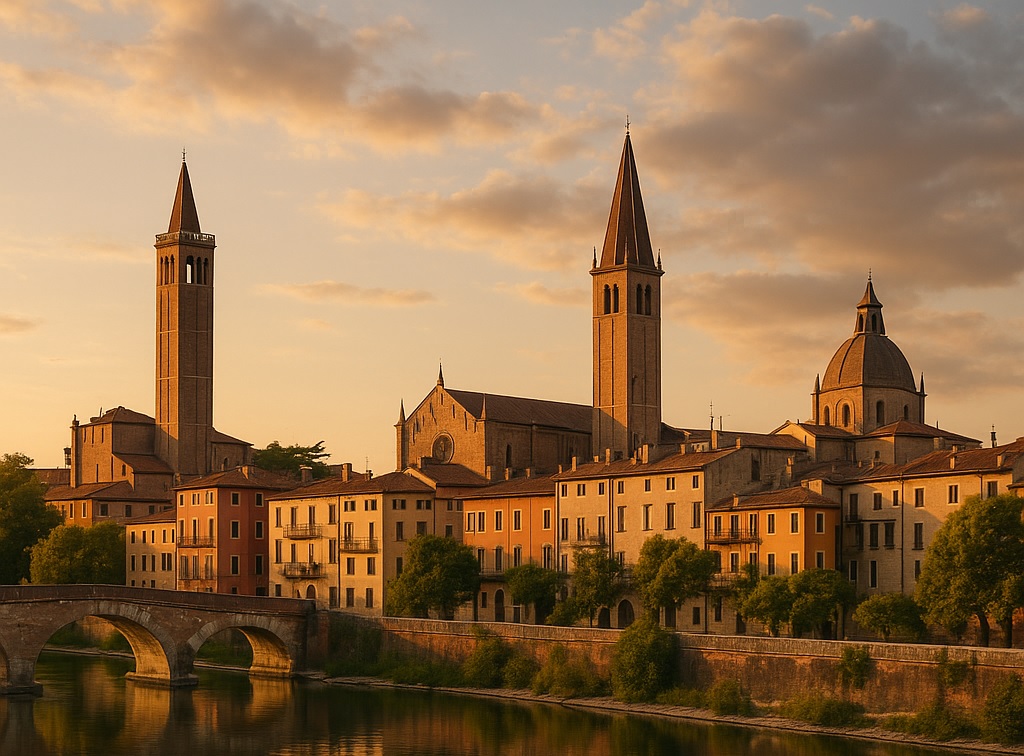
Alright. Let’s talk about one of the most famous love stories ever written and the question that refuses to die:
Was Romeo and Juliet a true story from 1303?
Because once you hear that rumor that it supposedly happened in medieval Italy it sticks. And suddenly Shakespeare’s tragedy feels less like theater and more like historical heartbreak.
So let’s break it down properly. No myths. No wishful thinking. Just history, literature, and what actually inspired the play.
First Things First: Did Romeo and Juliet Really Exist?
Short answer?
No confirmed historical record proves that Romeo and Juliet were real people.
There are no birth records.
No death certificates.
No verified court documents.
What we do have is something far more interesting: a chain of literary storytelling that existed long before William Shakespeare ever put quill to paper.
And that’s where the real story begins.
Where Shakespeare Got the Story
Romeo and Juliet wasn’t an original plot invented out of thin air.
Shakespeare published his version around 1597. But he borrowed heavily from an earlier English poem titled The Tragical History of Romeus and Juliet, written in 1562 by Arthur Brooke.
Brooke himself adapted the tale from an Italian novella by Matteo Bandello, who published his version in the 1550s.
Bandello’s version was inspired by even older Italian stories including a 1530 tale by Luigi da Porto.
That’s the real lineage.
This story evolved across decades. It wasn’t lifted from a single medieval newspaper headline.
The 1303 Claim – Where Did That Come From?
Here’s where things get cinematic.
Luigi da Porto placed his version of the story in Verona around 1303, during the rule of Bartolomeo I della Scala.
He also used the names Montecchi and Cappelletti which resemble two real Italian families mentioned in The Divine Comedy by Dante Alighieri.
But here’s the key detail.
Dante referenced those families as political rivals not star-crossed lovers. There is no documented historical account linking a Romeo and a Juliet to those households.
Da Porto likely fictionalized real family names to give his story political texture.
So yes, the year 1303 appears in early versions.
But that does not make it verified history.
The Real Verona Connection
If you visit Verona today, you’ll find:
- “Juliet’s House”
- A balcony tourists photograph daily
- A statue of Juliet
- Even a supposed tomb
Here’s the thing.
Those landmarks are cultural creations. They exist because the story became famous not because archaeologists uncovered proof of the lovers.
The balcony itself was added centuries later. The house was selected retroactively to fit the legend.
It’s beautiful marketing.
It’s not historical evidence.
So What’s Actually True?
Let’s simplify it with facts.
| Claim | Verified? | Reality |
|---|---|---|
| Romeo and Juliet were real people | ❌ No | No historical documentation |
| Story set in Verona | ✅ Yes (fictionally) | Used by early Italian writers |
| Year 1303 historically confirmed | ❌ No | Literary setting, not record |
| Montecchi & Cappelletti were real families | ⚠️ Possibly | Mentioned by Dante, but no love tragedy documented |
| Shakespeare invented the entire plot | ❌ No | Adapted earlier works |
That table right there clears up 90% of internet confusion.
Why the Story Feels Real
Now here’s where it gets interesting from a cinematic perspective.
The reason people keep asking if it’s true is because the story feels grounded.
Two rival families.
Teenagers caught in generational conflict.
A secret romance spiraling into tragedy.
That dynamic has happened throughout history. Not necessarily these two names. But versions of it.
Shakespeare didn’t write fantasy. He wrote emotional realism.
That’s why the play endures.
The Cinematic Legacy
Let’s zoom out.
Romeo and Juliet has inspired countless adaptations from traditional stage performances to films like:
- Romeo and Juliet directed by Franco Zeffirelli
- Romeo + Juliet directed by Baz Luhrmann
Each version reinterprets the same tragic arc.
And every time it returns to screens, a new generation asks the same question:
Did this really happen?
That’s storytelling power.
What Shakespeare Really Did
Here’s what makes Shakespeare’s version definitive.
He compressed timelines.
He intensified emotions.
He sharpened dialogue.
He transformed a cautionary tale into poetic tragedy.
The original Italian versions unfolded over months. Shakespeare’s version happens over just a few days. That decision increases urgency and emotional impact.
That’s not history.
That’s craft.
And it’s brilliant.
The Truth Behind the Legend
If we strip away the tourism, the 1303 rumor, and the balcony mythology, here’s what remains:
Romeo and Juliet is not based on a proven true story.
It is a layered adaptation of Italian Renaissance literature that used real family names to create realism.
It reflects social tensions of medieval Italy.
It echoes political rivalries.
It dramatizes youthful impulsiveness.
But there is no historical archive confirming the lovers’ existence.
Why the Myth Persists
Because people want it to be real.
A love so intense it defies family.
A tragedy so sudden it shocks a city into peace.
A story that feels ancient and inevitable.
When something resonates that deeply, audiences assume it must have happened.
But sometimes fiction survives longer than fact.
And in this case, fiction won.
Final Take
Was Romeo and Juliet a true story from 1303?
No.
Was it inspired by earlier Italian tales set in that period?
Yes.
Did Shakespeare elevate it into one of the most powerful tragedies ever written?
Absolutely.
And honestly? The fact that we’re still debating its reality 400 years later might be the most impressive achievement of all.
Because whether or not Romeo and Juliet lived their story certainly does

I am Jeremy Jahns – Your Cinematic Explorer
Immerse in movie reviews, Hollywood insights, and behind-the-scenes stories.