The Woman Behind the Movie
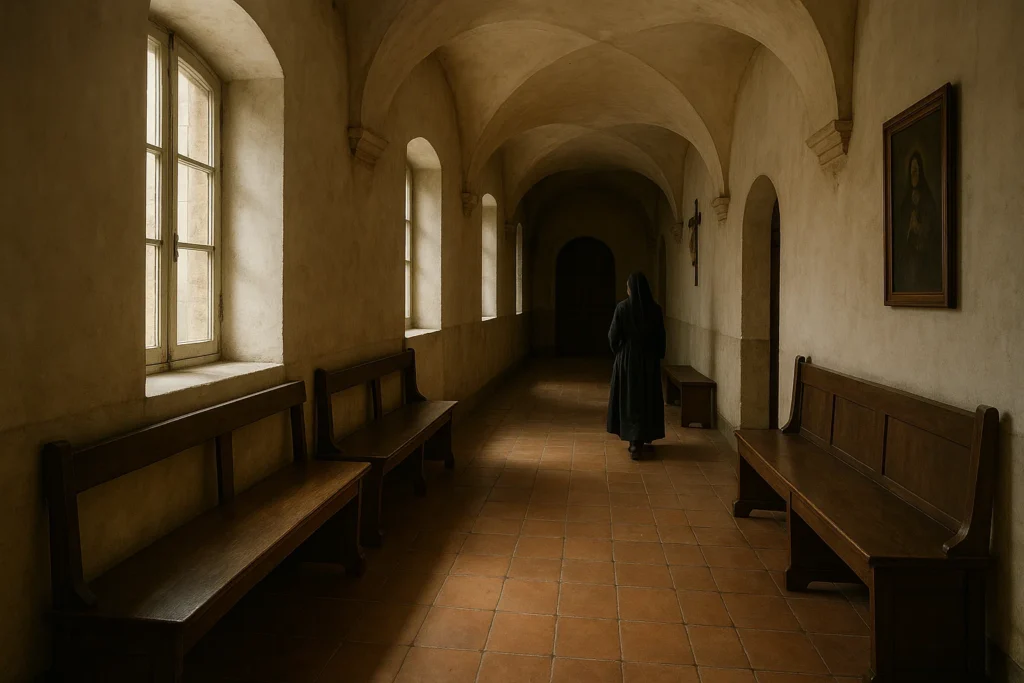
Before the film came the life. Philomena Lee was an Irish teenager from County Limerick in the early 1950s. She was fifteen when she became pregnant something Ireland’s society at the time treated as shameful and morally unforgivable. Her family sent her to Sean Ross Abbey, a convent where many young women were placed when they became pregnant outside marriage.
Life inside the abbey was strict and quiet. The young mothers worked long hours. Their children lived in the nursery nearby. Philomena cared for her baby boy, Anthony, every day for three years. Then her life changed forever.
When Her Son Was Taken
The film shows the moment vividly, but the truth is just as stark. Philomena’s son was adopted without her consent. The convent arranged his adoption and gave him to an American family who renamed him Michael Hess. That was common practice at the time, especially from the 1950s into the 1960s. Many Irish mothers were told they had no choice. Their children were adopted overseas, often for a fee.
Philomena watched the car drive away and carried that moment for the rest of her life.
Did Philomena Ever Find Her Son?
This is the question that draws most people to the story.
She never met him again.
Philomena spent years quietly trying to find him. The convent kept adoption records sealed. Her son, once grown, traveled to Ireland multiple times looking for her. He died in 1995 without knowing her name, even though he is buried at the same abbey with a request that his mother someday find him. Neither knew how close they were to reconnecting.
That truth sits at the center of the story’s heartbreak.
Who Her Son Became
Michael Hess grew up to be a respected lawyer in the United States. He worked at the highest levels of government and became chief legal counsel for the Republican National Committee. Behind his public life, he lived with quiet questions about his identity. He explored Ireland, hoping for a trace of the woman who gave birth to him. Even at the end of his life, he still hoped she might walk through the doors of Sean Ross Abbey one day.
He passed away at age 43 from AIDS-related complications, still searching for answers.
How Old Was Philomena When She Had Anthony?
Philomena was a young teenager only 15 years old when she became pregnant. This detail matters. It shows the vulnerability of her situation and explains the strict environment that shaped her early life. The society she lived in gave her little support and almost no choices.
What Actually Happened to the Real Philomena?
After losing her son, Philomena carried her grief quietly. She eventually married, raised a family, and worked as a nurse. She spoke about her son only to a few people, including her daughter, who later connected Philomena’s story with journalist Martin Sixsmith. His investigation led them back through years of sealed records, closed doors, and unanswered questions.
What they uncovered became the foundation of Philomena, the film starring Judi Dench and Steve Coogan.
The movie softened some moments and dramatized others, but its heart stays true: one mother spent most of her life wanting to know her child. And that child grew up wanting the same.
Is the Story of St. Philomena Related?
This question comes up often because of the shared name.
St. Philomena is not connected to Philomena Lee.
One is a legendary Christian martyr from early church tradition.
The other is a real woman whose life unfolded in 20th-century Ireland.
Their stories overlap only in name, not in history.
Why the Story Still Matters
The truth behind Philomena opened a much wider conversation. Thousands of women went through similar experiences in Ireland’s mother-and-baby homes. The story brought global attention to the secrecy around forced adoptions and pushed institutions to reexamine their role in the lives they shaped.
At its core, though, this is a story about love that never faded. Philomena Lee lived long enough to see her story told to the world. She spoke for herself, for her son, and for the many mothers who never had the chance.
Here’s the simple truth:
The movie touched people because the woman behind it lived with honesty, pain, and resilience.
Her story is real. Her loss was real. And her hope stayed with her for a lifetime.
Closing Thoughts
The film gives you a window into Philomena’s search, but the real journey is bigger than the screen. When you learn what happened to her son, how she carried her grief quietly for decades, and how determined she remained, the story becomes something else entirely a reminder of how strong a mother’s love can be even after fifty years of silence.
That’s why the Philomena true story stays in people’s minds. It’s not just about loss. It’s about dignity, truth, and the quiet courage of a woman who wanted answers and finally shared her voice with the world.

Jessica Savitch, with a deep passion for journalism, brings her expertise to istruestory.com as a dedicated author. MA in Arts & Journalism.