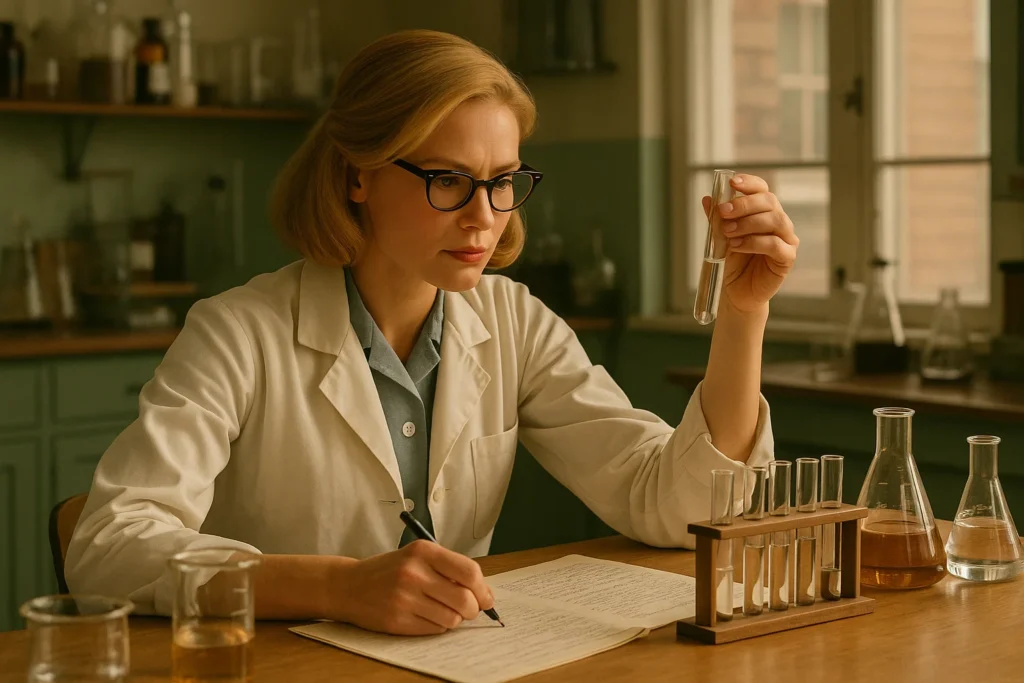
Here’s what actually inspired the story, what sparks the controversy, and why so many viewers walk away convinced they’ve met Elizabeth Zott in the pages of history.
What Matters Most Up Front
Lessons in Chemistry is not a true story.
Elizabeth Zott, Madeline Zott, and Calvin Evans never existed.
But the world around them absolutely did.
Bonnie Garmus, the author, has been open about where the idea came from. She once worked in a male-dominated environment where women were constantly dismissed. That frustration became the spark. She turned her own lived experience and the stories so many women still share into a fictional world that feels disturbingly familiar.
The Apple TV+ series adds more emotional weight and reshapes some parts of the book, but the core stays the same: a fictional woman navigating very real 1950s sexism in science.
So Is Lessons in Chemistry Based on a True Story?
Short answer: No.
Long answer: It’s fiction built on real patterns that shaped women’s lives.
Esquire’s coverage makes it clear that the series is inspired by the truth of the era, not real people. Women chemists in the 1950s faced blatant discrimination limited job roles, blocked promotions, and everyday sexism that often went unquestioned. Elizabeth is a symbol of them, not a direct portrait.
Fans on Reddit say the same thing: the story may be made up, but it cuts close to real experiences many women still face today. The emotional truth lands harder than a simple documentary because it lets you step into Elizabeth’s shoes.
What Inspired the Story?
Bonnie Garmus said she got the idea after a meeting where a male colleague ignored her work and spoke over her. That moment lodged itself in her mind. She went home, opened her laptop, and created a woman who refuses to shrink herself to make others comfortable.
Elizabeth Zott became a kind of answer a character who fights back in ways many real women could not.
Her struggles echo the lived experiences of:
- Women scientists who lost jobs after pregnancy
- Women who were pushed into “assistant roles” despite higher qualifications
- Women who weren’t allowed to publish their research under their own names
- Women who were told their “temperament” didn’t suit chemistry
By rooting the fiction in real emotions and societal obstacles, Garmus made the story feel true even without a factual backbone.
Is Elizabeth Zott Autistic in Lessons in Chemistry?
The book and series never label her.
Fans debate it often, and the conversation gets heated. Some see traits that resemble autism her straightforward communication, intense focus, and discomfort with social expectations.
But here’s the important thing:
Bonnie Garmus has never confirmed an autism diagnosis for Elizabeth.
What the character shows is a woman who refuses to perform softness for others. In a 1950s setting where women were trained to be gentle, agreeable, and quiet, anyone who stepped outside those expectations was often misread. Elizabeth isn’t written as neurodivergent she’s written as uncompromising in a world that demands compromise.
Is Madeline Zott a Real Person?
No. Madeline is fictional, but she plays a meaningful role. Through her eyes, the story reflects the long-term cost of secrets, grief, and parental expectations. She becomes a bridge between Elizabeth and Calvin a living reminder of what could have been.
Even though she isn’t based on a real child, her emotional journey mirrors what many children of single mothers felt during that era, when society judged women for raising kids “alone.”
What’s Controversial About Lessons in Chemistry?
Here’s where the conversation widens.
1. The portrayal of sexism
Some viewers think the show exaggerates 1950s misogyny. Others argue it barely scratches the surface. Women in science during that time dealt with behavior that would be unthinkable today and sometimes eerily similar to what still happens quietly.
2. Elizabeth’s emotional distance
Some critics say she comes across as too cold. Others say that’s the point women who don’t smile or soften their edges are still punished socially, even now.
3. The changes between the book and the show
Apple TV+ added, expanded, or softened certain storylines. Some readers loved it. Some said it took away the sharpness of the book’s tone.
4. The debate about neurodivergence
Without a clear diagnosis, fans fill in the gaps. The lack of clarity sparks arguments that the author never intended.
5. Calvin’s storyline and trauma
Some viewers feel his backstory was too heavy or used mainly for emotional shock value. Others think it deepened the narrative.
Controversial or not, it’s a story people keep talking about because it touches nerves that still feel raw.
Why the Story Feels So Real
If you step back from the specifics, the story’s truth becomes obvious.
Women were often barred from labs.
Women were told they didn’t belong in “serious science.”
Women did groundbreaking work that later got credited to men.
Women were expected to leave their careers when they married or had kids.
Women were told ambition was unfeminine.
So when Elizabeth stands over a beaker and explains the science of dinner, she’s doing more than cooking she’s reclaiming a space that was denied to countless real women.
The show turns her into a symbol of everyone who was told to lower her voice, hide her intelligence, or settle for less.
Where Fiction Meets the Emotional Truth
Sometimes a story becomes powerful not because it happened, but because it could have happened. Lessons in Chemistry is that kind of story. It mirrors the real frustrations women still feel in boardrooms, labs, and offices being overlooked, interrupted, or treated as an exception rather than an equal.
Elizabeth’s journey stands in for thousands of women whose names never made it into history books.
And that’s why the question keeps coming up: Was she real?
Because in many ways, she feels like someone we should have already known.
Bottom Line
Lessons in Chemistry isn’t a true story, but it’s built from real truths. Elizabeth Zott never lived, yet she represents a generation of women who pushed against the walls around them. The science is grounded. The sexism is accurate. The emotions are familiar.
It’s fiction, yes but it carries the weight of reality.

Jessica Savitch, with a deep passion for journalism, brings her expertise to istruestory.com as a dedicated author. MA in Arts & Journalism.