When people watch Charlie and the Chocolate Factory or the newer film Wonka, one question quietly sits in the back of their minds: Is Willy Wonka based on a true story?
The character feels larger than life. A mysterious candy genius. A factory full of chocolate rivers, edible gardens, and strange workers called Oompa-Loompas. It all feels magical.
But here’s the interesting part. While Willy Wonka himself is fictional, the story behind him is not completely made up. In fact, parts of the story connect to real history, real candy companies, and even real childhood memories.
To understand where Willy Wonka really came from, we need to go back to the mind of the author who created him: Roald Dahl.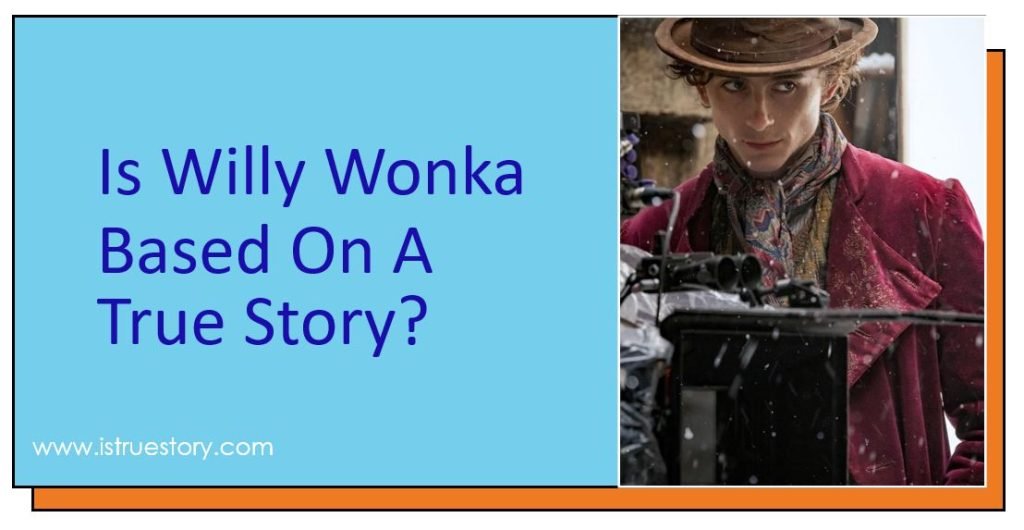
The Man Who Created Willy Wonka
The character Willy Wonka first appeared in the 1964 children’s novel Charlie and the Chocolate Factory, written by the famous British author Roald Dahl.
Roald Dahl was already known for imaginative stories. But when he wrote this book, he pulled inspiration from something very real: his childhood experiences with chocolate companies.
As a young student in England, Dahl attended Repton School. At that time, the famous chocolate company Cadbury would send boxes of experimental chocolates to the school.
Students were asked to taste the chocolates and give opinions.
Imagine being a kid and receiving a box of mysterious candy inventions to review. That experience stayed with Dahl for the rest of his life.
Years later, he turned that memory into a story.
And from that simple idea, Willy Wonka was born.
The Real Chocolate Wars That Inspired the Story
Here’s where the real history gets interesting.
During the early 1900s, several British chocolate companies were competing intensely. The biggest names included:
- Cadbury
- Rowntree
- Fry’s Chocolate
These companies constantly tried to outdo each other by inventing new sweets.
This fierce competition became known as the “Chocolate Wars.”
Factories guarded their recipes carefully. New chocolate ideas were secret projects. Employees sometimes had to sign agreements not to reveal recipes.
To a young boy like Roald Dahl, this world of secret chocolate experiments must have felt mysterious and magical.
And that atmosphere clearly influenced the story of Willy Wonka.
In the book, Wonka’s factory is extremely secretive. Workers are hidden. Recipes are protected. Competitors try to steal ideas.
That mirrors the real candy industry of Dahl’s childhood.
Was There a Real Willy Wonka?
No real person named Willy Wonka ever existed.
However, some historians believe the character is partly inspired by real chocolate entrepreneurs.
Two names often appear in discussions:
Milton S. Hershey
The American founder of the Hershey Chocolate Company built one of the most famous chocolate empires in the world.
Like Wonka, Hershey:
- Created innovative chocolate products
- Built a massive factory
- Developed a town around the chocolate business
But Hershey was a serious industrialist, not an eccentric inventor like Wonka.
John Cadbury
Cadbury’s founder also helped shape the chocolate industry. His company experimented with new chocolate recipes and built large factories.
Again, the connection is indirect.
These real chocolate pioneers may have influenced the idea of a candy empire, but Willy Wonka remains a fictional creation.
The Famous Chocolate River
One of the most unforgettable parts of the story is the chocolate river inside Wonka’s factory.
It looks delicious on screen, but many viewers wonder something simple:
Is there a real chocolate river anywhere in the world?
The answer is no.
Chocolate factories do move large amounts of liquid chocolate through pipes and machines. But no real factory has an open flowing river of chocolate like the one in the story.
Interestingly, when the 1971 film Willy Wonka & the Chocolate Factory was made, the filmmakers actually created a real chocolate mixture for the river scene.
The mixture included:
- Chocolate
- Cream
- Water
However, under the hot studio lights, the mixture quickly spoiled and smelled terrible during filming.
So while the chocolate river looked magical, it wasn’t very pleasant to work around.
How Rich Is Willy Wonka?
Another common question people ask is: How rich is Willy Wonka?
The story never reveals an exact number.
But from what we see, Wonka is incredibly wealthy.
His factory includes:
- Huge candy production lines
- Advanced inventions
- Global chocolate distribution
- Rare ingredients from around the world
Some fans estimate that if Wonka existed today, his company could be worth billions of dollars, similar to large candy brands.
Real-world chocolate companies such as Mars, Hershey, and Nestlé generate billions each year.
So if Wonka ran a real company, he would likely be one of the richest candy makers on Earth.
Does Wonka Candy Still Exist?
For many years, fans could actually buy Wonka candy products in real life.
The Wonka brand was created by the company Nestlé in the 1970s, inspired by the popularity of the original film.
Some famous candies included:
- Wonka Bars
- Nerds
- Runts
- Gobstoppers
The Everlasting Gobstopper candy even came directly from the book.
However, in 2018 Nestlé sold its U.S. candy division to Ferrero, the company behind Ferrero Rocher and Kinder.
After that deal, the Wonka brand slowly disappeared from stores.
Many of the candies still exist today, but the Wonka name itself is mostly retired.
Why the Story Feels So Real
Even though Willy Wonka is fictional, the story feels believable.
That is because Roald Dahl built the story using real elements.
These include:
Real inspiration from childhood
Dahl’s experience tasting experimental chocolates created the core idea for the factory.
Real candy industry competition
The secretive chocolate wars added the mysterious atmosphere.
Real human behavior
The children in the story represent exaggerated versions of real personalities.
For example:
- Augustus Gloop represents extreme greed
- Veruca Salt shows spoiled behavior
- Violet Beauregarde reflects obsession with winning
- Mike Teavee symbolizes media addiction
These traits make the story relatable even today.
The Evolution of Willy Wonka in Movies
Over time, the character of Willy Wonka has appeared in several films.
Each version shows a slightly different personality.
1971 – Willy Wonka & the Chocolate Factory
Actor Gene Wilder played the role.
His version of Wonka was mysterious, funny, and sometimes unsettling. Many fans still consider this the most iconic performance.
2005 – Charlie and the Chocolate Factory
Director Tim Burton created a darker version of the story.
Johnny Depp played Wonka as a socially awkward genius with a complicated childhood.
2023 – Wonka
This film explores Wonka’s early life before he opened the famous factory.
Timothée Chalamet plays a young inventor trying to build his chocolate dream.
Each movie keeps the magical spirit of the original story while adding new layers.
The Deeper Message Behind the Story
At first glance, Charlie and the Chocolate Factory looks like a fun fantasy about candy.
But Roald Dahl included deeper messages.
The story explores themes such as:
- Greed vs kindness
- Honesty vs selfishness
- Imagination vs consumerism
- Humility vs entitlement
Charlie Bucket, the poor boy who wins the factory, represents kindness and gratitude.
The other children represent excess and bad behavior.
This moral structure is one reason the story continues to connect with readers decades later.
Why Willy Wonka Still Captures Our Imagination
More than sixty years after the book was written, Willy Wonka remains one of the most famous fictional characters in entertainment.
Why?
Because the idea taps into something universal.
Everyone loves the fantasy of discovering a hidden place where:
- Candy grows like plants
- Machines create endless sweets
- Inventors build impossible creations
The story blends childhood wonder with real industry history, which gives it both magic and credibility.
That combination keeps audiences curious.
And it keeps the question alive.
Could something like Wonka’s factory ever exist?
The Final Truth About Willy Wonka
So, is Willy Wonka based on a true story?
The answer is both yes and no.
- Willy Wonka himself is fictional.
- His chocolate factory is imaginary.
- The chocolate river is pure fantasy.
But the inspiration behind the story is very real.
Roald Dahl’s childhood experiences with chocolate companies, combined with the real competition between candy manufacturers, helped shape the world of Wonka.
In other words, the story sits right at the border between history and imagination.
And that may be the real secret behind its lasting charm.
I am Jeremy Jahns – Your Cinematic Explorer
Immerse in movie reviews, Hollywood insights, and behind-the-scenes stories.