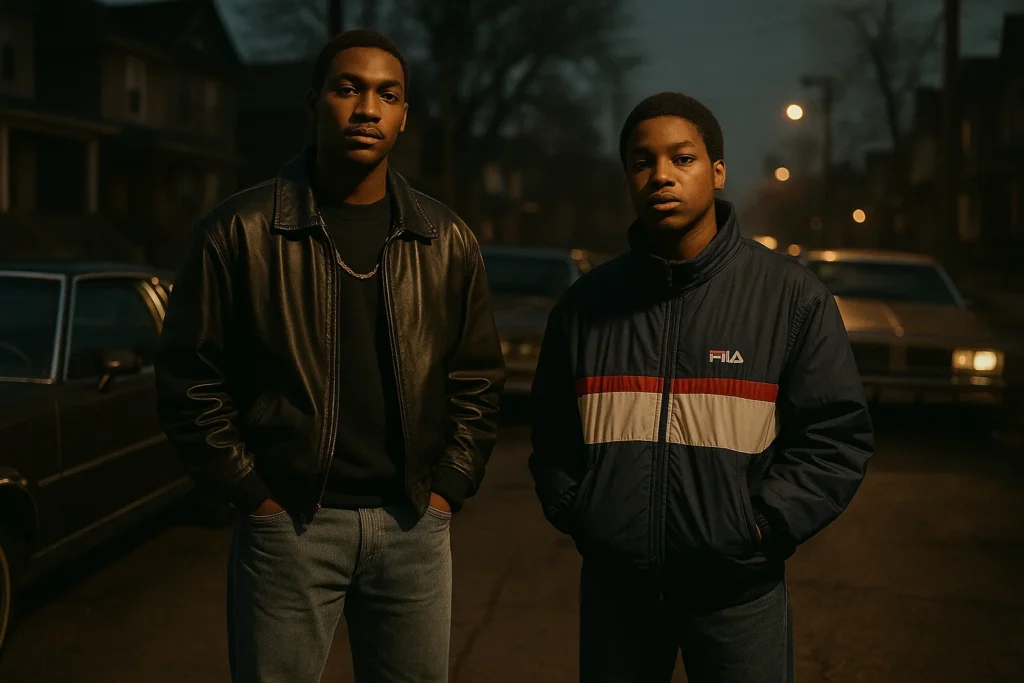
Here’s what matters. The show dramatizes moments, but the foundation comes straight from documented events, interviews, and the long trail of legal records surrounding Demetrius “Big Meech” Flenory and Terry “Southwest T” Flenory. Their story isn’t folklore. It’s part of the public record, covered by local Detroit reporters, federal investigators, and years of court filings.
The series simply takes that raw truth and gives it a voice.
The Real Brothers Behind BMF
Demetrius and Terry weren’t overnight names. They started small in southwest Detroit during the late 1980s. According to the Black Mafia Family historical records and media reports, the brothers built a drug network that grew into one of the largest criminal organizations in the United States. By the early 2000s, BMF stretched coast to coast, moving millions and leaving a cultural imprint that even today pulls curiosity from new viewers.
Sources confirm that the show’s central timeline , the brothers’ split, their rise, the attention of federal agencies , mirrors the documented reality.
The world you see on screen isn’t created out of thin air. It’s shaped from interviews with people who lived inside that Detroit era, including the Flenory family, neighbors, community members, and former associates.
Is Lamar from BMF Based on a Real Person?
Here’s where the story sharpens. Lamar in the show is intense, unpredictable, and almost mythic in how he moves. But he didn’t appear from imagination.
Multiple reports note that Lamar is loosely inspired by a real Detroit figure who was feared in the late 1980s and early 1990s. While the show alters names and circumstances, the character reflects a mix of personalities from that era who were known for violent reputations and long-standing rivalries.
The key thing to understand: Lamar isn’t a one-to-one recreation. He’s a composite. The show blends the real tensions, rivalries, and stories Detroit journalists documented, but shapes them into a character who fits the series’ dramatic arc.
So yes, he comes from truth , just not one single person you could point to directly.
Is 50 Cent a Part of BMF?
Behind the camera, absolutely.
Curtis “50 Cent” Jackson is the executive producer of the BMF series. He didn’t live the events, but he was deeply connected to the cultural wave BMF created in the 1990s and early 2000s. His interest in the story goes back years, and he personally pursued the rights to bring the Flenory brothers’ journey to television.
From interviews and statements given at launch, 50 Cent’s goal was simple: tell the story honestly, avoid glamorizing the lifestyle, and focus on the human cost and ambition behind it. His involvement helped bring authenticity to the tone, casting, and emotional pacing.
So while he isn’t a character in the real events, he’s directly responsible for how we see them today.
What Is Terry Flenory Doing Now?
After years in federal custody, Terry “Southwest T” Flenory was released in 2020 under home confinement, largely due to COVID-era prison adjustments. His brother Big Meech remains incarcerated, with a release date currently projected for 2028, according to public Bureau of Prisons information.
Terry has appeared on social media since his release, reconnecting with family and rebuilding parts of his life. While he hasn’t returned to public criminal activity , and has stated he won’t , his name still draws attention because of the series.
The real story didn’t end with the takedown. It simply shifted into quieter chapters.
Who Was the Real “First Lady” of BMF?
The title “First Lady of BMF” is a phrase that floats around interviews, documentaries, and online discussions, but the show’s representation is a dramatic interpretation rather than a direct biography.
Real-world accounts suggest that several women in the BMF circle held influence, handled logistics, or played key support roles. None of them are portrayed exactly as themselves in the series. Instead, the writers created characters inspired by the types of relationships and roles documented in BMF investigations and personal testimonies.
This keeps the heart of the story intact while protecting the identities of people who never chose to step into the spotlight.
How Accurate Is the BMF Series Overall?
Here’s the bottom line. BMF is rooted in fact. It follows the real timeline, the real brothers, their real rise, and their real downfall. But it does what every dramatic retelling has to do: fill the gaps with character arcs, heightened tension, and storytelling choices that keep a modern audience watching.
What remains untouched are the core truths:
- Two brothers tried to build something massive from a Detroit neighborhood.
- Their choices changed their lives and the lives of everyone around them.
- Law enforcement followed the trail for years until the full story came into view.
- Their influence reached far beyond crime , into music, culture, and identity.
The series sits on the edge between documentary fact and dramatic art. And it works because the real story is already unforgettable.
Why This Story Still Matters
Stories like BMF linger because they touch something deeper than headlines. They explore ambition, family bonds, survival, and the cost of choosing the fast path. Detroit remembers the impact. Investigators remember the scale. Viewers today see the echoes in every episode.
And while the show smooths edges and dramatizes rivalries, it never loses sight of what made the Flenory brothers unforgettable: they built an empire, and they paid the price for it.
Final Thoughts
So yes , BMF is based on a true story. A complicated, messy, powerful one. The show gives shape to real people and real events, but filters them through the lens of storytelling so viewers can feel the emotional weight of what happened. If anything, the truth behind the series only deepens the impact of what you see on screen.

Jessica Savitch, with a deep passion for journalism, brings her expertise to istruestory.com as a dedicated author. MA in Arts & Journalism.