No, Riverdale is not based on a true story. The TV series takes its central characters from Archie Comics and places them in a fictional town where family secrets, romance, murder mysteries, and later supernatural twists drive the drama. There is no documented real case behind Archie Andrews, Betty Cooper, Jughead Jones, or the death that starts the first season. The CW’s official series description identifies Archie Comics as its source.
That does not mean every part of the show came from nowhere. Its creator borrowed ideas from another famous TV mystery, and its streets and scenery were filmed in real Canadian locations. Here is where the story ends and the real inspiration begins.
Is Riverdale Based on a True Story? The Quick Answer
- True-story status: Fiction, not a dramatization of a real crime.
- Original source: Archie Comics characters and their fictional hometown.
- TV creator: Roberto Aguirre-Sacasa.
- Creative influence: The small-town mystery style of Twin Peaks.
- Real filming area: Vancouver and other British Columbia locations.
- Original run: Seven seasons, from 2017 to 2023.
Those details come from the network’s production information, an interview with Aguirre-Sacasa, and The CW’s final-season announcement.
What Was Riverdale Actually Based On?
The Archie Comics connection
Long before the television show, Archie Andrews and his friends were characters in American comic books. Readers knew Archie, Betty Cooper, Veronica Lodge, Jughead Jones, and their hometown through decades of stories about school, friendships, dating, and everyday trouble. When Riverdale arrived on television in January 2017, it kept those familiar names but gave them much darker problems.
Archie Comics itself introduced the adaptation in 2016 as a live-action drama built around its classic characters. Its official announcement described a fresh, more dangerous version of the comic-book world. The network also lists Aguirre-Sacasa as an executive producer and the central creative figure.
Here is the important difference: being based on comic-book characters is not the same as being based on real people. A writer can adapt fictional characters into a new story without turning the result into a true-crime account.

Why the television show became so much darker
Traditional Archie stories often centered on comic misunderstandings and teenage relationships. Riverdale brought those same characters into a world shaped by secrets and danger. That change was deliberate. In a 2015 conversation with The Beat, Aguirre-Sacasa said the original pitch was essentially a teenage version of Twin Peaks.
That comparison helps explain the show better than any claim about a hidden true story. Twin Peaks also opens with a shocking death that exposes a community’s secrets. Riverdale uses a similar storytelling idea, but its characters, deaths, and town history belong to its own fictional world.
The Television Academy also described the series as a reinvention of Archie Comics with a Twin Peaks-influenced mystery. In other words, the creators were mixing two fictional storytelling traditions, not recreating an unsolved murder.
Was Jason Blossom a Real Person? Was His Murder Real?
No. Jason Blossom is a fictional character. His death is the mystery that launches the show, not a retelling of a verified death in an actual town called Riverdale. Cheryl Blossom, the town’s wealthy families, and the investigations surrounding them are also part of the script.
Tourism officials in Vancouver describe Jason’s final boat ride as a scene filmed at Alouette Lake. That is evidence of a real production location, not evidence that the crime happened there; see Destination Vancouver’s filming guide.
The same distinction applies to later serial-killer plots, secret groups, and supernatural events. They may borrow familiar themes from crime stories or horror, but that does not make their events historical facts. Fans comparing dark fictional mysteries can also explore the difference between invention and real-world inspiration in our article on the story behind Bates Motel.
Is Riverdale a Real Town?
The Riverdale in the show is fictional. Archie Comics described its television setting as a small fictional town in New York in its early adaptation announcement. That does not mean there is a single real town whose residents, school, families, and crimes match the story.
Real communities have names such as Riverdale, and many towns have diners, high schools, wooded roads, and close-knit neighborhoods. But sharing those details does not make the Archie Comics town a disguised account of one location.
Part of the appeal is that the town feels familiar even when the plot becomes unusual. The series uses recognizable settings to make strange events more unsettling. If you like stories built around a more everyday small-town atmosphere, our look at the real inspiration behind Gilmore Girls offers a useful comparison.
Where Was Riverdale Filmed in Real Life?
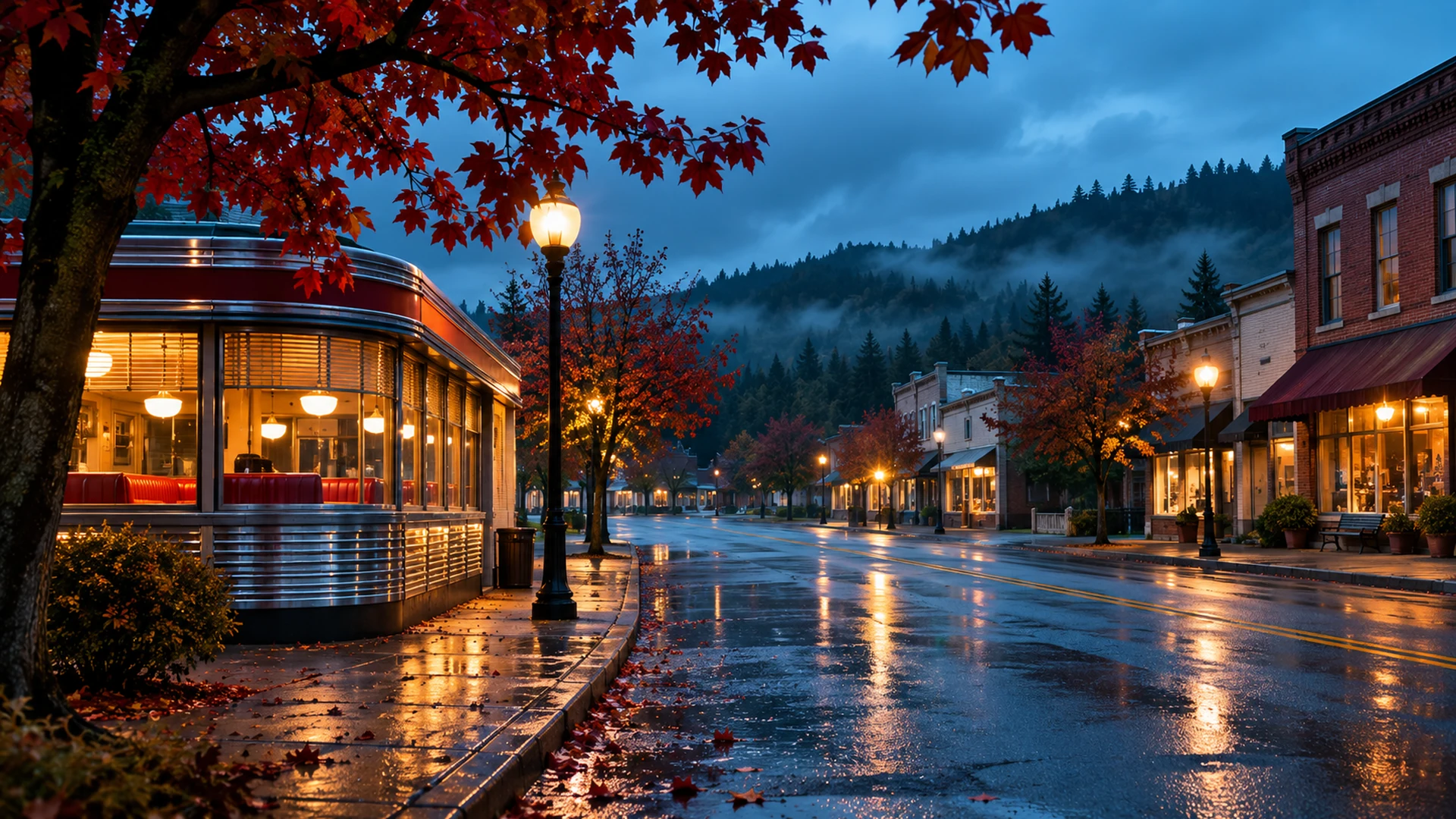
The fictional American setting was brought to the screen largely through Vancouver and other parts of British Columbia, Canada. The CW production listing gives Vancouver as its place of origination, while Destination Vancouver identifies several recognizable shooting locations.
- Alouette Lake, Golden Ears Provincial Park: Used for scenes representing Sweetwater River, including flashbacks linked to Jason Blossom.
- Rocko’s Family Diner: Used as the diner exterior and location in the pilot, standing in for Pop’s Chock’lit Shoppe; later interiors included a studio set.
- Cecil Green Park House: One of the properties used to represent the Blossom family mansion.
These are real places, but they do not turn the fictional story into history. A camera can film a fictional murder beside a real lake, just as a set can make a real diner seem to belong to an imaginary town.
Are Archie, Betty, Veronica, and Jughead Based on Real People?
The central characters are established figures from Archie Comics rather than portraits of specific real teenagers. In the television adaptation, Archie is played by KJ Apa, Betty by Lili Reinhart, Veronica by Camila Mendes, and Jughead by Cole Sprouse. The CW cast listing confirms the actors and roles.
What feels real is often emotional rather than biographical: friendship changes, arguments with parents, jealousy, first love, pressure at school, and questions about identity. Many viewers recognize those feelings even though the people experiencing them on screen are invented.
That is also why a fictional teen drama can start important conversations. A show does not need to be a verified biography to examine loneliness or the effects of rumors. Still, its dramatic plot should not be mistaken for a clinical or factual guide to teenage life. The distinction matters in other series too, including 13 Reasons Why and its fictional story.
Why Does Riverdale Sometimes Feel Like a True Story?
The show places extreme events inside ordinary spaces. A school hallway, a family dinner, a local business, and a relationship can all look completely believable. Then the story introduces an investigation, an impossible secret, or a sudden shift in time.
That contrast is the point. The show asks what would happen if a familiar town hid a world of mysteries. It can feel convincing moment by moment even when the overall plot is clearly invented. Think of it as real emotions inside an unreal story, not a fictionalized documentary.
Later seasons become even more openly fantastical, so the gap between everyday life and the show’s events grows. Fans who enjoy that mix can compare it with Manifest’s fictional mystery and real-world questions, another series whose premise sometimes leads people to search for a true-story connection.
Did Riverdale End, and How Does Its Ending Fit the Fiction?
Yes. Riverdale ran for seven seasons and ended on August 23, 2023. That date was announced by The CW and later confirmed in Netflix’s final-season guide. The last season explores a 1950s setting, a reminder that the creators were free to experiment with time and reality because this was never a strictly historical drama.
You do not need a theory about a real Riverdale to understand the finale. The series is saying goodbye to its own invented version of Archie’s world, not closing a real investigation.
Common Questions About Riverdale’s Real Inspiration
Is Riverdale based on a book?
It is adapted from the characters and setting of Archie Comics, not from a single nonfiction book or a true-crime memoir. The TV plots make major changes to the familiar comic-book world.
Is Pop’s Chock’lit Shoppe a real diner?
Pop’s is fictional, but Rocko’s Family Diner in British Columbia was used for the pilot. The interior associated with the show also involved a studio set, as the local filming guide explains.
Is Jughead Jones a real person?
No. Jughead is a fictional Archie Comics character. Cole Sprouse plays him in the TV adaptation.
Was Riverdale inspired by Twin Peaks?
Yes, in its tone and approach to mystery. Aguirre-Sacasa compared the initial pitch to a teenage version of Twin Peaks in his 2015 interview. That was a creative influence, not a shared true-life case.
The Real Story Behind Riverdale
Riverdale is a fictional television series with a very real creative history. Archie Comics supplied the characters, Twin Peaks helped shape its dark mystery style, and British Columbia supplied many of the places viewers see. None of that makes Archie, Jason Blossom, or the town’s crimes real. The story works because it makes an imaginary place feel familiar, then keeps finding new ways to surprise us.
I am Jeremy Jahns – Your Cinematic Explorer
Immerse in movie reviews, Hollywood insights, and behind-the-scenes stories.