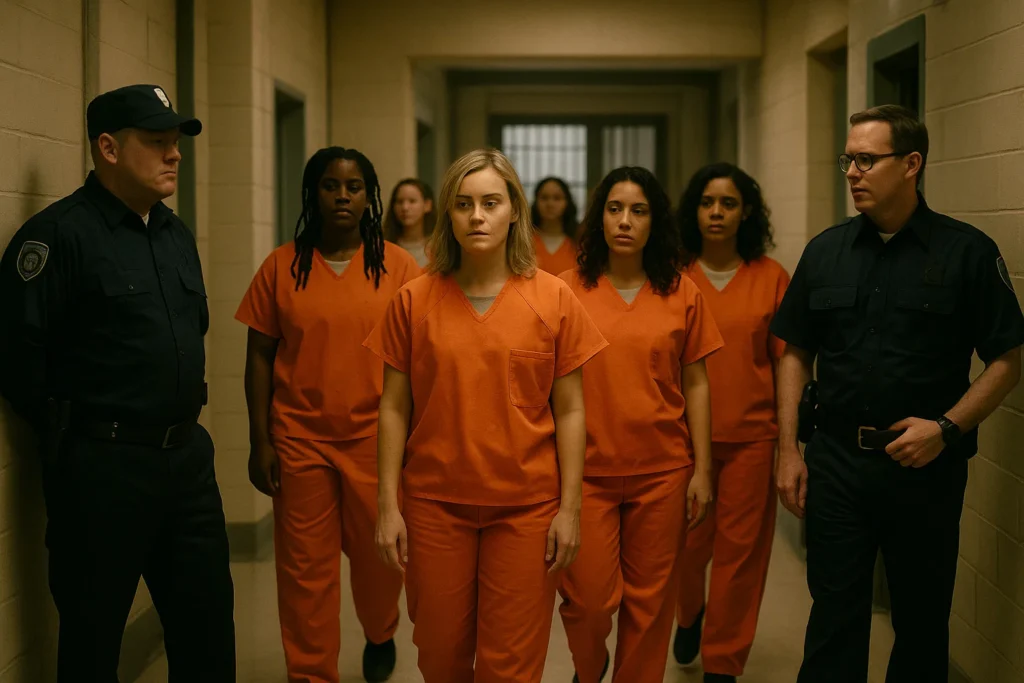
The series is based on Piper Kerman’s memoir, “Orange Is the New Black: My Year in a Women’s Prison.” Her book walks through her time at FCI Danbury, a minimum-security federal prison. The show takes that foundation and builds something larger. It keeps some truths, bends others, and creates new characters to explore bigger themes. Let me explain where reality ends and creative storytelling begins.
(Sources include the real Piper’s interviews and profiles, including L Style G Style, insights from cast and production news via IMDb, and reader discussions and research from Reddit and PM Press.)
How Much of Orange Is the New Black Is Based on a True Story?
The heart of the story Piper entering prison years after a drug-related crime from her early 20s is true. Piper Kerman did carry money for an international drug ring. She wasn’t a heavy player, but she was involved enough to face charges later in life.
The show keeps the emotional core of her experience:
- entering prison unprepared
- meeting women with stories far from her own
- learning unspoken rules
- navigating race, class, and survival
- realizing how the system shapes people
But the series also expands everything around her. Real events are stretched, rewritten, or completely reimagined to tell a wider story about the American prison system. Even Piper Kerman has said that the show goes far beyond what happened to her. It uses her starting point but doesn’t try to recreate her exact year behind bars.
Bottom line: the frame is true, the picture is bigger.
Did Piper Marry Larry in Real Life?
This is one of the biggest questions fans ask, especially because the show’s relationship between Piper and Larry feels rocky, dramatic, and sometimes painful.
Here’s the truth.
In real life, Piper Kerman married Larry Smith, the man her character is based on. Their real relationship is calmer than what the show portrays. Larry in the series becomes a source of tension, plot twists, and complicated love triangles. That’s all storytelling.
The real couple had challenges, of course, but they didn’t go through the dramatic betrayals OITNB created. According to interviews and profiles, Larry and Piper stayed connected, supportive, and committed while she served her time.
So yes Piper did end up marrying Larry, just not the TV version of him.
Is Alex Vause Based on a Real Person?
Yes, she is.
Alex Vause, portrayed as Piper’s former lover and the woman who pulled her into the drug operation, is inspired by Catherine Cleary Wolters. Their connection was real, but the show heightens nearly everything about their relationship.
Here’s what’s actually true:
- They did know each other.
- They were connected through the same drug network.
- Their lives crossed again during Piper’s legal process.
Here’s what isn’t:
- They did not serve their sentences at the same time.
- They were never in a prison relationship.
- They were not the dramatic on-again, off-again couple the series built.
Catherine Wolters herself clarified that their bond was more casual than the show suggests. The writers took their shared history and turned it into a central emotional arc. It makes great television, but it’s not how things played out.
Was Crazy Eyes a Real Person?
No.
Suzanne “Crazy Eyes” Warren is not based on a single real person. Instead, she reflects a blend of the people Piper met, the stories she heard, and the emotional realities of prison life. Characters like Suzanne exist because the writers wanted to show how mental health, trauma, kindness, and instability often collide inside prisons.
Suzanne’s depth her tenderness, her struggles, her outbursts comes from research, writer insight, and the brilliant work of actress Uzo Aduba. Fans often assume she must come from a real person because she feels so alive. But she’s a fictional creation built with empathy and detail.
Which Characters Are Real, and Which Are Fictional?
Most characters in the show are fictionalized composites.
Through reporting and sources like PM Press and Reddit discussions, one pattern becomes clear: the writers combined traits from real people to create characters with richer emotional arcs. Even the funniest or most chaotic figures often reflect several real experiences blended together.
Examples:
- Red is loosely inspired by a woman Piper knew, but the TV version is much more dramatic.
- Taystee, Poussey, and Nicky are not direct portrayals of real people but represent real struggles poverty, addiction, family loss, broken systems.
- Pennsatucky shares some early similarities with a real inmate Piper met, but the show takes her story in a very different direction.
The point wasn’t to replicate exact individuals but to tell the truth about life inside prison using characters who could carry complex stories.
Where the Show Stays Closest to Real Life
A few themes ring painfully true, based on Piper Kerman’s memoir and interviews:
1. Separation from family feels like a constant wound.
Women miss their children, their parents, their partners. The show keeps that truth front and center.
2. Race shapes the prison experience.
Piper wrote about the unspoken racial divisions inside Danbury. The show leans into that reality through friendships, conflicts, and alliances.
3. Prison bureaucracy can feel cold and unmovable.
Lost paperwork, wrong medications, strange punishments these things happen, and the series shows them often.
4. Women build fierce, surprising communities.
The alliances, the fierce loyalty, the way women protect each other that’s one of the most faithful elements of the entire show.
Where the Show Moves Into Fiction
Television needs conflict. Prison life does have its dangers, but OITNB raises the stakes for dramatic impact.
The show exaggerates:
- violence
- love triangles
- major scandals
- power struggles
- inmate-guard interactions
- corruption inside the system
Some storylines go far beyond Piper’s real memories, especially in the later seasons. Those arcs speak more to America’s wider prison issues than to Piper Kerman’s personal journey.
Why the Real Story Matters
What makes OITNB powerful isn’t just its fiction. It’s the truth beneath it:
Women in prison are often forgotten, overlooked, or judged without understanding. Piper’s memoir shed light on their stories. The show amplified them.
The real takeaway isn’t whether every character or moment happened exactly as shown. It’s that the series brought empathy to a place where empathy rarely goes. It helped people see the human beings inside a system designed to hide them.
And that part?
That’s completely true.

Jessica Savitch, with a deep passion for journalism, brings her expertise to istruestory.com as a dedicated author. MA in Arts & Journalism.