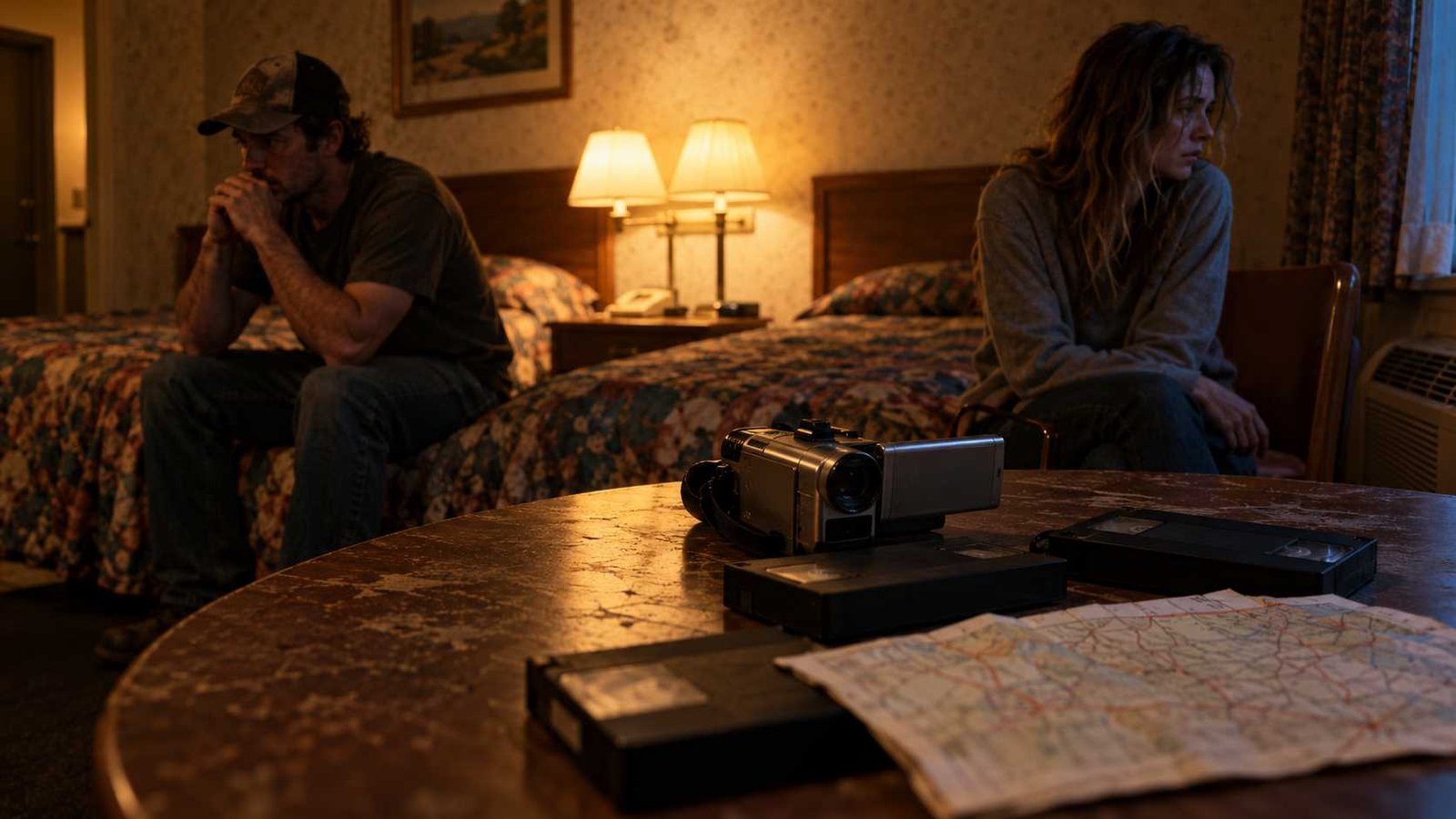
That’s the mystery behind Video X: The Dwayne and Darla-Jean Story.
So, is Dwayne and Darla a true story? No. There is no verified evidence that Dwayne Foote and Darla-Jean Stanton were real serial killers. Their story comes from a fictional crime thriller presented as if it were actual documentary footage.
The film’s realistic style and claims about hidden police evidence have confused viewers for years. To understand why, we need to look at the two films, the people who made them, and the evidence behind the supposed crimes.
The Truth Behind Dwayne and Darla-Jean
Dwayne Foote and Darla-Jean Stanton are the central characters in Video X: The Dwayne and Darla-Jean Story and Murder in the Heartland: The Search for Video X.
The films describe them as a young couple from Kentucky whose trip turns into a violent journey across several American states.
According to the story, the couple commits robberies and murders while recording their actions with a video camera. The recordings later become the focus of a supposed police investigation.
The film’s promotional description even calls the recordings genuine footage discovered by authorities.
Yet there is an important difference between a film claiming to show real evidence and that evidence being independently verified.
Movie databases identify actors playing the main characters. TV Guide describes the earlier production as a mock documentary, a fictional work designed to resemble nonfiction.
The story is therefore best understood as fiction presented in the style of a true-crime investigation.
What Happens in Video X?
The story begins with a couple whose journey through the American South takes a frightening turn.
Dwayne and Darla-Jean are presented as young lovers from rural Kentucky. What starts as a trip away from home develops into a series of criminal acts.
As the couple travels, their behavior becomes increasingly dangerous.
The film’s premise suggests that they document their actions using a handheld camera. The recordings form what the story calls Video X, a tape that supposedly contains proof of their crimes.
Instead of presenting the events through the polished style of a typical Hollywood thriller, the filmmakers make the footage seem rough and personal.
The camera appears to belong to the characters themselves. That approach gives viewers an uncomfortable feeling of being present during events they should never have witnessed.
The companion film, Murder in the Heartland: The Search for Video X, follows an investigation into the missing recording.
Its fictional investigators interview people connected to the couple and question why the authorities appear unwilling to release the tape.
The movie’s promotional storyline includes a particularly disturbing claim: 17 robberies, 11 murders, and a journey through six states.
Those numbers are elements of the film’s narrative. They should not be reported as actual crime statistics.
The mystery surrounding the recording is what connects the two films.
Were Dwayne Foote and Darla-Jean Stanton Real People?
This is where the distinction between fiction and reality becomes especially important.
The characters have full names, a hometown, a relationship, and an alleged criminal history. These details make them sound like people who might appear in a genuine police investigation.
But the available production records tell another story.
In Video X, Dwayne Foote is credited to actor Joey Gibson, also listed as Joe Ward in film-credit databases. Darla-Jean Stanton is played by Michelle Moretti.
The credits also identify James D. Mortellaro as the director, with Mortellaro and Steve Longmuir credited as writers.
That is evidence of a scripted screen production, not an independently documented murder investigation.
Could two real people somewhere have similar names? Of course. But that would not establish a connection to these fictional characters.
There is no reliable evidence in the sources reviewed that a Kentucky couple matching the film’s story committed the described multistate killing spree.
Dwayne and Darla-Jean are movie characters, not verified historical criminals.
Why Does the Movie Look Like a Real Crime Documentary?
One reason the Dwayne and Darla story continues to raise questions is its unusual presentation.
Many crime films make it obvious that you’re watching fiction. They use dramatic music, carefully framed scenes, and recognizable storytelling patterns.
Video X takes a different approach.
It relies on the appearance of personal recordings and documentary evidence. Its companion film builds a larger mystery around people supposedly investigating the material.
The Missing Videotape
The idea of a missing recording is central to the story.
According to the fictional narrative, police have information about the couple’s crimes but are concealing important evidence.
That gives viewers a question to focus on: What could be on the tape that makes it so dangerous?
It’s an effective storytelling device because unanswered questions naturally make us curious.
But an accusation of concealed evidence within a movie is not proof that real authorities hid anything.
Interviews That Feel Genuine
Murder in the Heartland uses interviews and investigative storytelling to make its characters appear connected to a real case.
The format resembles television crime documentaries, where witnesses, investigators, and relatives explain what happened.
Here, those familiar techniques help create a believable fictional world.
Some viewers may reasonably mistake the presentation for nonfiction, especially if they encounter the film without knowing its background.
The Power of Found Footage
The found-footage technique asks viewers to imagine that the camera recordings were discovered after an event.
That makes the footage feel immediate, imperfect, and sometimes disturbingly personal.
We’ve seen similar storytelling techniques in films such as The Blair Witch Project, where fictional material is presented with the appearance of recovered recordings.
Video X uses that sense of authenticity to make its violent story more unsettling.
The result is a film that invites viewers to question what they’re watching.
What Happened to Dwayne and Darla-Jean Stanton?
People searching for the Dwayne and Darla true story often want to know what eventually happened to the couple.
Were they arrested? Did they die? Did one escape?
The difficulty is that these questions are sometimes asked as though the characters were real criminals.
Within the films, the supposed crime spree and investigation form a fictional narrative. The central mystery involves the recording of their alleged actions and the effort to uncover it.
The available film descriptions do not establish a reliable, detailed account of each character’s ultimate fate. It would be misleading to invent one or claim that the ending proves a real-life arrest or death.
Outside the films, there is no verified criminal case establishing what happened to a real Dwayne Foote and Darla-Jean Stanton matching this story.
That means reports about their supposed later lives should be treated cautiously unless supported by independent historical evidence.
Is Darla-Jean Stanton Still Alive?
There is no verified real-life death or survival record for Darla-Jean Stanton as the killer described in Video X.
The character is portrayed by Michelle Moretti, whose acting credit is documented in public film databases.
That does not establish that Darla-Jean was a historical person.
It also means we cannot responsibly claim she died in prison, escaped prosecution, or lives under another identity.
Those statements would require genuine records rather than details borrowed from a fictional movie.
If you encounter a website claiming to know where Darla-Jean Stanton lives today, look for reliable supporting evidence.
A film synopsis alone is not enough.
Who Made Video X and Why?
Director James D. Mortellaro is credited with both Murder in the Heartland: The Search for Video X and Video X: The Dwayne and Darla-Jean Story.
Steve Longmuir shares writing credits on the productions.
The earlier film appeared in 2003, while the combined Video X: The Dwayne and Darla-Jean Story release is listed in 2007.
This distinction matters because viewers sometimes encounter the films under different titles and release dates.
The filmmakers built a crime narrative that could be explored from two perspectives.
One film creates the impression of an investigation looking for hidden evidence. The other presents the supposedly discovered footage as part of the story.
Together, they encourage viewers to imagine they are witnessing an actual criminal case rather than watching conventional fiction.
While that approach explains the films’ unusual structure, the sources reviewed do not establish that a particular real murder case inspired the screenplay.
What the Evidence Actually Tells Us
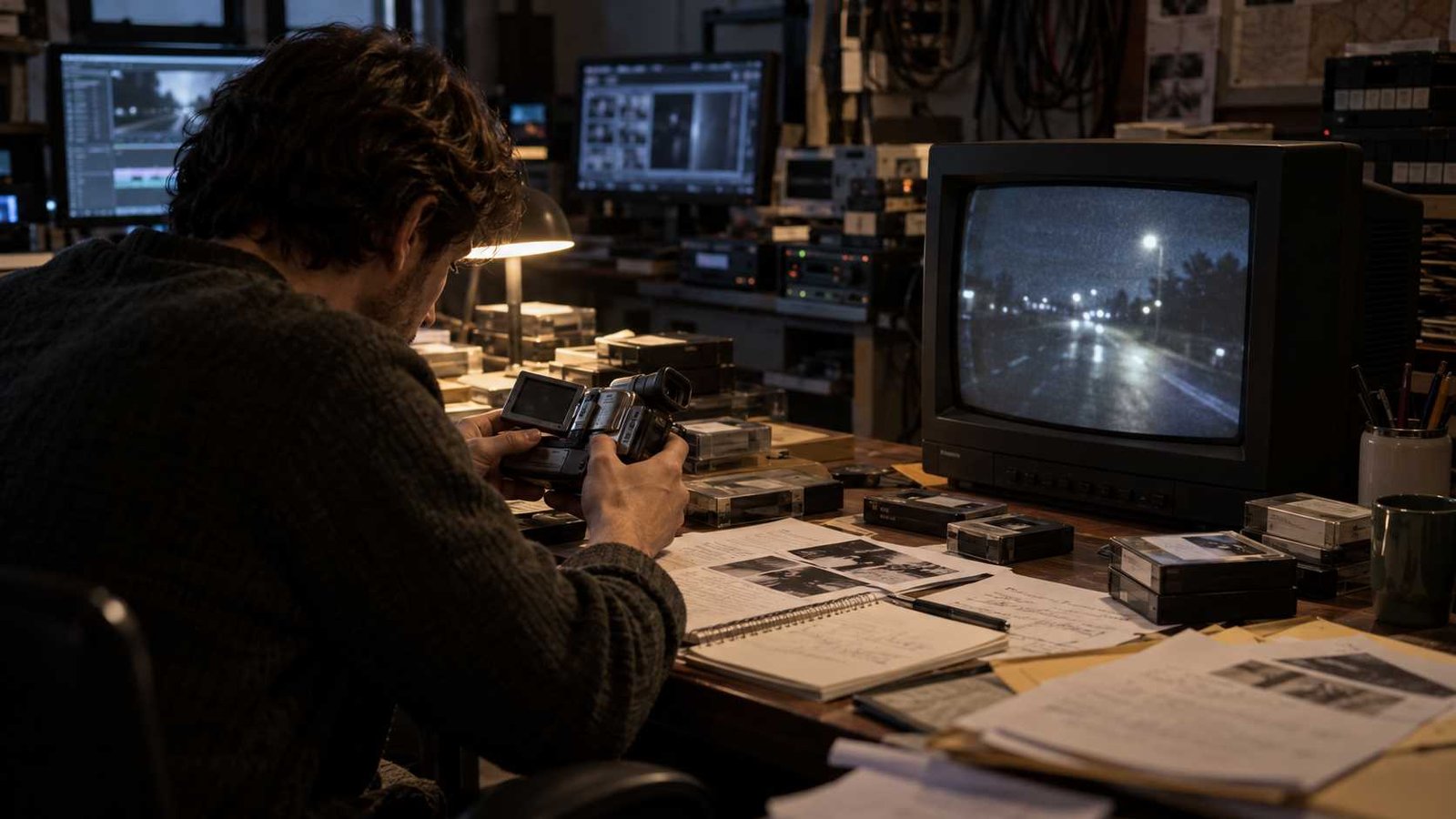
When examining a supposed true-crime story, I find it useful to separate the claims made inside a film from facts supported by independent sources.
Here’s what can be established about Dwayne and Darla.
| Question | What the evidence supports |
|---|---|
| Were Dwayne and Darla real serial killers? | No verified real-life case has been established. |
| Did they commit 11 murders? | That number comes from the film’s fictional premise. |
| Did police recover their videotape? | The recovered-tape claim is part of the story. |
| Who portrayed Dwayne? | Joey Gibson, also credited as Joe Ward. |
| Who portrayed Darla-Jean? | Michelle Moretti. |
| Was the earlier film a documentary? | It is described as a mock documentary. |
| Was the story based on actual crimes? | No specific real case has been reliably established as its source. |
The available evidence consistently points toward a fictional production designed to resemble a real investigation.
This does not make the films meaningless. Their unsettling effect comes partly from how convincingly they imitate true-crime storytelling.
But realism and historical accuracy are not the same thing.
Why the Story Still Confuses Viewers
The Dwayne and Darla story reveals something interesting about how we respond to crime films.
When we see a shaky camera, an interview, or a claim about secret evidence, we may instinctively associate it with authenticity.
That’s especially true when a movie uses ordinary names and familiar American locations.
The story doesn’t need famous actors or elaborate special effects to feel believable.
It uses details that resemble the material we encounter in actual criminal investigations.
Even the promotional descriptions contribute to that impression by presenting the recordings as genuine.
For someone who discovers the film years after its release, there may be little immediate indication that those claims belong to a fictional premise.
That’s why checking the production credits and the film’s genre is so important.
It changes the entire meaning of what you’re watching.
The Story Behind the Mystery
So, is Dwayne and Darla a true story in real life?
No. Dwayne Foote and Darla-Jean Stanton are fictional characters in the Video X films, and their alleged murders have not been established as real historical events.
What makes their story memorable is not a documented criminal case but the way the filmmakers blurred the boundary between fictional storytelling and documentary presentation.
The interviews, the disturbing recordings, and the mystery of hidden evidence were designed to create doubt.
And that doubt is powerful.
Because sometimes the most convincing part of a frightening movie isn’t what appears on the screen. It’s the possibility that somewhere, somehow, it might have really happened.
In the case of Dwayne and Darla, the available evidence gives us a different answer.
The story may feel real, but feeling real does not make it true.

Jessica Savitch, with a deep passion for journalism, brings her expertise to istruestory.com as a dedicated author. MA in Arts & Journalism.