That is exactly why so many viewers leave with the same question.
Is Ouija based on a true story?
The short answer is no. The 2014 movie is not a direct retelling of one real paranormal case. No official record exists of the exact events shown in the film. But the deeper answer is far more interesting. The movie pulls its fear from a real object, a real history, and decades of real stories told by people who believed they experienced something terrifying after using a Ouija board.
That mix of fact, belief, religion, psychology, and horror is what gives the film its unsettling feeling.
And honestly, that is where the real story begins.
Why the Ouija Movie Feels So Real
One reason Ouija works better than many supernatural movies is because the object at the center of the story actually exists. Millions of people around the world have seen a Ouija board in stores, at sleepovers, in horror films, or even in their own homes.
That alone changes the experience.
A monster created for a movie feels distant. A Ouija board does not.
The film follows a group of teenagers who use a spirit board after the mysterious death of their friend Debbie. Strange events begin happening almost immediately. Shadows appear. Messages arrive from nowhere. The board seems to answer questions nobody else could know.
The movie presents the board less like a toy and more like a doorway.
That idea did not come from nowhere.
For more than 130 years, people have connected Ouija boards with ghost stories, séances, unexplained deaths, and supernatural claims. Families once used them to speak to lost loved ones during periods of grief. Paranormal believers treated them as communication tools. Religious leaders warned against them. Hollywood turned them into horror icons.
So while Ouija itself is fictional, the fear surrounding it absolutely comes from real history.
The Real History Behind Ouija Boards
The real origins of the Ouija board go back to the late 1800s in America during the rise of the Spiritualism movement.
At that time, many people believed the dead could communicate with the living. Public séances became popular. Mediums held gatherings where participants tried to contact spirits using tables, automatic writing, or mysterious knocking sounds.
This movement grew rapidly after the American Civil War because countless families had lost loved ones and desperately wanted comfort.
That emotional pain created a huge interest in spirit communication.
Then businessmen noticed something important.
People were willing to buy tools that promised answers from the other side.
In 1890, businessman Elijah Bond patented one of the first talking boards. Charles Kennard helped market the product, and eventually the name “Ouija” became famous across America. Nobody fully agrees where the word itself came from. Some claimed the board spelled it out during a séance. Others believed it combined French and German words meaning “yes.”
Either way, the mystery helped sell it.
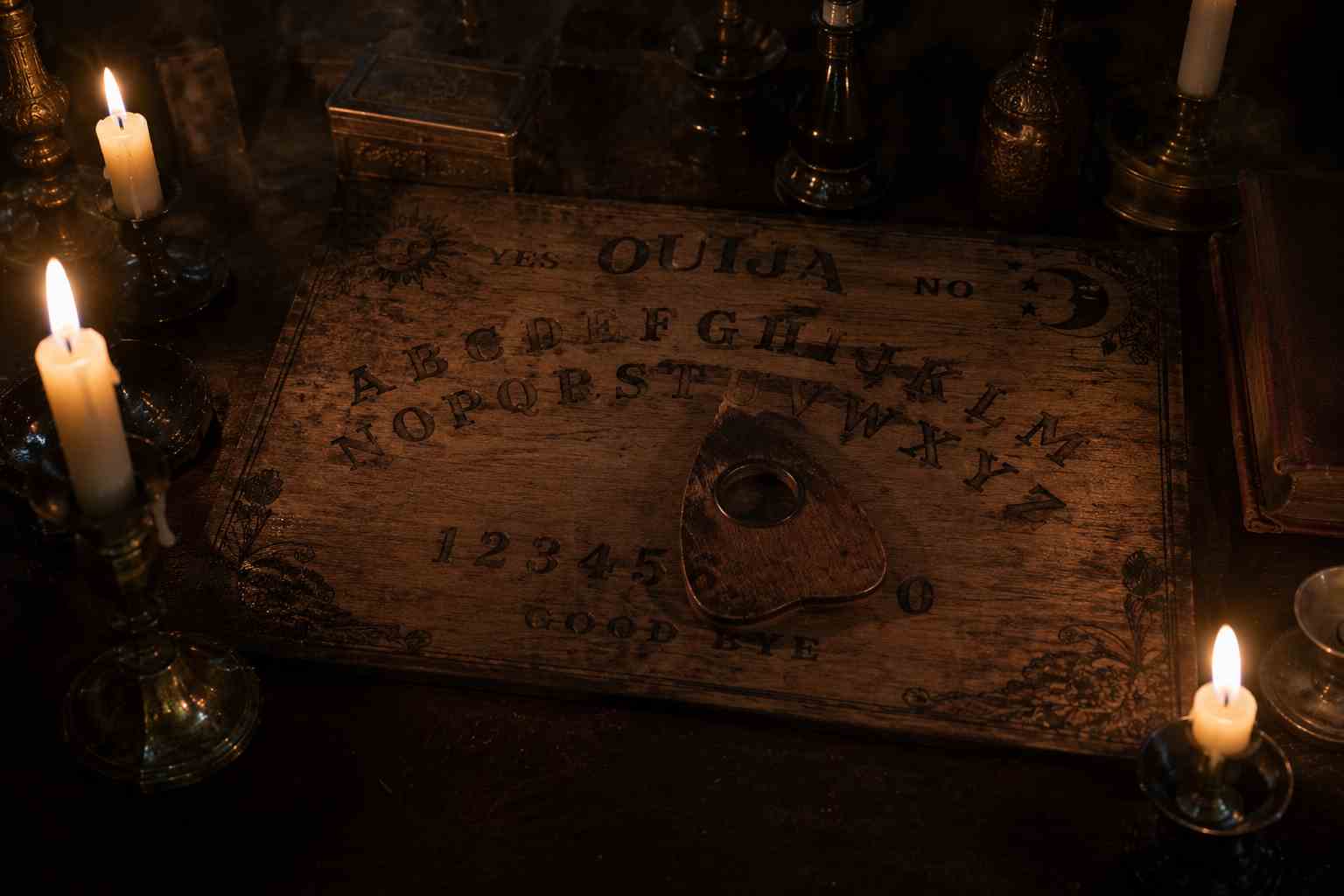
The board usually included:
- Letters of the alphabet
- Numbers
- “Yes” and “No” sections
- A movable pointer called a planchette
Players lightly placed their fingers on the pointer and asked questions. Then the planchette seemed to move by itself.
That movement became the center of the mystery.
Who Invented the First Ouija Board?
Many people assume Ouija boards came from ancient occult traditions. Some even think they were used by witches centuries ago.
That is not true.
The modern Ouija board was a commercial American invention. It was created during a period when spiritualism became fashionable entertainment.
Elijah Bond is often credited with patenting the board, but several businessmen were involved in bringing it to the public. William Fuld later became heavily associated with the product after helping manufacture and market it.
Over time, stories around Fuld added even more mystery to the board’s legend. Some people claimed the board guided his business decisions. Others linked his later accidental death to supernatural forces, though historians generally reject those dramatic claims.
The truth is simpler.
The Ouija board became popular because it mixed curiosity, fear, grief, and entertainment into one experience.
That formula still works today.
Was the 2014 Ouija Movie Inspired by Real Events?
Not directly.
The 2014 film was created as a supernatural horror story inspired by the cultural reputation of Ouija boards rather than one documented paranormal case.
But the movie clearly borrows ideas from real stories that have surrounded spirit boards for decades.
Many reported experiences share similar themes:
- People claiming the board moved on its own
- Users hearing strange noises afterward
- Sudden feelings of fear or anxiety
- Claims of spirit attachment
- Nightmares after séances
- Religious panic connected to “opening doors”
These stories became part of popular culture long before the movie existed.
One major turning point happened in 1973 when The Exorcist linked spirit boards with demonic possession. In that story, a young girl communicates with a spirit through a board before becoming possessed.
That connection changed public perception forever.
After that, the Ouija board stopped looking like a harmless party game to many people. It became a symbol of danger.
Movies like Witchboard, Paranormal Activity, and later Ouija continued building on that fear.
So while the events in Ouija are fictional, the emotional fear behind them comes from real cultural beliefs people have carried for generations.
Why So Many People Believe Ouija Boards Are Dangerous
Fear around Ouija boards exists in almost every generation now.
Part of that fear comes from religion. Part comes from horror movies. Part comes from personal experiences people genuinely believe were real.
And belief is powerful.
Some users describe the board spelling names nobody else knew. Others claim the planchette moved aggressively without anyone pushing it. Some say strange events happened in their homes afterward.
Even people who do not fully believe in ghosts sometimes admit the experience can feel disturbing.
Why?
Because the board creates uncertainty.
Nobody can fully explain in the moment why the pointer moves. That uncertainty allows imagination to grow quickly. Once fear enters the room, every shadow suddenly feels important.
Human psychology fills the gaps.
And when several people experience the same strange movement together, it feels convincing.
That is why stories spread so easily.
A single unexplained moment can turn into a lifelong memory.
What Science Says About Ouija Boards
Science has a much less supernatural explanation.
Researchers often point to something called the ideomotor effect.
This is a psychological phenomenon where people make small unconscious movements without realizing it. The brain influences muscles automatically, especially when someone expects movement to happen.
In simple words, participants may actually move the planchette themselves without consciously deciding to do it.
That explains why the pointer can appear to glide across the board naturally.
Several experiments support this idea.
In some studies, participants gave much less accurate answers when blindfolded because they could no longer subconsciously guide the pointer toward letters.
To scientists, the Ouija board reveals more about the human mind than about spirits.
But science does not always erase fear.
Even when people understand the ideomotor effect, the emotional experience can still feel deeply real.
That emotional reaction is exactly what horror films use so effectively.
Is Ouija Real or Fake?
This question depends entirely on who you ask.
Paranormal believers often say Ouija boards can become spiritual tools under certain conditions. Some claim they have personally witnessed impossible events connected to them.
Skeptics strongly disagree.
Psychologists usually explain the experience through suggestion, unconscious movement, group dynamics, fear, and expectation.
Then there are people somewhere in the middle.
They may not fully believe in ghosts, but they still avoid Ouija boards because the experience feels emotionally unsettling.
That middle ground is surprisingly common.
The board sits in a strange place between entertainment and fear. It is sold as a game, yet treated by many people like a spiritual object.
Very few toys create that kind of tension.
Is There a Real Ouija Board?
Yes. Absolutely.
Real Ouija boards exist and are still sold today.
In fact, many people are surprised to learn the board has been manufactured by major toy companies for decades. Parker Brothers once produced it before ownership later moved to Hasbro.
That fact creates an odd contradiction.
A board connected to demons in horror movies is also sold alongside regular family games.
But marketing never fully erased the fear around it.
Many parents still refuse to allow them in their homes. Some religious communities openly warn against them. Horror films continue presenting them as dangerous supernatural objects.
That tension between “toy” and “spiritual tool” is exactly why the Ouija board remains culturally fascinating.
Is a Ouija Board Haram?
Many Islamic scholars consider using a Ouija board haram because it may involve attempting communication with spirits, unseen entities, or supernatural forces outside Islamic teachings.
In Islam, seeking knowledge or power through occult practices is generally forbidden. Some scholars also warn that such activities can create fear, confusion, superstition, or psychological harm.
Even among people who do not believe the board truly contacts spirits, many religious leaders still discourage it because it may lead individuals toward unhealthy beliefs or spiritual anxiety.
Christian leaders in many traditions have issued similar warnings over the years.
That does not mean every person who touches a Ouija board experiences something supernatural. But religious concerns usually focus more on spiritual intention and risk rather than proof of paranormal activity.
For many believers, avoiding the board entirely feels safer.
How Hollywood Turned Ouija Into a Horror Legend
The Ouija board may never have become this famous without movies.
Cinema transformed it from a curious talking board into a worldwide horror symbol.
Filmmakers understood something important very early: fear becomes stronger when the object already exists in real life.
That is why Ouija scenes work so well on audiences.
A haunted doll can feel fictional. A Ouija board feels possible.
Movies also created repeated rules around the board:
- Never play alone
- Never ask dangerous questions
- Always say goodbye
- Never anger the spirits
Interestingly, many of these “rules” developed more through popular culture than documented historical practice.
But once enough movies repeated them, people accepted them as real traditions.
That is the power of storytelling.
Hollywood did not invent fear around Ouija boards, but it amplified it dramatically.
And honestly, after decades of horror films, it is difficult for many people to see the board as just cardboard and plastic anymore.
The Final Truth Behind Ouija and Real-Life Fear
So, is Ouija based on a true story?
Not in the traditional sense.
The movie does not recreate one real haunting or one documented paranormal case. Its characters and events are fictional.
But the deeper fear behind the story comes from something real:
- A real board
- A real history
- Real spiritual beliefs
- Real psychological experiences
- Real religious warnings
- Real stories shared across generations
That blend of truth and mystery is exactly why Ouija remains fascinating more than a century after its creation.
Some people see it as harmless entertainment.
Others see it as dangerous.
And many simply see it as one of the most powerful horror symbols ever created because nobody can completely separate the myths from the emotions attached to it.
Maybe that uncertainty is the real reason the Ouija story never dies.

Jessica Savitch, with a deep passion for journalism, brings her expertise to istruestory.com as a dedicated author. MA in Arts & Journalism.