It deals with identity, self-discovery, losing control, and the uncomfortable feeling that there may be parts of your personality you do not fully understand.
That is also why the song feels so haunting. The narrator seems to meet a stranger, yet the stranger feels strangely familiar. Bowie never gave us one neat explanation, but his own comments make the identity theme especially important. AllMusic notes that Bowie described the song as an attempt to express feelings he had when young, before he had discovered the full range of his own personality.
And then, more than 20 years later, Nirvana gave the song an entirely new life.
What Does The Man Who Sold the World Mean?
At its heart, The Man Who Sold the World appears to be about a person confronting a hidden or forgotten part of himself.
Think of looking into a mirror and, for a moment, feeling that the person staring back is both you and someone else.
That is close to the emotional idea running through the song.
The narrator meets a mysterious figure. They speak as if they already know each other. The conversation becomes increasingly confusing because the stranger seems separate from the narrator while also feeling like another version of him.
This creates the song’s central question: Who is really speaking to whom?
One strong interpretation is that Bowie is imagining a meeting between two sides of his own identity.
AllMusic connects the song with Bowie’s feelings about not yet understanding the full range of his personality when he was young.
That does not mean every line has one fixed psychological meaning. Bowie enjoyed ambiguity. The mystery is part of what makes the song work.
So Who Is the Man Who Sold the World?
There is no confirmed character with a name or literal backstory.
The man can be understood as another version of the narrator himself.
He may represent:
- A lost identity
- A hidden side of the personality
- A person changed by fame
- A past self that feels almost dead
- The fear of losing control over your own life
American Songwriter also discusses an interpretation in which Bowie is confronting the cost of giving part of himself to fame and public attention. Under that reading, selling the world is closer to selling yourself or losing ownership of your private identity than making an actual transaction.
That interpretation fits Bowie particularly well because identity would become one of the defining themes of his career.
He repeatedly changed his appearance, sound, and public personality. Later came characters and identities such as Ziggy Stardust and the Thin White Duke.
But The Man Who Sold the World arrived before those famous transformations. It almost sounds like Bowie was already asking a question that would follow him for years:
How many different people can exist inside one person?
The Strange Meeting Has a Literary Connection
There is another clue behind the song.
Commentators have long connected its strange encounter to Antigonish, a poem by American writer William Hughes Mearns.
The poem centers on an unsettling idea: someone encounters a man who somehow is not really there. The Poetry Foundation identifies Mearns as the author of Antigonish, which dates to the early 20th century.
You can immediately see why people connect it with Bowie.
Both works create an impossible meeting. Someone appears familiar and present, yet also absent.
AllMusic specifically notes the link between Bowie’s composition and Mearns’ writing.
That does not mean Bowie simply retold the poem. The song takes the basic feeling much further into questions of identity, memory and control.
Is the Song About Death?
Partly, perhaps, but calling it simply a song about death misses too much.
Death appears in the song’s imagery, but it works almost like a psychological symbol.
The person who has died may represent an old identity.
Imagine meeting the person you were ten years ago. That person is technically still you, but your beliefs, relationships, fears and ambitions may have changed so much that the old version feels like someone who no longer exists.
The song creates that same uneasy feeling.
So when listeners hear death in The Man Who Sold the World, it can also be understood as the death of an earlier self.
This is an interpretation rather than a fact Bowie clearly confirmed. That distinction matters because the song was written to remain mysterious.
Fame May Be Another Piece of the Puzzle
Another common interpretation focuses on fame.
American Songwriter describes the song in terms of Bowie losing privacy and control as his life becomes public.
That reading makes the title especially interesting.
What does someone sell when they become famous?
Not the world itself.
They may sell an image of themselves to the world.
The public begins to know a character, face or personality. Meanwhile, the real person behind that image can start feeling strangely disconnected from it.
For Bowie, this idea would become increasingly relevant as his fame grew.
Still, we should be careful with the timeline. Bowie was not yet the global superstar of the Ziggy Stardust era when the song was recorded. So it works better as a broader fear about identity and exposure than as a simple confession about already being overwhelmed by fame.
Who Originally Sang The Man Who Sold the World?
David Bowie originally wrote and performed The Man Who Sold the World.
AllMusic credits Bowie as the composer and dates the original song to 1970.
It appeared on Bowie’s album The Man Who Sold the World, produced by Tony Visconti.
The official David Bowie site says the album was released in North America in November 1970, while much of the rest of the world received it in April 1971.
The official Bowie store lists the title song as the eighth track on the album.
So despite what some younger listeners discovered through Nirvana:
The song is a Bowie original.
The Album Was Almost Called Something Else
Here is a small piece of Bowie history that makes the story even more interesting.
The album was originally connected with the title Metrobolist.
For its 50th anniversary, Bowie’s official site released a version called Metrobolist (AKA The Man Who Sold The World) and explained that Tony Visconti remixed the album for the edition.
Today, however, The Man Who Sold the World is the title that defines both the album and one of Bowie’s most enduring songs.
The title feels so perfectly mysterious that it is difficult to imagine the record being known by anything else.
Was David Bowie’s Version a Huge Hit?
Not at first.
That is one of the surprising parts of the story.
AllMusic notes that the original album had modest commercial impact when first released. The title song later became much better known through covers by artists including Lulu, Midge Ure and Nirvana.
Bowie’s official site has also acknowledged the album’s weak early UK sales.
Time changed everything.
The song slowly grew from a relatively obscure Bowie recording into one of the most recognizable pieces associated with him.
And Nirvana played a huge role in that transformation.
Which David Bowie Song Did Nirvana Cover?
Nirvana covered The Man Who Sold the World.
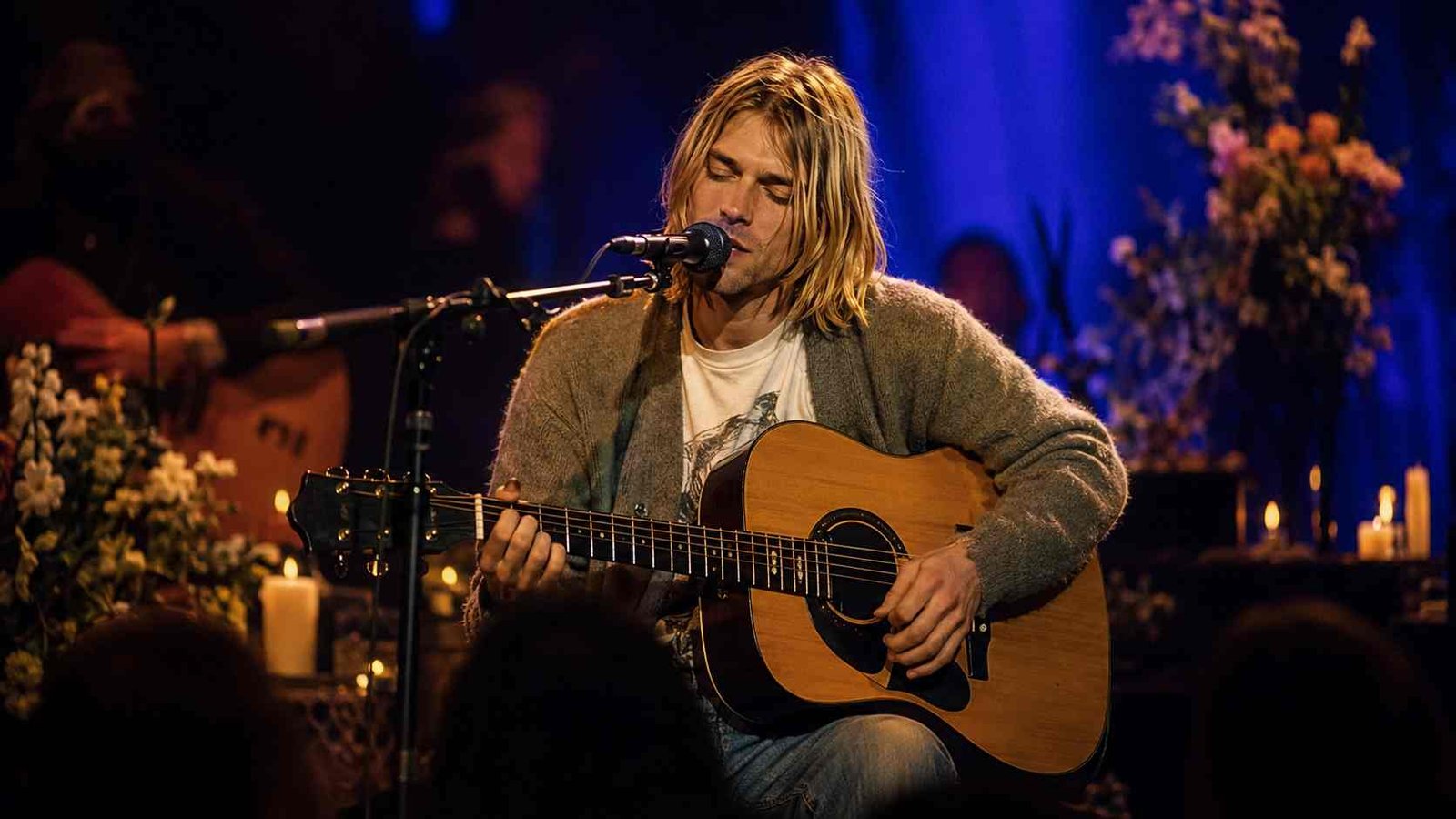
The band performed it during their famous MTV Unplugged recording at Sony Music Studios in New York City on November 18, 1993. Paramount confirms the date and location of the performance.
It was an unusual choice.
Instead of filling the show with only their biggest hits, Nirvana included several unexpected covers.
Live Nirvana’s concert archive identifies that night as Nirvana’s first live performance of The Man Who Sold the World.
That choice helped turn an older Bowie song into something that suddenly belonged to another generation.
Why Did Nirvana’s Version Become So Famous?
Kurt Cobain sounded almost painfully vulnerable during the performance.
The arrangement was restrained. There was no giant rock production surrounding him. That left the melody, guitar and voice exposed.
The song’s themes of identity, isolation and disconnection fit Cobain’s performance so naturally that someone hearing Nirvana first could easily assume he had written it.
Even members of Nirvana treated Bowie’s original with care. In an oral history of the Unplugged performance, bassist Krist Novoselic recalled studying Tony Visconti’s bass part before the show so he could capture the important elements of the song.
Bowie noticed the emotional quality of the cover too.
American Songwriter reports that Bowie described Nirvana’s rendition as honest and heartfelt and said he was surprised to discover that Kurt Cobain admired his work.
That is an unusual thing about great cover versions.
They do not replace the original. They reveal something new inside it.
Did Nirvana Write The Man Who Sold the World?
No.
David Bowie wrote The Man Who Sold the World. Nirvana covered it.
This confusion became common enough to amuse and frustrate Bowie.
By 2000, Bowie was discussing how younger American fans sometimes approached him after concerts believing he was performing a Nirvana song. The story became a funny example of just how strongly Cobain’s version had entered 1990s culture.
In other words, Nirvana’s cover became so successful that some listeners discovered the songwriter only after hearing the cover artist.
Lulu and Midge Ure Covered It Too
Nirvana was not the first artist to reinterpret Bowie’s song.
Scottish singer Lulu recorded a version in the 1970s, with Bowie involved in the production. American Songwriter notes that Lulu’s version reached No. 3 in the UK.
Midge Ure also recorded the song, and AllMusic lists Bowie as its composer.
These covers helped the composition live beyond its original album.
But Nirvana’s performance became the version that most dramatically changed how a younger audience understood the song.
What Is the Story Behind The Man Who Sold the World?
There is not really a traditional story with a beginning, middle and ending.
Instead, the song gives us a scene.
A narrator meets a mysterious person. They seem to recognize each other. Their identities begin to overlap. The conversation raises questions about who is alive, who has changed and who has really lost control.
Then Bowie leaves us inside that mystery.
That is the point.
You are not supposed to solve the song like a crime case and discover that the mysterious man was secretly a specific person.
The stronger question is:
What happens when you no longer recognize part of yourself?
That makes the song surprisingly personal.
Most of us change without noticing it. Then something happens: we see an old photograph, meet someone from years ago, return to an old place or remember what we once wanted from life.
Suddenly, the person we used to be can feel like a stranger.
Bowie turned that strange human experience into a haunting encounter.
Why the Song Still Feels So Powerful
More than half a century after Bowie recorded it, the meaning of Man Who Sold The World remains open enough for each generation to hear something different.
One listener hears fame.
Another hears depression or loneliness.
Another hears a divided personality.
Someone else hears the frightening moment when you realize you have changed so much that your old self feels like another person.
The strongest evidence points toward identity and self-discovery, supported by Bowie’s own comments about understanding the different sides of his personality.
But Bowie never locked the song inside a single explanation.
That is probably why it survived.
David Bowie wrote it. Lulu reinterpreted it. Midge Ure carried it forward. Kurt Cobain made a generation feel as though it belonged to Nirvana.
Yet beneath every version sits the same unsettling idea: sometimes the strangest person you can meet is yourself.

Jessica Savitch, with a deep passion for journalism, brings her expertise to istruestory.com as a dedicated author. MA in Arts & Journalism.