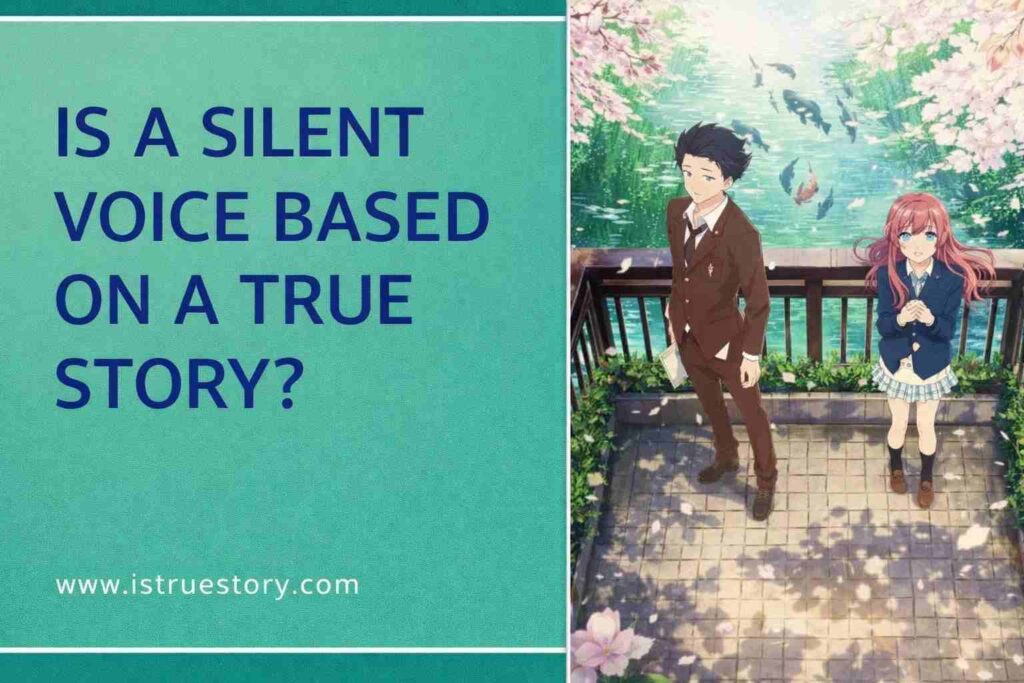
When the film first released in 2016, viewers around the world had the same question after the credits rolled. The story felt so personal and painfully real that many wondered:
Is A Silent Voice based on a true story?
The short answer is no. The anime is not based on one specific real-life event. But the deeper answer is much more interesting. The film is inspired by real social issues, real emotions, and experiences that many people have lived through.
Let’s break down the truth behind the story, the characters, and the powerful themes that made this anime unforgettable.
The Short Answer: Is A Silent Voice a True Story?
No, A Silent Voice is not based on a single real-life story.
The film comes from a manga created by Japanese author Yoshitoki Ōima. She wrote the original story, which was later adapted into the anime movie directed by Naoko Yamada and produced by Kyoto Animation in 2016.
But here’s where things get interesting.
While the characters themselves are fictional, the themes of bullying, disability, loneliness, depression, and redemption are deeply rooted in real experiences. These issues exist in schools all over the world, and that realism is what makes the story feel authentic.
Many viewers connect with the characters because they have experienced similar situations in their own lives.
The Real Inspiration Behind A Silent Voice
When Yoshitoki Ōima began writing the manga, she wanted to explore something rarely discussed in Japanese comics at the time: the emotional impact of bullying and social isolation.
The story centers on two students:
- Shoya Ishida, a boy who bullied a deaf girl in elementary school
- Shoko Nishimiya, the girl who becomes the target of that bullying
This premise wasn’t chosen randomly. Ōima researched how deaf students experience school environments and how communication barriers can lead to misunderstanding and cruelty.
The result was a story that feels painfully real.
In fact, many teachers and psychologists have praised the film for how accurately it shows the long-term effects of bullying.
The Story of Shoya Ishida
Shoya Ishida begins the story as a typical kid who loves attention and excitement. But when Shoko Nishimiya, a deaf student, joins his class, things quickly change.
Instead of welcoming her, Shoya starts bullying her.
He mocks her hearing aids, makes fun of her speech, and encourages other students to treat her the same way. At first, the class laughs along. But eventually, the situation spirals out of control.
When the school administration steps in, something unexpected happens.
The blame shifts entirely onto Shoya.
Suddenly, the bully becomes the outcast.
For years afterward, Shoya struggles with guilt and social anxiety. He grows up feeling like he doesn’t deserve friends or happiness.
This character arc feels incredibly real because it mirrors something psychologists often discuss: the cycle of shame and regret after harmful actions.
Shoko Nishimiya: A Character That Represents Many Real People
Shoko Nishimiya is one of the most emotionally powerful characters in modern anime.
She communicates using Japanese Sign Language, writes messages in a notebook, and constantly apologizes even when she has done nothing wrong.
Her personality reflects something that many people with disabilities experience in real life:
- Feeling like a burden
- Trying too hard to make others comfortable
- Accepting blame to avoid conflict
The film portrays these struggles with quiet honesty. Shoko rarely expresses anger, even when she is treated cruelly.
That level of patience and emotional pain is what makes viewers feel deeply connected to her story.
What Is Shoya Ishida’s Mental Illness?
A common question viewers ask is:
What is Shoya Ishida’s mental illness?
The film never gives a formal diagnosis, but Shoya clearly struggles with severe depression and social anxiety.
Several signs point to this:
- He avoids eye contact with people
- He imagines large X marks covering everyone’s faces
- He isolates himself from classmates
- He believes he does not deserve happiness
These visual elements are a brilliant storytelling choice.
Instead of long explanations, the film shows how Shoya feels about the world. Everyone becomes faceless to him because he believes he no longer belongs in society.
This representation of mental health is one reason the movie resonates so strongly with audiences.
Did Shoko Forgive Shoya?
One of the most emotional parts of the story is the relationship between Shoya and Shoko after they meet again years later.
Shoya seeks her out to apologize for what he did in elementary school. He expects anger or rejection.
Instead, Shoko responds with kindness.
But forgiveness in A Silent Voice is not simple.
The film shows that forgiveness takes time and emotional effort from both people. Shoya must confront his past actions, and Shoko must process the pain she experienced.
Their journey together becomes less about romance and more about healing and understanding.
Is Shoko Dead in A Silent Voice?
This is another question viewers often ask because of the film’s intense emotional scenes.
The answer is no.
Shoko does not die in the story.
However, the film includes a very serious moment where Shoko struggles with overwhelming guilt and sadness. She believes that she is the cause of everyone else’s problems, which leads her to a tragic decision.
That scene is one of the most heartbreaking moments in the film.
But ultimately, the story moves toward recovery rather than tragedy.
What Was the Real Ending of A Silent Voice?
The ending of A Silent Voice is quiet, emotional, and hopeful.
After years of guilt and self-hatred, Shoya finally begins to reconnect with people. He learns to forgive himself and accept the possibility of friendship again.
The final scene shows Shoya walking through a crowd of people.
For the first time, the X marks covering their faces disappear.
He can finally look at the world again.
It’s not a loud, dramatic ending. Instead, it feels like a small but powerful victory.
And that subtle storytelling is exactly what makes the film memorable.
Is A Silent Voice a Sad Movie?
Yes.
But it’s also much more than that.
The movie deals with painful topics such as:
- Bullying
- Disability discrimination
- Depression
- Suicide
- Social isolation
Because of these themes, many viewers describe the film as emotionally heavy.
However, the story also carries a strong message about hope and redemption.
It shows that people can grow, change, and rebuild relationships—even after terrible mistakes.
The Anime Production: A Seven-Year Journey
Another interesting fact about the film is the time it took to bring the story to life.
The original manga was published between 2013 and 2014, but the anime adaptation required years of planning and production.
Kyoto Animation, the studio behind the film, is known for its extremely detailed animation style. Director Naoko Yamada worked carefully to capture subtle facial expressions and body language, especially when portraying sign language communication.
This level of detail helped make the story feel authentic and respectful.
Many fans say the emotional impact of the film would not be the same without this careful production approach.
How Many Episodes Are in A Silent Voice Anime?
This question sometimes confuses people.
Unlike many anime series, A Silent Voice is not a TV show.
It is a single animated movie with a runtime of about 130 minutes.
There are no episodes because the entire story is told within one film.
However, the original manga contains multiple chapters that expand the story further.
Is A Silent Voice on Netflix?
Availability of the film changes depending on region and licensing agreements.
At different times, A Silent Voice has been available on Netflix, but streaming rights move between platforms.
Currently, viewers may find the movie on services such as:
- Netflix (in some regions)
- Amazon Prime Video
- Apple TV
- Blu-ray or digital purchase
Because licensing deals change often, the availability can vary from country to country.
Why A Silent Voice Feels So Real
Even though the story is fictional, it resonates with audiences because it explores universal emotions.
Everyone understands:
- The regret of hurting someone
- The desire to be forgiven
- The fear of being rejected
- The struggle to accept oneself
These feelings exist across cultures, languages, and countries.
That’s why A Silent Voice became one of the most talked-about anime films of its generation.
How the Film Changed Conversations About Bullying
After its release, many teachers and educators began recommending the film as a way to discuss bullying and empathy with students.
Unlike many stories about bullying, A Silent Voice does not present simple heroes and villains.
Instead, it shows how entire social groups can contribute to cruelty through silence, peer pressure, and misunderstanding.
This nuanced approach makes the story powerful.
It reminds viewers that real life is rarely black and white.
A Silent Voice’s Lasting Impact on Anime
Anime often explores deep themes, but A Silent Voice stands out for its emotional honesty.
The film received praise from critics and audiences worldwide. It also earned awards and nominations for animation and storytelling.
More importantly, it helped expand what people expect from anime films.
Instead of focusing on fantasy adventures, the movie proves that animated storytelling can tackle serious social topics with maturity and compassion.
The Final Truth Behind A Silent Voice
So, is A Silent Voice based on a true story?
Not exactly.
The characters and events are fictional, created by Yoshitoki Ōima. But the emotions, struggles, and social issues in the story come directly from real human experiences.
That’s why the film feels so authentic.
It reflects real problems that exist in schools and communities everywhere.
And by the end of the movie, the message becomes clear.
People can make terrible mistakes.
But they can also grow, change, and find a path toward forgiveness.
Sometimes the quietest stories leave the loudest impact.

I am Jeremy Jahns – Your Cinematic Explorer
Immerse in movie reviews, Hollywood insights, and behind-the-scenes stories.