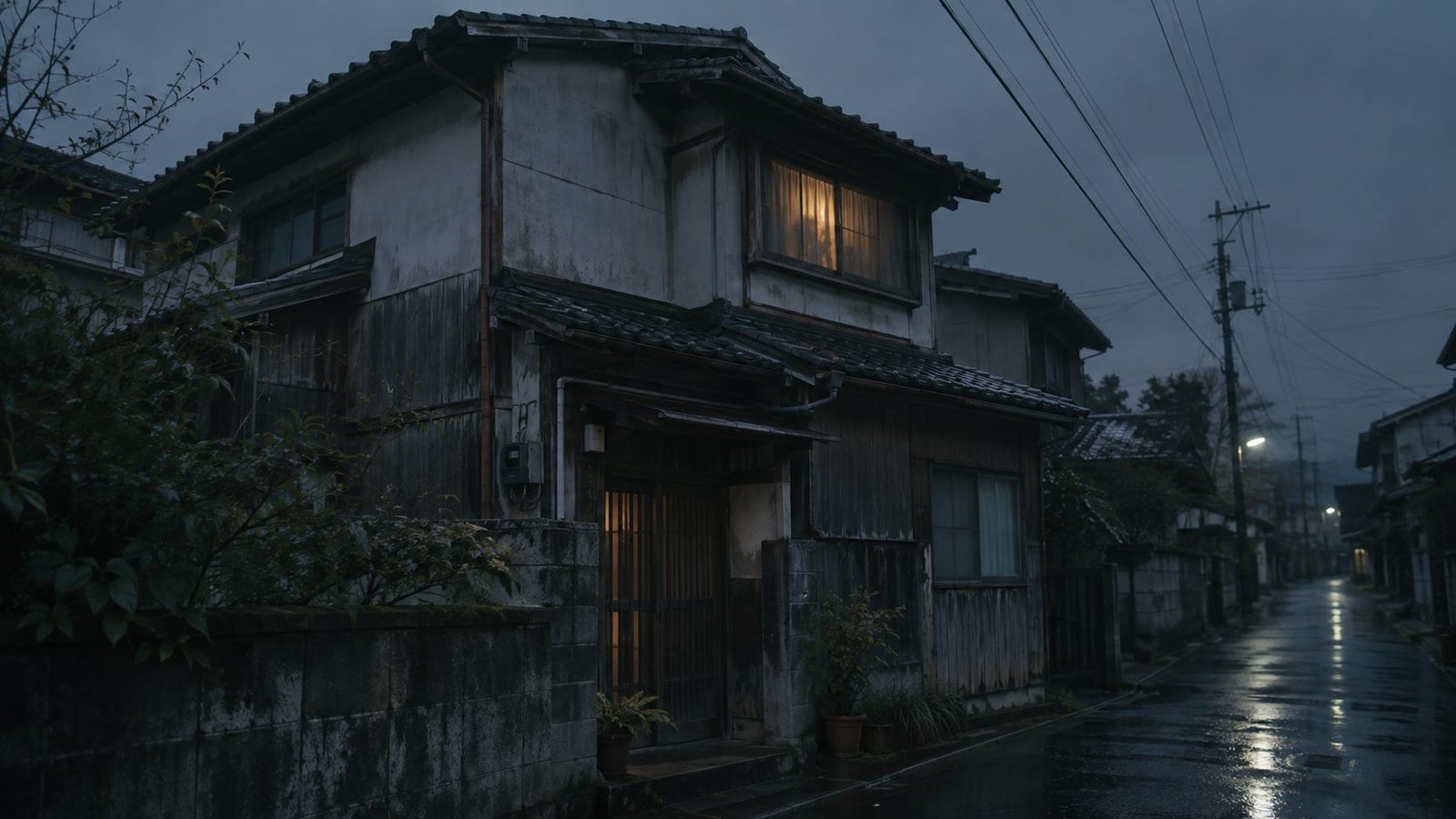
No, The Grudge is not an adaptation of a verified real-life haunting or murder case. The 2004 film is based on Takashi Shimizu’s Japanese film Ju-On: The Grudge. Shimizu described creating its supernatural world by combining Japanese ghost-story influences with his own ideas and rules.
There is a real creative history behind the fear. Understanding it means separating three things: the fictional family, the ghost-story traditions, and the places used to make the movies.
What story is The Grudge based on?
The immediate source for the 2004 English-language film is Ju-On, written and directed by Takashi Shimizu. Shimizu also directed the remake, with Stephen Susco credited as its screenwriter. Sarah Michelle Gellar plays Karen, an American care worker drawn into a supernatural threat in Tokyo.
The story follows a curse that spreads from person to person. Encountering it can make someone its next victim, even when that person has done nothing wrong. Sony’s official description presents Karen’s struggle as an attempt to break that supernatural chain.
That idea explains much of the film’s power. In many horror stories, you can imagine a way to stay safe. Leave the building. Avoid the forest. Refuse to open the box.
Here, simply helping someone can bring you into danger. Good intentions offer little comfort.
The curse grew from Shimizu’s imagination
Asked whether the curse came from a Japanese legend, Shimizu explained that he loved reading ghost stories as a child. Different stories gave their ghosts different powers and limits. He combined those influences to create a supernatural world of his own.
This distinction matters. A filmmaker can draw on cultural traditions without adapting one particular legend or documenting a real event.
The evidence points to that kind of creative process behind The Grudge. Its frightening rules belong to the story Shimizu built.
Why does the haunting feel so believable?
My reading is that the film works because its surroundings feel familiar before anything frightening happens.
A staircase is just a staircase. A bedroom should offer privacy. A care worker entering someone’s home is doing an ordinary job. The film gradually makes those familiar spaces feel unsafe.
It also gives you fragments rather than a comfortable, straightforward explanation. You try to understand the danger alongside the characters. That uncertainty leaves room for your imagination to work.
Even the unsettling croaking sound has a practical filmmaking explanation. In a 2004 interview, Shimizu confirmed that the sound was his own voice. Something that feels impossible on screen began with a human performance.
Knowing how it was made may help. Hearing it in a dark room can still be another matter.
Is The Grudge house real?
The house has a real production history, but that does not establish a real haunting. The answer also changes depending on which film you mean.
| Version | What the evidence supports |
|---|---|
| Japanese Ju-On: The Grudge | Shimizu described filming at a suburban Tokyo house that later attracted visitors and complaints from neighbours. |
| English-language The Grudge (2004) | Sarah Michelle Gellar explained that the house was a constructed set, built with two floors. |
These accounts come from interviews with the director and the remake’s lead actor.
Gellar specifically addressed the assumption that the cast had worked inside an existing house. The building looked convincing because the production team had constructed a detailed, functional space.
So, photographs of a filming location do not prove that the fictional Saeki family lived there. They show where filmmakers created part of the illusion.
The director also said that the remake used different locations from Ju-On, despite their similar appearance. That is another reason to be cautious when a website labels one building “the real Grudge house” without identifying the film.
Why do some descriptions mention true events?
One source of confusion is the separate Netflix series Ju-On: Origins.
Netflix’s publicity describes that series using language about true events behind the story. However, a promotional description for a later series does not independently verify the fictional Saeki murders or establish that the 2004 film depicts a documented haunting.
For the original film’s creative origins, Shimizu’s explanation remains the clearest evidence: he drew on ghost stories and developed his own supernatural rules.
When checking a true-story claim, look for the actual connection. Is there a named event, a reliable record, or a filmmaker explaining the adaptation? A frightening claim becomes more useful when its source is clear.
Did anyone survive The Grudge?
Spoilers follow for The Grudge (2004) and The Grudge 2 (2006).
Yes. Karen Davis survives the events of the 2004 film, although the ending leaves her under threat. After trying to burn the house, she reaches hospital alive. Her survival is also confirmed by Sony’s official synopsis for the sequel, which begins with Karen hospitalised in Japan.
Her escape does not end the curse.
In The Grudge 2, Karen dies after falling from the hospital roof during another supernatural encounter. Her sister Aubrey then becomes central to the continuing story.
The precise answer is that Karen survives the first film, but she does not survive the sequel. That distinction matters when people say that nobody survives The Grudge. Reaching the end of one instalment alive does not guarantee lasting safety within the series.
What is the scariest movie based on a real story?
There is no objective winner. What frightens you may leave another viewer completely unmoved.
If you want an example with a documented connection to a reported event, The Exorcist offers a useful comparison. Georgetown University’s archives explain that William Peter Blatty’s novel was inspired by newspaper coverage of a 1949 exorcism involving a teenage boy. Blatty later adapted his novel for the screen.
That establishes an inspiration. It does not make every supernatural event in the film a verified fact.
This is the distinction to keep in mind when reading “based on a true story.” The phrase can describe anything from a close adaptation of recorded events to a fictional story prompted by one reported incident.
For The Grudge, the strongest evidence instead points toward ghost-story influences and Shimizu’s original imagination.
The fear can stay after the facts are clear
So, is The Grudge based on a true story? Its documented origins lead to an earlier film, Japanese ghost stories, and a director creating his own world of fear.
The house, performances, sound, and storytelling make that world feel close enough to touch. You do not need to believe that Kayako was real to understand why the film stays with people.
Sometimes a frightening story follows you home because it has changed how you look at an ordinary room. The facts can reassure you, even if you still switch on the hallway light.

I am Jeremy Jahns – Your Cinematic Explorer
Immerse in movie reviews, Hollywood insights, and behind-the-scenes stories.